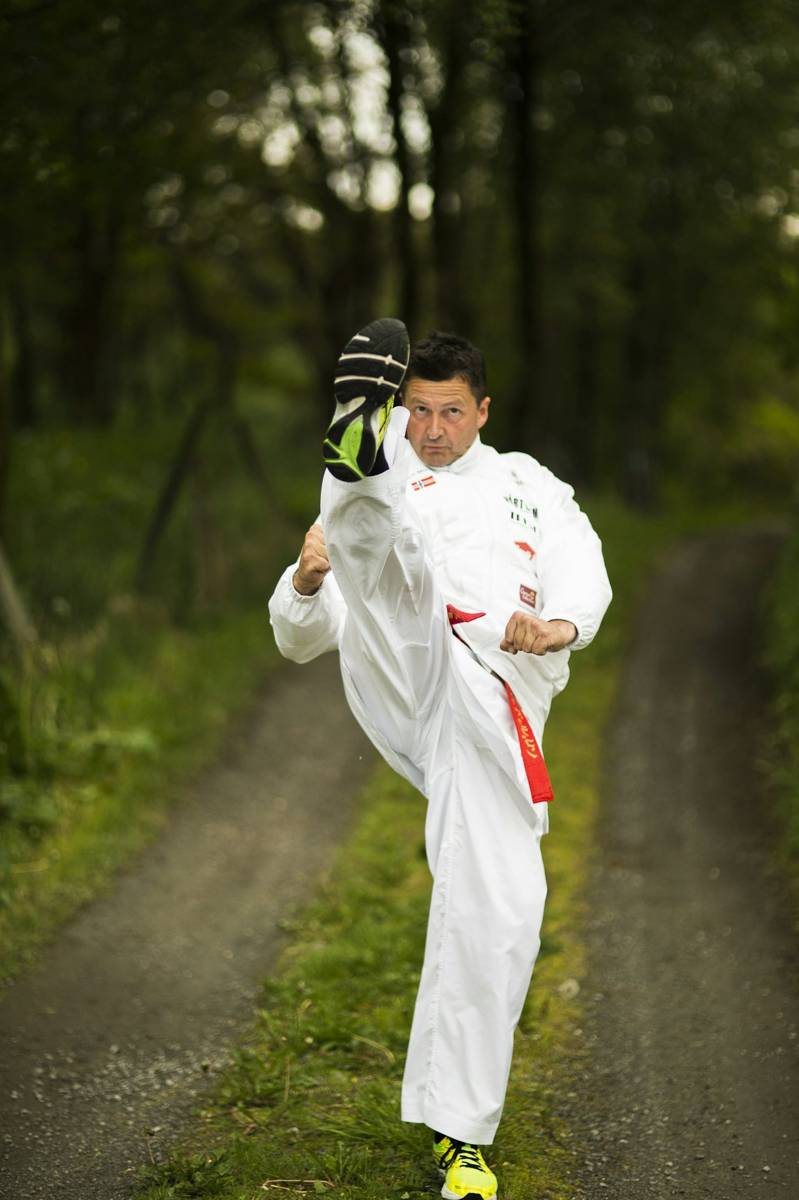
| Taekwondo | Kung fu and wushu | |
|---|---|---|
| What it is | One Korean art with a common curriculum | Hundreds of Chinese styles, plus modern wushu |
| Main focus | Kicks, sparring and forms | Forms, stances, acrobatics and sometimes weapons |
| Sparring | Olympic-style, padded, after a few belts | Varies widely; some schools rarely spar |
| Ranks | Colored belts, standardized in most schools | Sashes or belts, different at every school |
| Competition | Olympic sport with many youth events | Forms and wushu events; sanda for sparring |
| Culture | Korean terms and etiquette | Chinese culture, often lion dance and festivals |
| Typical cost | About $100 to $250 a month plus testing | Varies widely; cultural centers can be cheaper |
Pick by goal
- Wants frequent goalsTaekwondoBelts come every few months.
- Loves to dance and performKung fuForms and wushu reward expression.
- Wants to competeTaekwondoTournaments are easy to find.
- Chinese heritage or cultureKung fuMany schools teach language, lion dance and history.
On this page
Taekwondo and kung fu both have a reputation for spectacular kicks, and both appear in films that make children want to sign up. Beyond that, they are very different propositions. Taekwondo is one Korean art with a broadly shared curriculum and a clear sporting side. Kung fu is an umbrella term for hundreds of Chinese martial arts, from slow internal styles to explosive modern wushu, and no two schools are quite alike.
For more on each, see Taekwondo for kids and kung fu and wushu for kids, or the comparison of all the main styles.
Technique
Taekwondo is above all a kicking art. Children learn front, roundhouse and side kicks first, then turning, jumping and spinning kicks, practised on pads, in forms and in sparring. Hand techniques are mostly blocks and straight punches.
Kung fu is broader. Depending on the style, children may learn low, strong stances, circular blocks, palm strikes, sweeps and kicks, and later traditional weapons such as staffs and swords. Many American schools teach a traditional style such as Shaolin, Hung Gar or Choy Li Fut, while others focus on modern wushu, which adds jumps, flips and fast, athletic routines judged for performance.
Forms and performance
Both arts teach forms, set routines performed alone. In Taekwondo, the forms are called poomsae, and most schools teach the same series, one for each belt, so a child can move schools and keep going. Our forms guides step through each one.
In kung fu, forms are often the heart of training, and they can be long, expressive and beautiful. Each style has its own, so they do not transfer between schools. Children who love dance, gymnastics or performing often find kung fu forms deeply satisfying, and many schools perform at festivals and Lunar New Year events, often with lion dance.
Sparring and competition
Taekwondo has a clear sporting path. Sparring follows Olympic-style rules with padded vests and head guards, youth tournaments are common, and the art has been an Olympic sport since 2000.
Kung fu schools vary enormously. Some spar regularly, some rarely. Competition exists in forms and wushu events, and in sanda, a kickboxing-style sport with throws, but youth events are less common in most of the US. If competition matters to your child, Taekwondo is the easier route.
Ranks and progress
Most Taekwondo schools use a familiar belt order with testing every few months and a junior black belt after roughly three to five years, as our belt order guide explains. Kung fu has no common rank system: some schools use colored sashes, others belts or no visible ranks. Progress can feel less regular, which suits some children better than others.
Culture
Taekwondo classes use Korean counting, commands and etiquette, which children pick up quickly. Kung fu schools often go further into culture, sometimes teaching Chinese language, history and philosophy, and lion dance troupes are a big draw. For families with Chinese heritage, or children curious about Chinese culture, that can be a real attraction.
Cost
Taekwondo is mostly taught at commercial schools, typically around $100 to $250 a month plus testing fees and sparring gear. Kung fu prices vary more: commercial schools are similar, while classes at cultural centers and community associations can be much cheaper. Use our cost calculator to compare.
Which should your child choose?
Choose Taekwondo if your child loves to kick, likes clear goals and frequent belts, or wants to compete. Choose kung fu if your child loves movement and performance, is drawn to acrobatics or weapons, or would enjoy the cultural side. Because kung fu varies so much, always watch a class and ask what a typical week includes before you sign up.
Questions parents and students ask
Is kung fu or Taekwondo better for kids?
Neither is better for every child. Taekwondo suits energetic kids who want clear goals and competition. Kung fu suits kids who enjoy flowing movement, acrobatics and culture. Because kung fu varies so much from school to school, visiting the specific school matters even more than usual.
Is kung fu harder than Taekwondo?
Kung fu forms can be long and demanding, and wushu acrobatics take great flexibility and strength. Taekwondo's high kicks and sparring are demanding in a different way. Both take years to master.
Do kung fu schools have belts?
Many do, but there is no common system. Some use colored sashes, some belts, some traditional titles and some no visible ranks at all. Ask the school how progress is marked and how often students test.