| BJJ | Judo | |
|---|---|---|
| Main focus | Ground: pins, escapes, submissions | Standing throws, breakfalls and pins |
| Falling skills | Some | Taught from day one |
| Belts | Kids' belts, slow | Colored belts, varies by club |
| Competition | IBJJF and local tournaments | Olympic sport since 1964 |
| Where taught | Commercial academies | Many nonprofit and community clubs |
| Typical cost | Often the top of the $100 to $250 range | Often much cheaper at community clubs |
Pick by goal
- Lowest costJudoCommunity clubs are often the cheapest option.
- Ground self-defenseBJJBuilt around escaping bad positions.
- Learning to fallJudoBreakfalls are the first thing taught.
- Olympic dreamsJudoA full Olympic pathway exists.
On this page
If you have decided you want your child in a grappling art rather than a kicking or punching one, the choice usually comes down to Brazilian Jiu-Jitsu or judo. The two are close cousins. BJJ grew out of judo taught in Brazil in the early twentieth century, and both use a heavy cotton uniform, gripping, pins and a belt system. But over a century they have grown into quite different sports, and children experience them differently.
Here is how they compare in practice, and how to decide. For a wider view, including the striking arts, see our guide to the best martial art for kids.
Standing vs ground
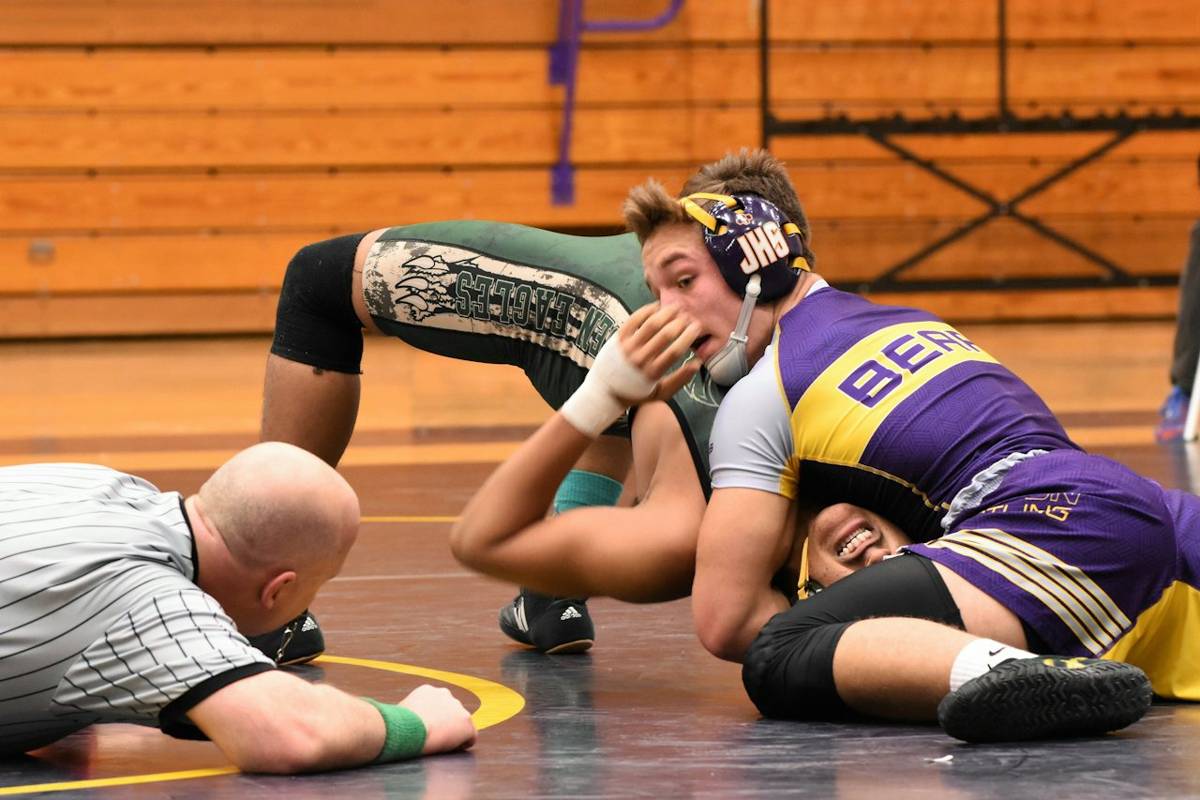
The simplest way to put it is that judo is mostly fought standing up and BJJ is mostly fought on the ground. In judo, the main goal is to throw your opponent cleanly onto their back. A perfect throw wins the match outright. Ground work (pins, and for older players chokes and arm locks) is part of judo, but referees give only a short time on the ground before standing players back up.
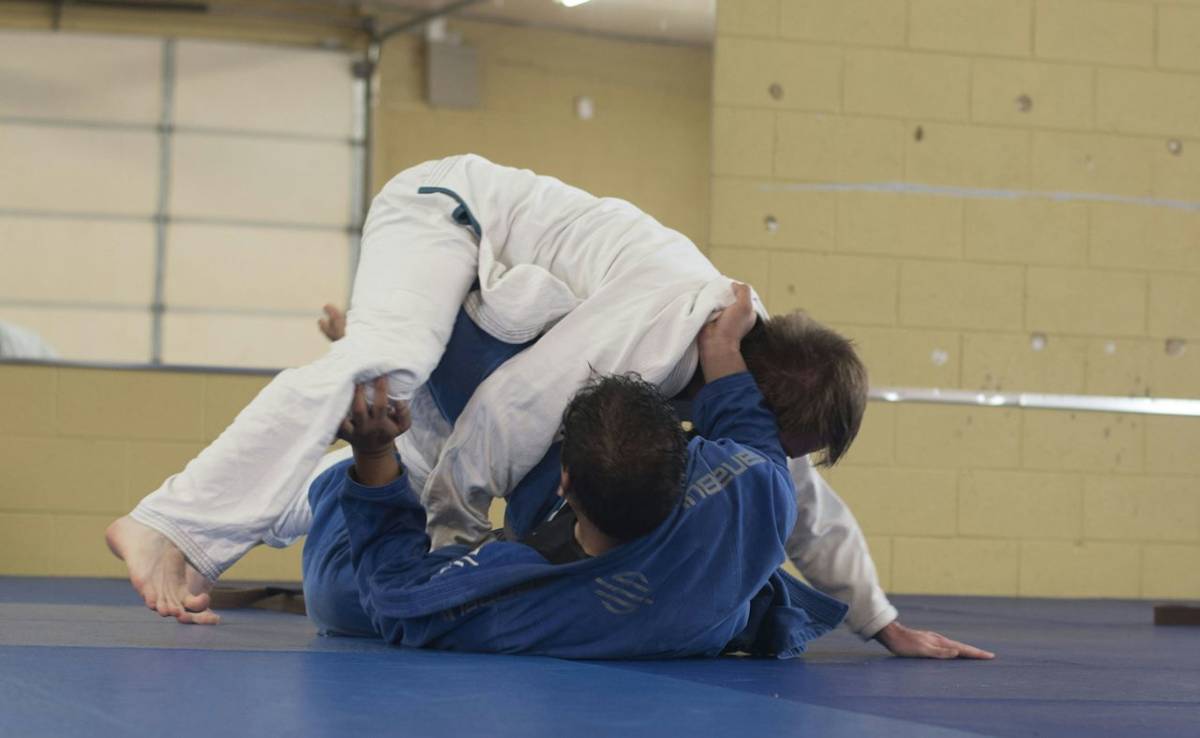
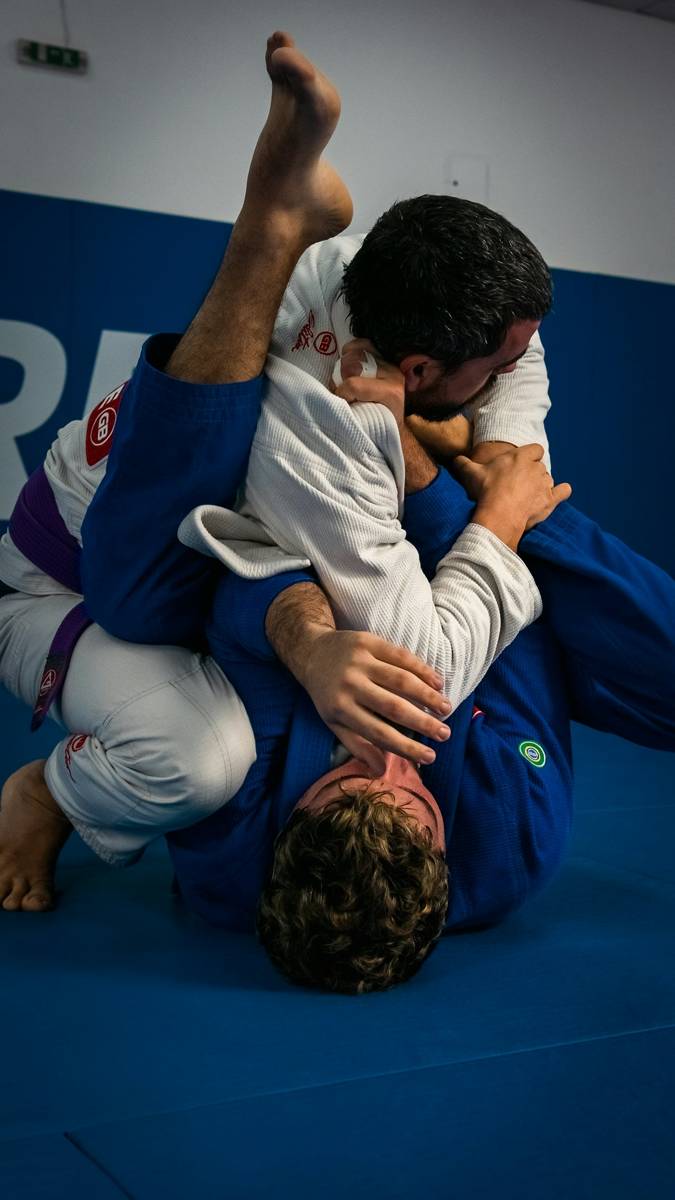
In BJJ, matches often start standing, but most of the action happens on the ground. Children learn to take a dominant position, hold it, escape from bad positions and, as they get older, apply submissions under kids’ rules. There is no limit on ground time, so the sport becomes a long, patient game of control, which is why people call it chess on the mat.
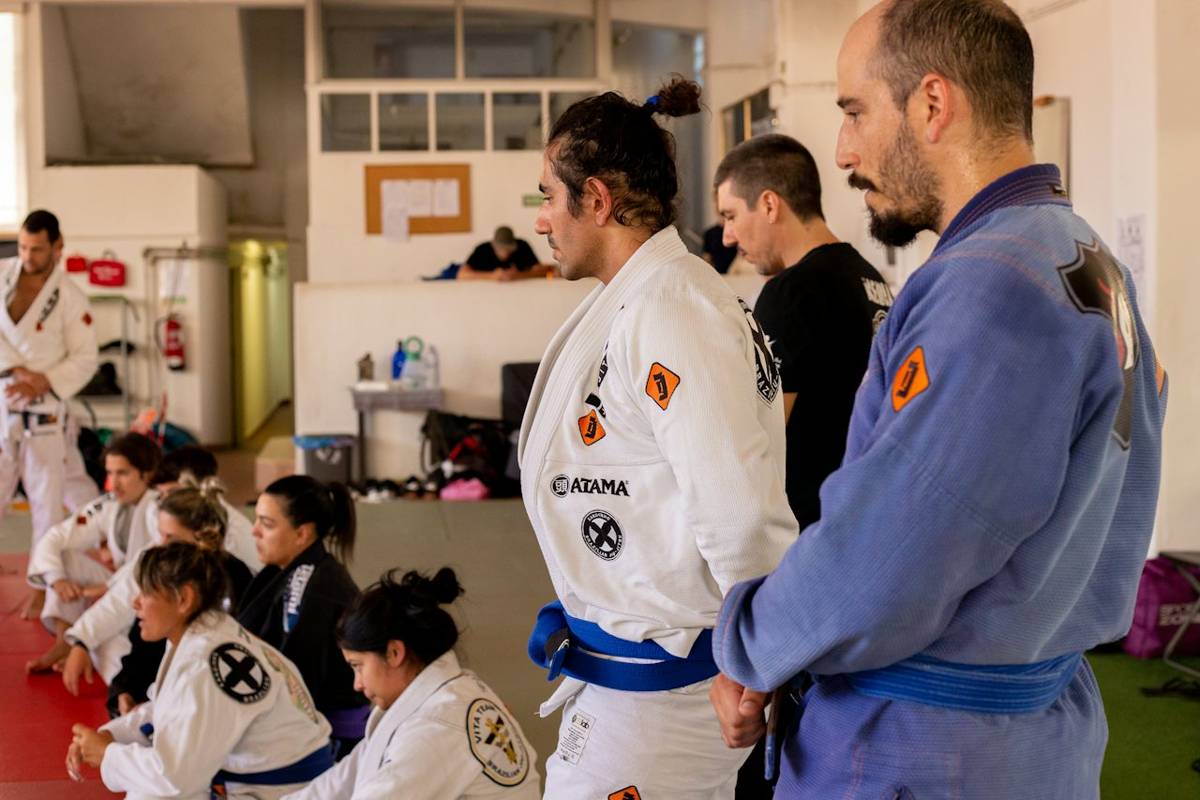
How it feels for a young child
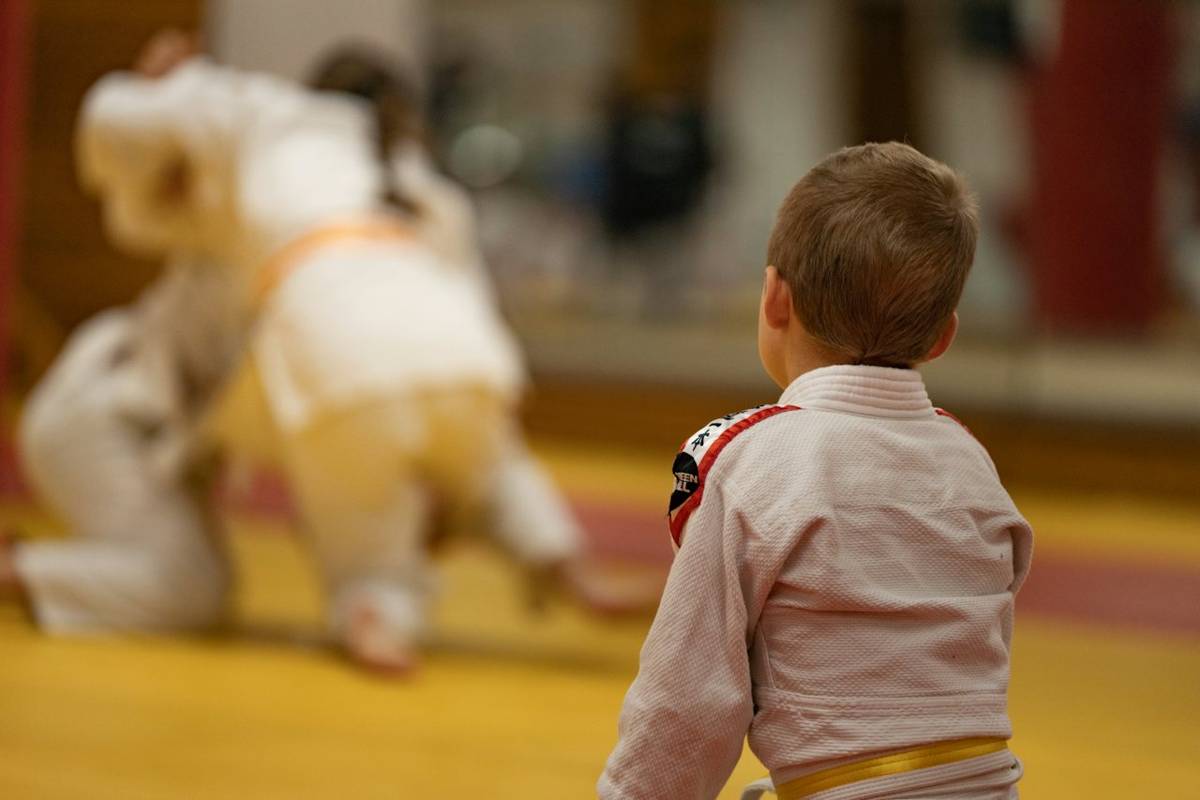
Judo classes begin with ukemi, breakfalls, and children practise falling safely in every class. Kids who love being thrown onto crash mats, rolling and tumbling usually adore judo. The throws are dynamic and athletic, and children develop excellent balance and body awareness.
BJJ classes for young children are typically built around games: holding a partner down, escaping, getting to a partner’s back. Because there is no throwing at full speed for little ones, children can “roll” (spar) at full effort against each other very early, which many kids find exciting and empowering. Children who are smaller or less athletic often do well in BJJ, because technique and patience can beat size and speed.
Safety
Both arts restrict techniques for children. In BJJ, the IBJJF children’s rules ban many joint locks, neck cranks and slams, and they phase techniques in by age. In judo, children’s rules forbid chokes and arm locks until the teen years, at ages set by each national federation and event.
The main injury risks are different. Judo involves repeated falls, so good breakfall teaching and quality mats matter. BJJ involves fewer hard impacts but more twisting on the ground, so instructors need to supervise rolling closely and teach children to tap (signal surrender) early and respect their partner’s tap. In both, ask how children are paired by size and age.
Belts and progress
Judo in the US uses a sequence of junior color belts set by the national organizations and individual clubs, with promotion often based on both skills and competition results. Adult ranks follow the Kodokan system.
The IBJJF kids’ system has white, then grey, yellow, orange and green belts, each with three variants (a white bar, a solid belt and a black bar), plus stripes in between. Children can move through these until age 15, and at 16 they move into the adult belts. BJJ is famous for slow, demanding promotion: an adult black belt typically takes a decade. Children may wait several months between stripes, which is worth knowing if your child is motivated by frequent rewards.
Competition
Judo is an Olympic sport, with a clear youth pathway through national and international events, and it is popular in schools and clubs worldwide. BJJ is not in the Olympics, but it has a huge tournament scene in the US, with frequent local kids’ events where children compete by age, weight and belt. Both sports let children compete in divisions matched to their size and experience.
Self-defense
Both arts teach children to control another child without striking, which is exactly what most schoolyard conflicts call for. Judo teaches children to stay on their feet, break an opponent’s balance and fall safely. BJJ teaches them to escape when they end up underneath someone, which is the scenario that frightens most parents of bullied children. Either one gives a child real, tested confidence, because both are practised against a resisting partner. Our guide to the best martial art for bullying goes into this in more depth.
Cost and where to find classes
Many judo clubs in the US are run by volunteers or as nonprofits, in community centers, YMCAs, universities and police athletic leagues, so judo is often one of the cheapest martial arts available. BJJ academies are usually commercial gyms and often charge at the higher end of martial arts pricing. On the other hand, BJJ gyms are now far more common in most American towns, so the nearest judo club may be a longer drive.
Which should your child choose?
Choose judo if your child is athletic, loves rough-and-tumble play and being thrown on crash mats, or if you want an Olympic sport and good value. Choose BJJ if your child is smaller or more thoughtful, if the main concern is bullying and escaping from the ground, or if there simply is not a good judo club nearby. Whichever you pick, watch a class first, check that children are paired sensibly, and ask how the coach handles a child who gets hurt or upset. A great grappling coach in either art will give your child skills and confidence that last for life.
Typical ranges at reputable schools. Taekwondo and karate award junior black belts to children; judo and BJJ set minimum ages for black belt.
Questions parents and students ask
Is BJJ or judo better for kids?
Both are excellent grappling arts for children. Judo focuses on throws and teaches safe falling first, and clubs are often cheaper. BJJ focuses on ground control and escapes and lets children practise at full effort from early on. Choose the one with the better coach nearby.
Which is safer for children, BJJ or judo?
Both are considered safe in well-run kids' programs because the most dangerous techniques are banned for children. BJJ has fewer high-impact falls, while judo teaches breakfalls so throws are absorbed safely. Supervision and matching partners by size matter most.
Can kids do both BJJ and judo?
Yes, and the two complement each other well. Judo improves throws and balance standing up, and BJJ improves control on the ground. Many grapplers train both, though one or two classes a week in one art is plenty for a young child starting out.