| Taekwondo | BJJ | |
|---|---|---|
| Type | Striking, mostly kicks | Grappling on the ground |
| Live practice | Padded sparring a few belts in | Rolling with a partner most classes |
| Self-defense | Moderate | Strong |
| Belt pace | Fast, every few months | Slow, stripes in between |
| Physical demands | Flexibility, balance, speed | Strength, endurance, body awareness |
| Olympic sport | Yes | No |
| Typical cost | About $100 to $250 a month plus testing fees | Often the top of that range, few testing fees |
Pick by goal
- Self-defenseBJJMost real scuffles end up close or on the ground.
- Energy to burnTaekwondoConstant movement and kicking drills.
- Clear goalsTaekwondoFrequent belts keep young kids motivated.
- Shy or anxious kidBJJSmall, calm classes and one partner at a time.
On this page
Taekwondo and Brazilian Jiu-Jitsu sit at opposite ends of the martial arts spectrum. One is about kicking from a distance, the other about grappling up close on the ground. Parents often end up choosing between them because both are widely available and both run large children’s programs, yet they suit very different children and very different goals.
The basic difference
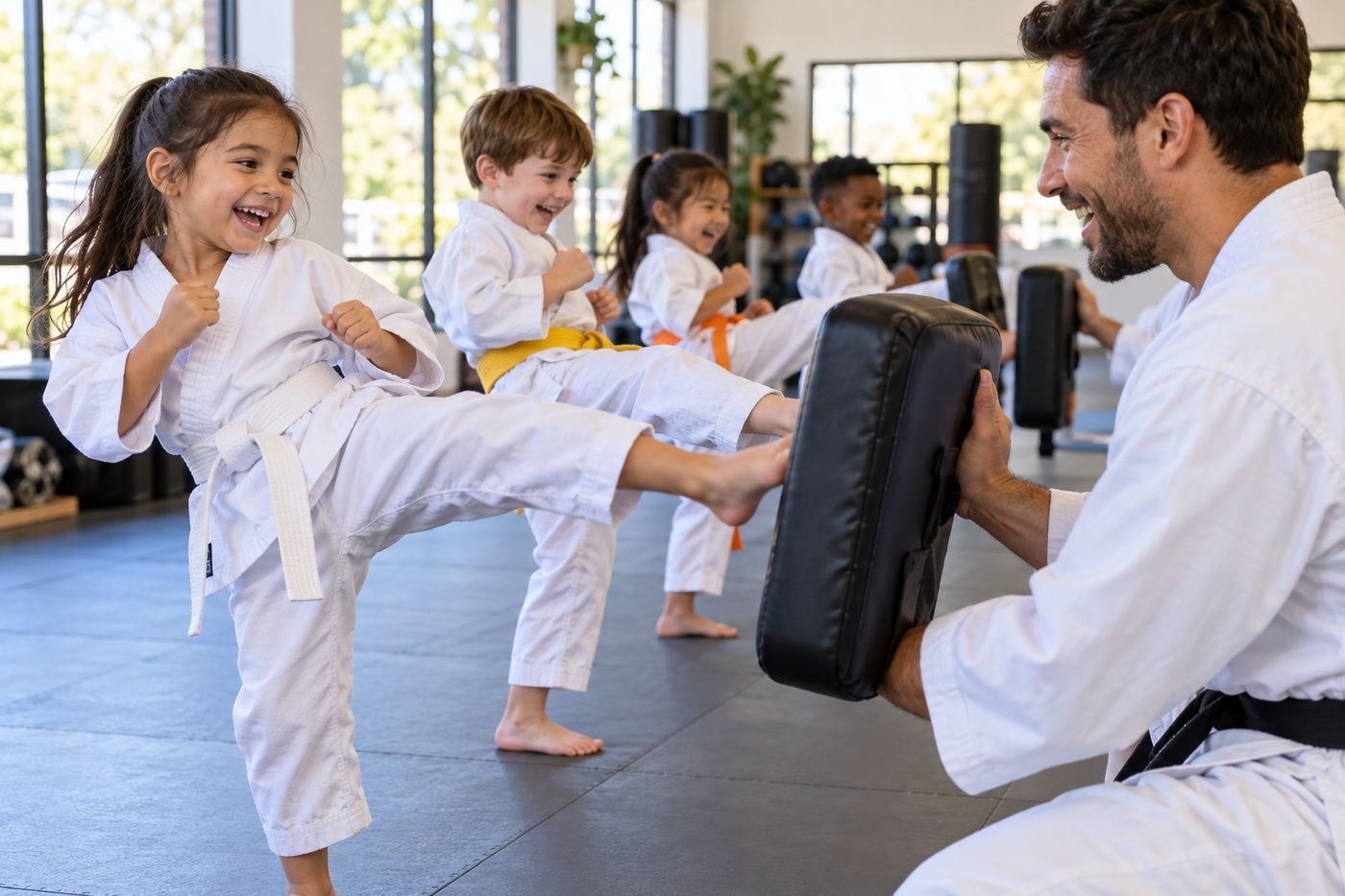
Taekwondo is a Korean striking art built around kicks. Children learn stances, blocks, punches and a long list of kicks, practise forms (poomsae), and from a certain belt take part in sport sparring wearing a padded vest and helmet. Our Taekwondo section explains the belts, forms and tests in detail.
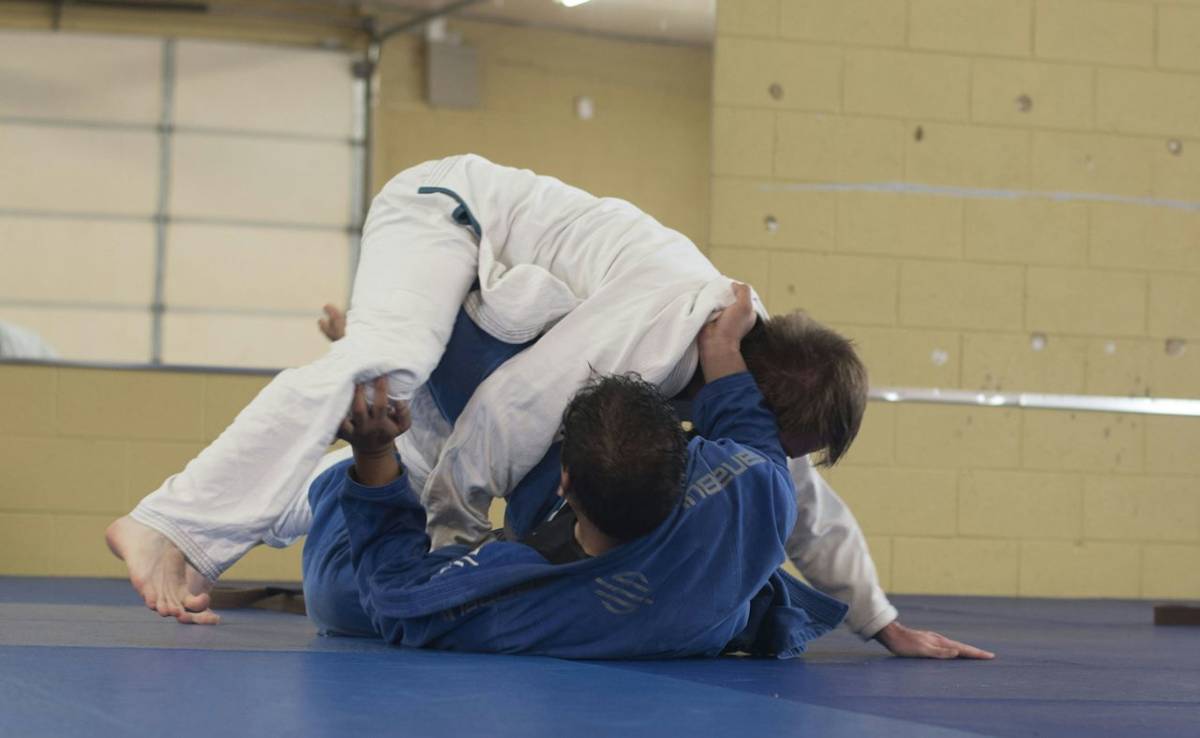
BJJ is a grappling art. There is no punching or kicking in children’s classes. Instead, children learn to take a partner down safely, pin them, escape from underneath and, as they get older, use submission holds allowed by kids’ rules. Much of each class is spent “rolling”, which means sparring at full effort against a resisting partner.
Self-defense
This is the question that brings many parents to BJJ. Fights between children rarely look like a kicking match. They usually involve shoving, grabbing, headlocks and ending up on the ground. BJJ trains exactly those situations, against a partner who is really resisting, so children learn what actually works. It also gives a child a way to control another child without punching, which keeps everyone safer and keeps your child out of trouble at school.
Taekwondo builds fitness, balance, speed and confidence, and good schools teach self-defense techniques such as releases from grabs. But most sparring practice is the Olympic-style sport, scoring kicks on a padded vest, which is quite different from a real confrontation. If self-defense is your top priority, BJJ (or judo, or wrestling) deserves serious consideration. Our guide to the best martial art for bullying explores this further.
Discipline, focus and goals
Taekwondo shines when it comes to structure. Classes are formal, with lines, bows, counting in Korean and clear routines. Belts come every few months, each with a clear syllabus, and the tests are a big, exciting event. Children who are motivated by goals and visible achievements thrive on this.
BJJ classes are usually more relaxed in style, though good academies still expect respect and attention. Progress is slower and quieter: stripes on the belt every few months and new belt colors less often. Children who are motivated by getting better at the game itself, rather than collecting rewards, tend to love BJJ’s honesty, because on the mat you can feel your improvement.
Safety
Both are reasonably safe in a good children’s program. Taekwondo’s main risks come in sparring, especially head contact from kicks, so ask at what age and level head contact begins and make sure helmets and mouthguards are required. BJJ involves no strikes, which removes most concussion risk, but children twist and pull on each other, so instructors must supervise rolling closely and teach children to tap early and let go immediately when a partner taps.
Physical demands
Taekwondo develops flexibility, explosive leg power and balance, and suits energetic children who love to move. BJJ develops full-body strength, endurance and body awareness, and it is close-contact: children are on top of each other for much of the class. Some children love that immediately; others take a few weeks to get used to it.
Cost and time
Both commonly fall in the range of about $100 to $250 a month at commercial schools, with BJJ academies often at the higher end. Taekwondo usually adds regular belt testing fees and a set of sparring gear. BJJ usually adds one or two uniforms (gis), and testing fees are often lower or absent, though tournament entry fees can add up. See our cost by style guide.
Which should your child choose?
Choose Taekwondo if your child is energetic and flexible, loves to kick and jump, enjoys formal structure and frequent goals, or would love Olympic-style competition. Choose BJJ if self-defense is a major reason for signing up, if your child loves wrestling and games of control, or if your child is smaller or less athletic, since technique beats size on the mat. If you can, try a class of each in the same week. Children usually make their preference very clear.
Typical ranges at reputable schools. Taekwondo and karate award junior black belts to children; judo and BJJ set minimum ages for black belt.
Questions parents and students ask
Is Taekwondo or BJJ better for self-defense for kids?
For typical schoolyard situations, BJJ is usually more practical because it teaches children to control and escape from another child without hitting, and they practise against full resistance. Taekwondo builds fitness, confidence and striking skills, but sport sparring is a long way from a real scuffle.
Which is more fun for young children?
It depends on the child. Kids who love jumping, kicking and visible goals usually enjoy Taekwondo more. Kids who love wrestling with siblings, puzzles and games of control tend to love BJJ.
Can a child do Taekwondo and BJJ together?
Yes. They complement each other well, since one is standing and striking and the other is ground grappling. For a young child, start with one and add the second later if they are keen and the schedule allows.