On this page
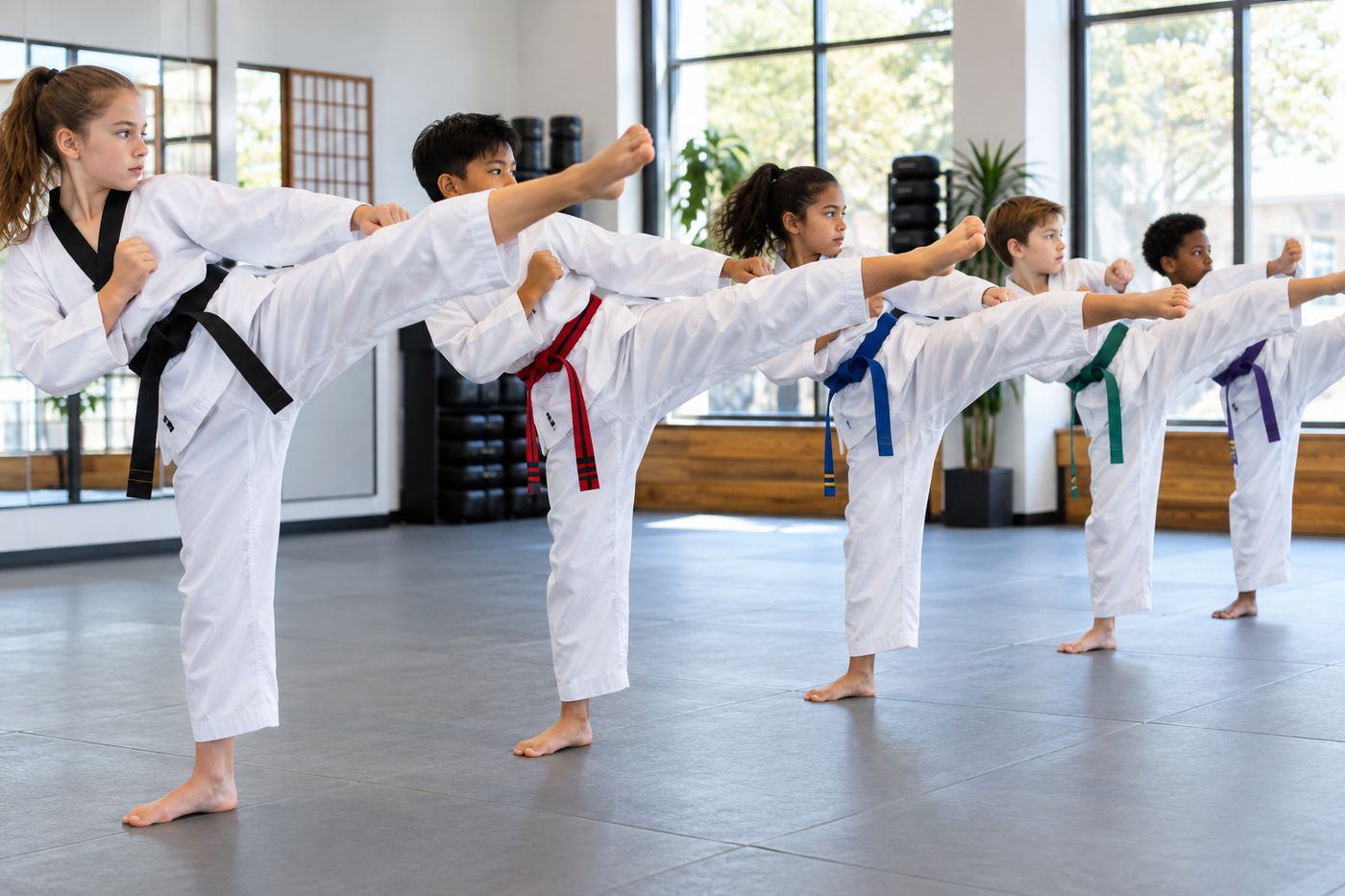
The front kick, ap chagi (앞차기), is the first kick every Taekwondo student learns and one they keep practising for the rest of their training. It is simple enough for a five-year-old in their first class and still a core part of the black belt forms. The front kick teaches the habit every other kick depends on: lift the knee first, kick second, and bring the foot back before putting it down.
What the front kick is used for
The front kick drives straight forward at a target in front of you, usually the stomach, chest or chin. In self-defense it is the quickest kick to throw and the hardest to see coming, because it travels in a straight line. In the forms, front kicks appear from Taegeuk Il Jang onward, usually followed by a punch as you land. In sparring, a version of it is used to push an opponent back or to stop them moving in.
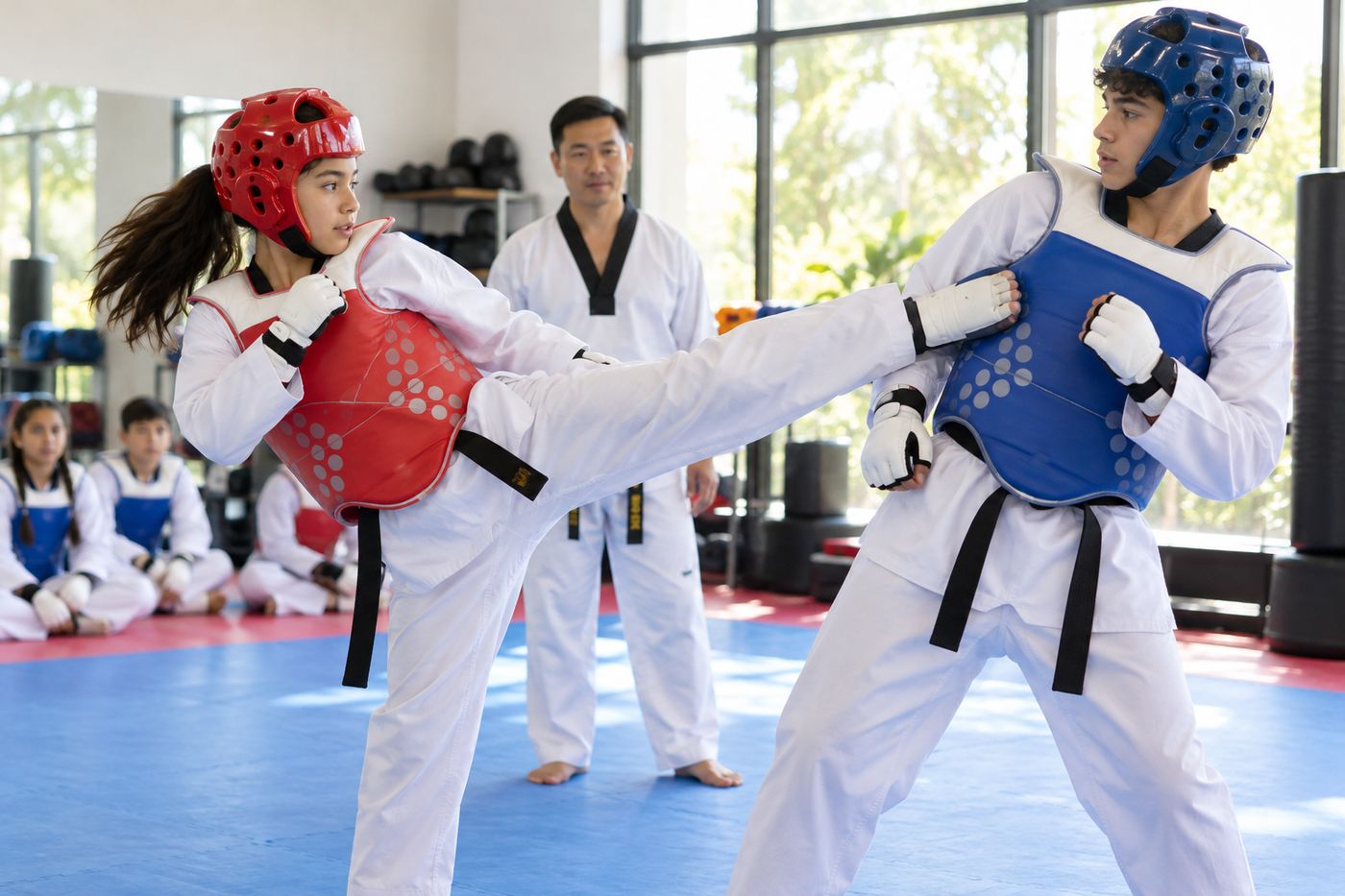
There are two main versions. The snap front kick whips the lower leg out and back from the knee, like flicking something with your foot. The push front kick drives the whole leg and hip forward to shove the target away. Beginners learn the snap version first.
How to do a front kick, step by step
- Start in a fighting stance or a front stance with your guard up. Your weight is spread evenly.
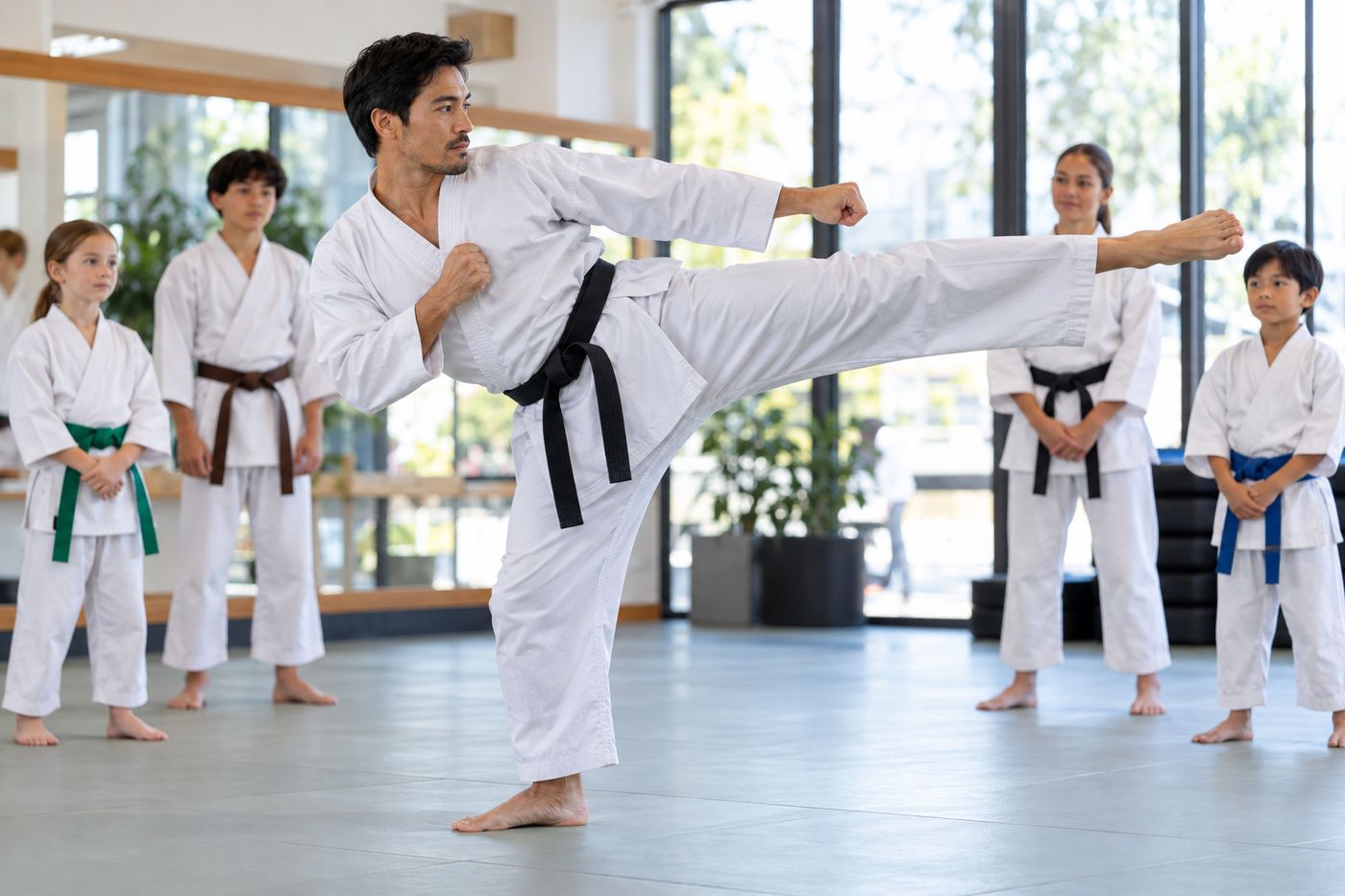
- Lift the kicking knee straight up in front of you to the height of the target. This is the chamber. The foot stays relaxed under the knee and the toes are pulled back.
- Snap the lower leg forward from the knee, striking with the ball of the foot. Push the hip forward a little at the moment of impact so the kick has the weight of your body behind it.
- Bring the lower leg straight back to the chamber position, knee still high.
- Set the foot down, either back where it started or forward into a new stance, and keep your guard up.
Keep the standing foot flat on the floor and the standing knee slightly bent throughout. Breathe out sharply as the foot lands on the target.
Common mistakes
The most common mistake is kicking without lifting the knee first. The leg swings up from the hip like a pendulum, the kick has no snap, and it is easy to block. Lift the knee to the height of the target every single time, even when kicking slowly.
The second is pointing the toes. If the toes are pointed when you kick with the ball of the foot, they take the impact and can be jammed or broken. Pull the toes back hard, as if standing on tiptoe in the air.
The third is dropping the hands. Beginners often let their arms fly back to keep balance. Keep the fists up near the chin, or at the hips if your instructor teaches it that way in forms. Finally, many students forget the return. A kick that is left hanging out in front is easy to catch, so the foot should come back to the chamber as fast as it went out.
Drills to practise at home
Chamber holds. Lift the knee into the chamber and hold for five seconds, then set the foot down. Ten on each leg builds balance and the hip strength the kick needs.
Slow kicks. Perform the kick in four counts: lift, extend, return, set down. Doing it slowly makes every mistake visible, especially in a mirror.
Wall kicks. Stand facing a wall about a leg’s length away and kick lightly toward it, stopping just short. This trains accuracy and stops the hips from leaning back.
Pad or pillow kicks. If someone can hold a cushion at stomach height, kick it with the ball of the foot for snap, then with the sole of the foot for push. Feeling the difference teaches both versions.
Where it fits in your training
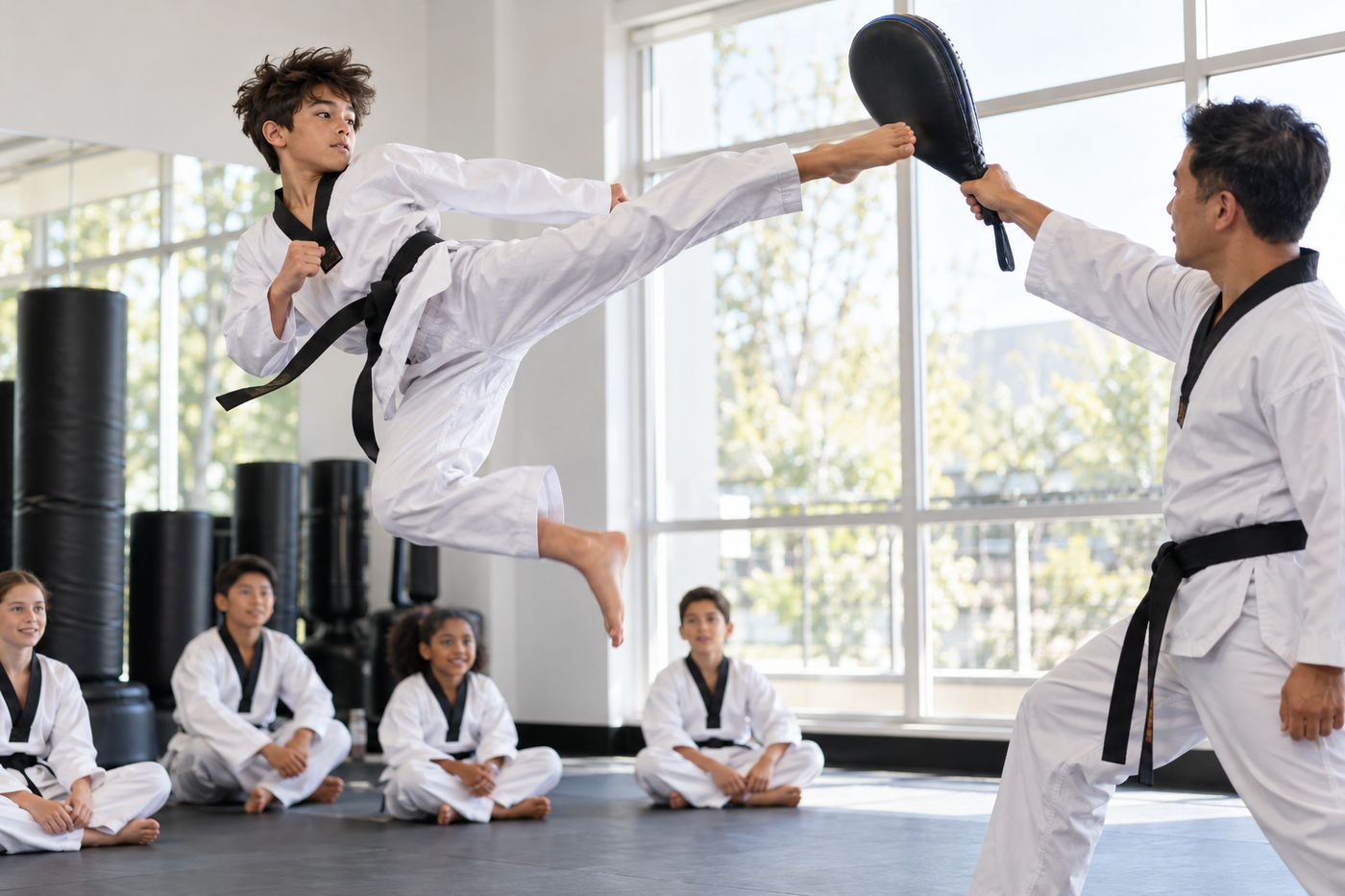
The front kick is learned at white belt and tested from the first belt test onward. It leads directly into the roundhouse kick, which uses the same chamber with a turn of the hip, and into the jumping front kick used in later forms and breaking. For the full list of kicks and when each one is usually taught, see our guide to every Taekwondo kick.
Questions parents and students ask
What part of the foot do you kick with in a front kick?
Traditionally the ball of the foot (apchuk), with the toes pulled back so they do not get jammed. In sparring and on pads many schools let students use the top of the foot or the whole sole, depending on the target.
Why does my front kick feel weak?
Usually because the knee is not lifted high enough before the leg extends, or the hips stay back. Lift the knee to the height of the target first, then snap the lower leg out and push the hip forward slightly.
When do Taekwondo students learn the front kick?
In the first week of white belt. It is the first kick taught in almost every school and appears in the first Taegeuk form.