On this page
Every Taekwondo student wants higher kicks, and almost everyone tries to get them the same way: by stretching harder for a few days, then giving up. High kicks do not come from stretching alone. They come from three things working together: flexibility in the hips and hamstrings, strength to lift and hold the leg up, and technique that turns the hip over correctly. This guide covers all three, with a simple four-week plan you can follow at home.
Why most students cannot kick higher
The most common reason is tight hamstrings and hip flexors, especially in adults who sit for most of the day. The second is weak hip muscles: many students can reach a high position with their hands on the floor in a stretch, but cannot lift the leg there by themselves. Coaches call the difference passive and active flexibility, and kicks need the active kind. The third reason is technique. A roundhouse or side kick that does not turn the hip over will never reach head height however flexible the student is. Our guides to the roundhouse kick and side kick cover the hip turn.
Warm up before you stretch
Stretching cold muscles is less effective and more likely to cause a strain. Spend five minutes getting warm first: jogging on the spot, jumping jacks or skipping. Then do dynamic stretches, which move the leg through its range without holding: front leg swings, side leg swings, and inside and outside crescent kicks, ten each side, starting low and gradually going higher.
The stretches that help most
Hold each of these for 30 to 60 seconds, breathing slowly, and do them after training or after a warm-up. A gentle pull is right; sharp pain is not.
Seated hamstring stretch. Sit with legs straight in front of you and reach toward your toes, keeping the back long rather than rounding over. This helps front kicks and axe kicks.
Butterfly stretch. Sit with the soles of the feet together and let the knees drop toward the floor, pressing them gently with the elbows. This opens the hips for side and roundhouse kicks.
Low lunge. Step one foot forward into a deep lunge with the back knee on the floor, and push the hips forward. This stretches the hip flexor of the back leg, which tightens with sitting.
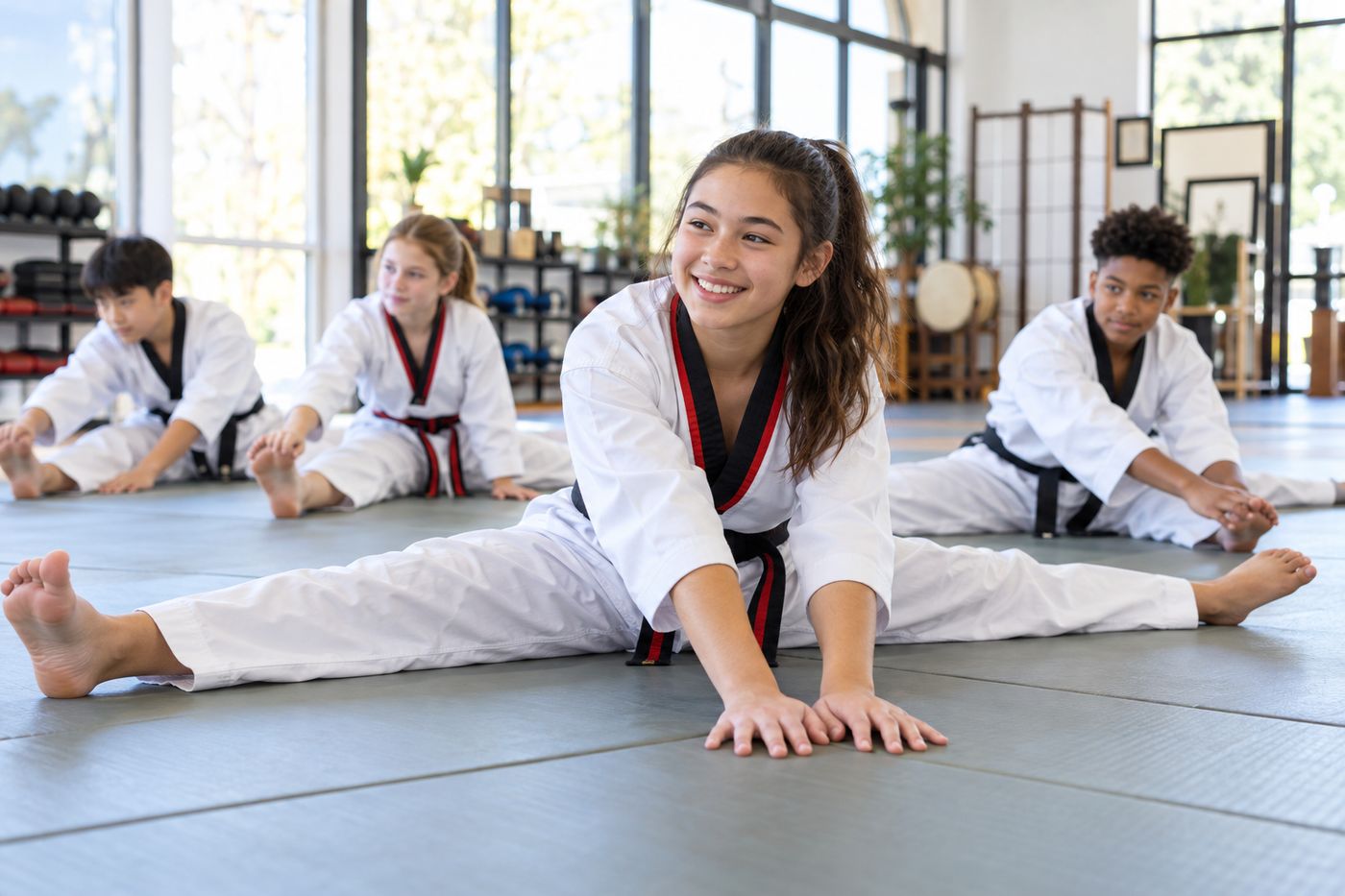
Straddle stretch. Sit with legs wide apart and lean forward from the hips. This is the base of the side split.
Front split practice. Slide into a half split with one leg forward and one back, using your hands or blocks for support. Go only as low as is comfortable.
Strength for high kicks
Active flexibility comes from strength at the end of the range. These exercises build it:
Leg raises. Stand next to a wall, hold it for balance, and slowly lift a straight leg to the front, then the side, as high as you can without leaning. Hold for three seconds and lower slowly. Ten each way.
Chamber holds. Lift into a side kick or roundhouse chamber and hold for ten seconds. This strengthens the muscles that keep the knee high.
Slow kicks. Perform kicks in slow motion, taking four seconds to extend and four to return. This is one of the most effective drills for both height and control.
A simple four-week plan
Weeks 1 and 2. Five days a week: five-minute warm-up, leg swings, then the five stretches above for 30 seconds each, twice. Finish with ten slow leg raises each way.
Weeks 3 and 4. Same routine, but hold stretches for 45 to 60 seconds and add chamber holds and slow kicks, ten each side.
Measure progress at the start and the end by kicking slowly next to a wall and marking the height. Most students see a difference within four weeks if they are consistent. Five short sessions a week beat one long one.
Kids, teens and adults
Young children are usually flexible already and only need gentle, playful stretching. They should never be pushed into the splits by an adult. Teenagers often lose flexibility during growth spurts as bones grow faster than muscles; this is normal and passes, so ease off rather than force it. Adults gain flexibility more slowly but steadily, and should be especially careful to warm up first. For more on training as an adult, see starting Taekwondo as an adult.
For more ways to improve your kicks, see how to kick harder and the full guide to Taekwondo kicks.
Questions parents and students ask
How long does it take to kick higher?
Most students see a noticeable change in four to eight weeks of stretching five or six days a week. Big gains, like going from chest-height to head-height kicks, usually take several months.
Should I stretch before or after Taekwondo?
Both, in different ways. Before training, use dynamic stretches like leg swings to warm up. After training, when the muscles are warm, use longer static stretches held for 30 seconds or more. That is when flexibility improves most.
Do I need the splits to kick high?
No, but splits training helps. Many good kickers cannot do a full split. What matters is active flexibility: being able to lift and hold the leg high using your own strength, not just reach it on the floor.
Are kids naturally more flexible?
Generally yes, especially before puberty. Children should still stretch gently and never be pushed into splits by another person. Teenagers often lose flexibility during growth spurts, which is normal and temporary.