On this page
The back kick, dwi chagi (뒤차기), is one of the most powerful kicks in Taekwondo and the first one that asks a student to turn their back on the target. That turn is what makes it hard, and also what makes it so effective: the whole body rotates into the kick, and the heel drives straight back in a line. In sparring, a well-timed back kick is a match-winner. In breaking, it is the kick that goes through boards other kicks cannot.
What the back kick is used for
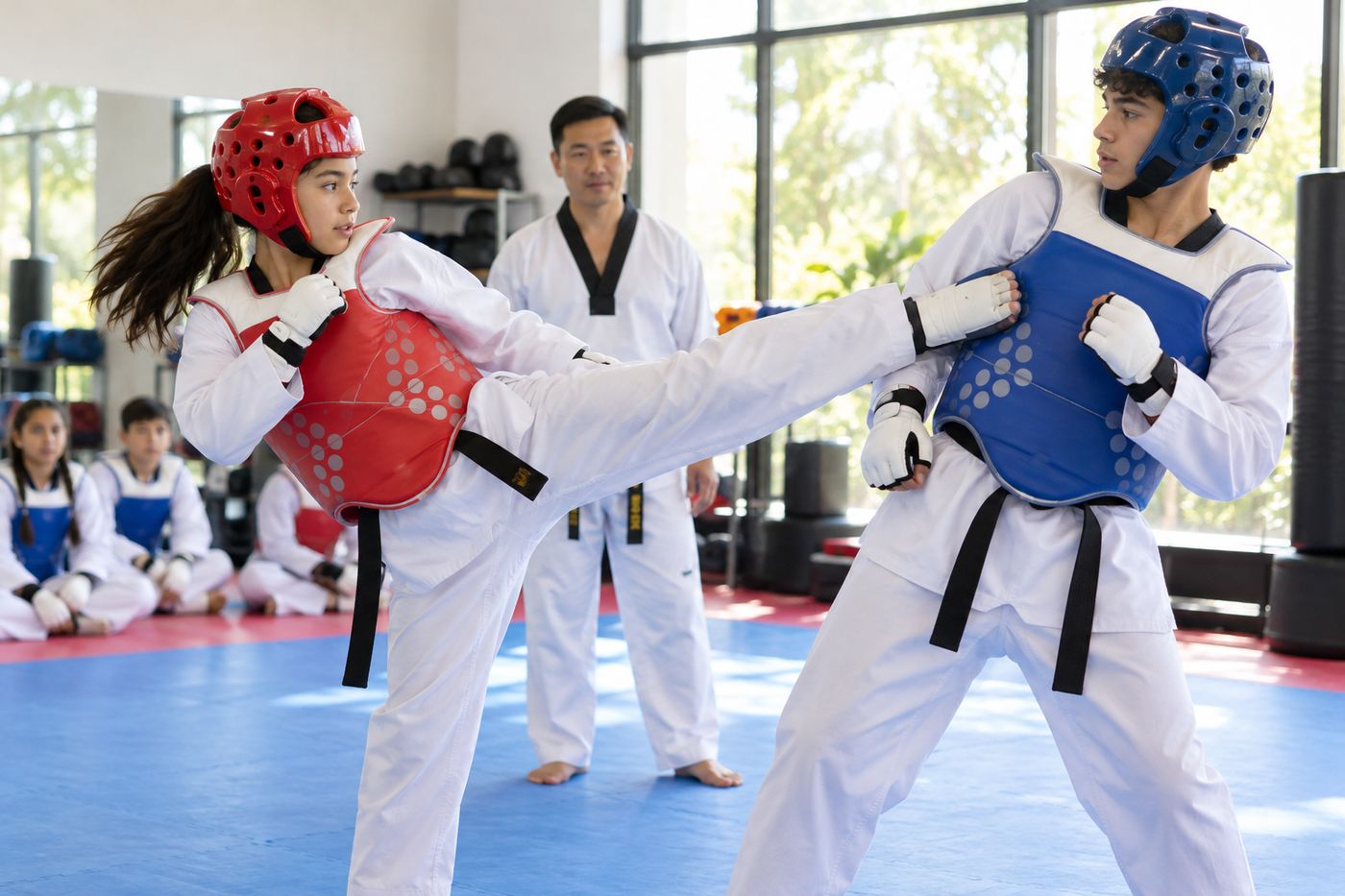
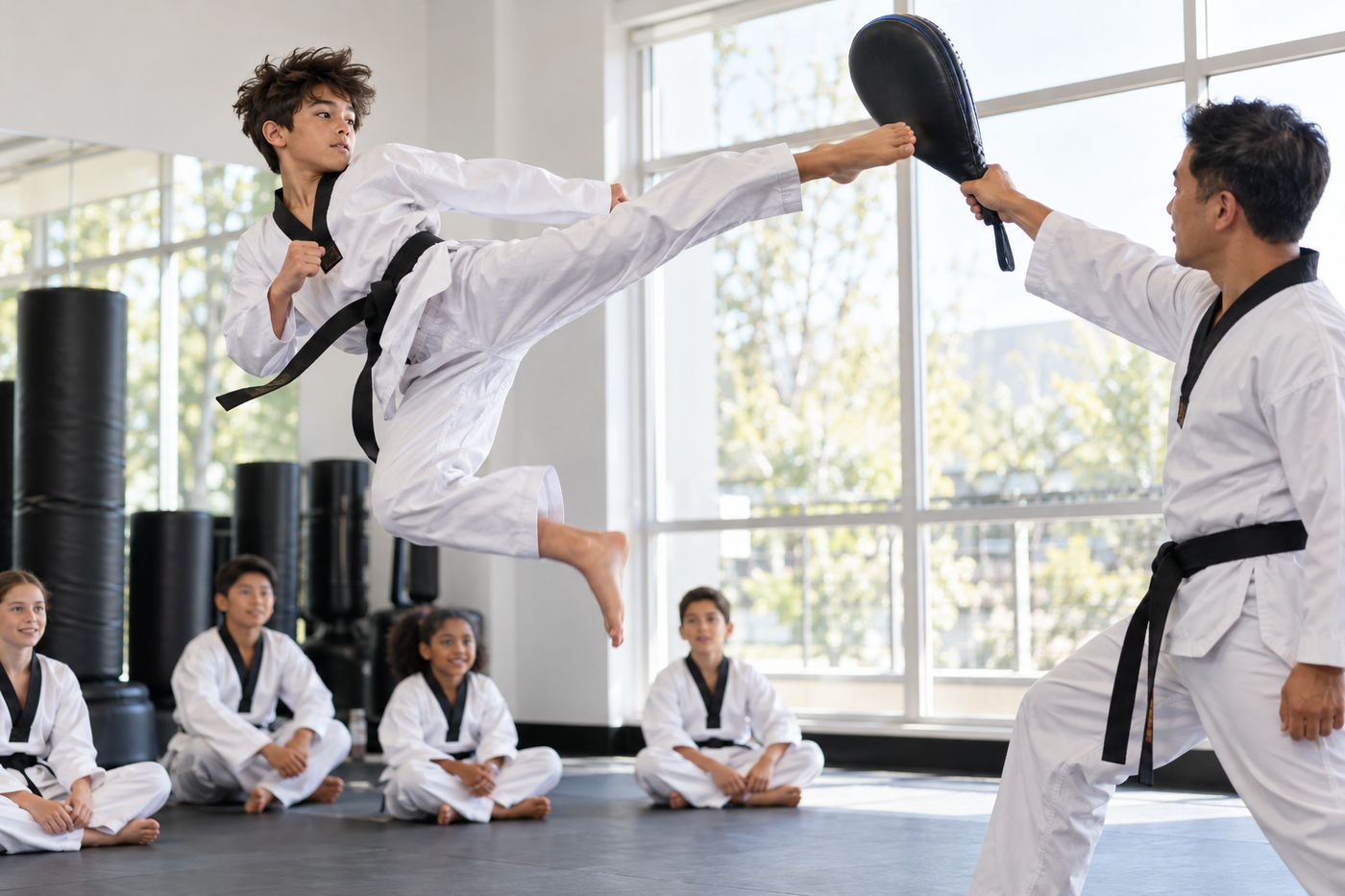
The back kick strikes straight behind you with the heel, after a turn of the body. In Olympic-style sparring it is mostly a counterattack, thrown as an opponent steps in so that they run onto the heel. In breaking demonstrations it is a favorite because of its power.
How to do a back kick, step by step
- Start in a fighting stance, side-on to the target, guard up.
- Turn your head first and look over your back shoulder at the target. This is the step most students skip, and it is the one that makes the kick accurate.
- Pivot on the balls of both feet, turning the body away from the target so your back faces it. Keep your knees close together as you turn.
- Lift the kicking knee up close to the standing leg, with the foot flexed and the heel pointing at the target.
- Drive the heel straight back toward the target in a line, as if pushing a door shut behind you. The toes point down toward the floor.
- Pull the foot back and land facing the target in your fighting stance, ready for the next move.
The kicking leg should brush past the standing leg on the way out. If the knees separate, the kick will swing in an arc.
Common mistakes
Not looking first is the most common problem. If you turn and kick blind, the kick will miss or land to the side. Turn the head, see the target, then kick.
Over-rotating is the second. If the body turns too far, the kick becomes a side kick or flies off line. The kick goes straight back from where your back is facing, so stop the turn at about 180 degrees. Third, many students swing the leg out wide, which is slow and easy to see. Keep the knees together until the heel is on its way. Last, watch the landing: students often finish with their back still to the target, which leaves them open. Practise landing square and ready.
Drills to practise at home
Look and turn. Without kicking, practise the head turn and body pivot together, ten times each way. It builds the habit of seeing the target first.
Wall back kicks. Face away from a wall about a leg’s length away. Look over your shoulder, then push the heel slowly back to touch the wall. This keeps the line straight.
Slow-motion kicks. Perform the whole kick in six counts, holding the extended position for a second. Speed comes once the path is clean.
Counter drill with a partner. If a family member can hold a pillow and step toward you, practise timing the back kick as they come in. Go slowly and gently. The goal is timing, not power.
Where it fits in your training
Most schools teach the back kick around purple or blue belt, once the side kick is solid. It leads into the spinning hook kick, which uses the same turn, and the jumping back kick used in breaking. For every other kick, see our guide to Taekwondo kicks.
Questions parents and students ask
Is a back kick the same as a spinning back kick?
In Taekwondo, yes. The back kick (dwi chagi) is normally thrown by turning the body away from the target and kicking straight back with the heel, which is what many people call a spinning back kick.
Why does my back kick go to the side?
Usually because the body over-rotates or the knee swings out, turning it into a side kick or a wild swing. Keep the knees close together as you turn, look over your shoulder at the target first, and drive the heel straight back in a line.
Is the back kick good for sparring?
Yes. It is one of the most effective counterattacks in Olympic-style sparring because it meets an opponent who is coming forward, and a clean back kick to the body is very hard to absorb.