On this page
The axe kick, naeryeo chagi (내려차기), is the kick most people picture when they think of a Taekwondo athlete’s flexibility. The leg swings straight up past the opponent’s head and then chops down onto it with the heel or sole. It looks spectacular, it is surprisingly hard to block, and it is a regular point-scorer in Olympic sparring. It also needs more flexibility than any basic kick, so it is worth learning carefully.
What the axe kick is used for
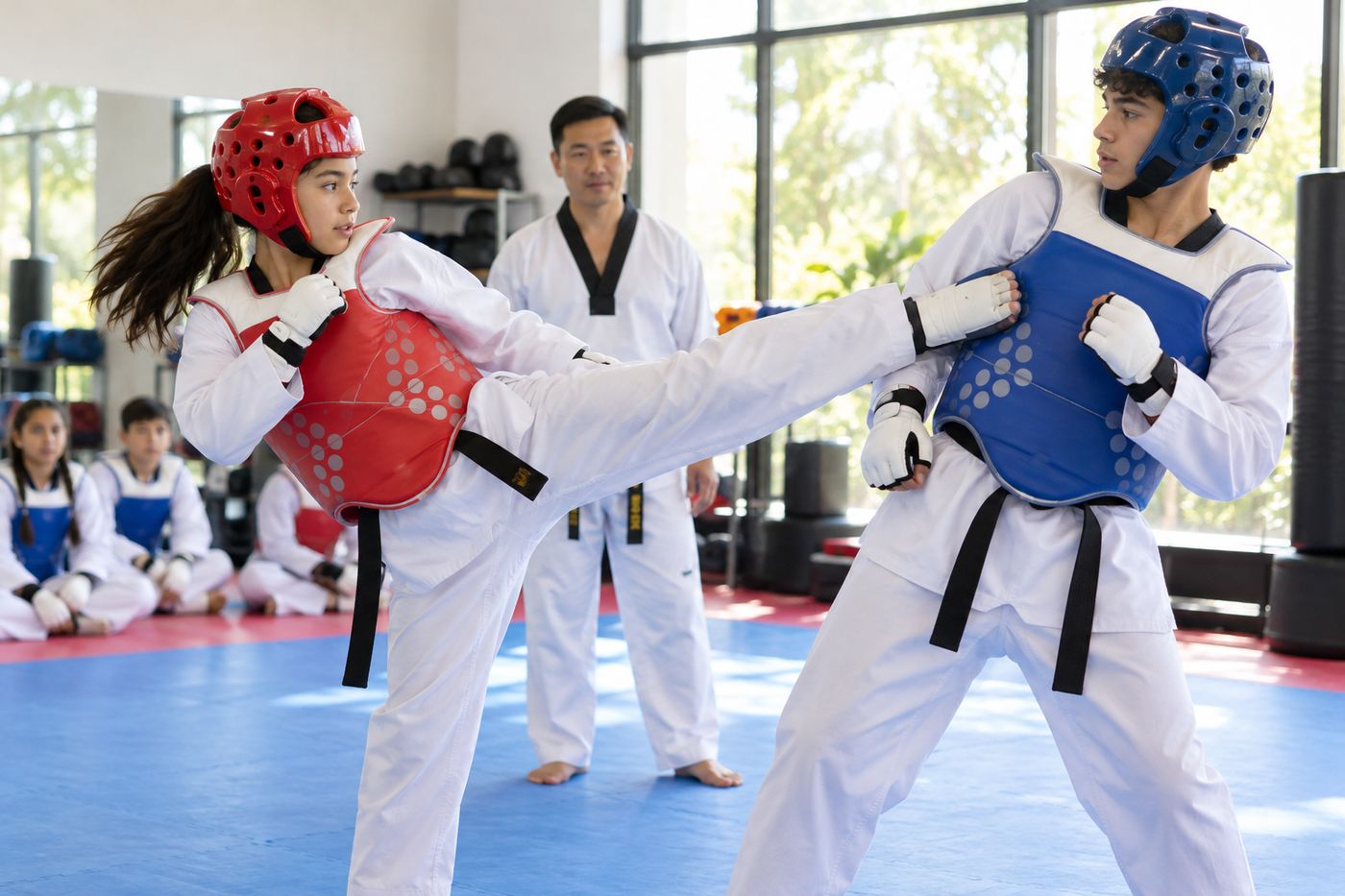
In sparring, the axe kick attacks the head from above, over an opponent’s guard. It scores as a head kick when it lands on the headgear. It is especially useful at close range, where a roundhouse kick has no room. In self-defense it is less practical, because it needs height and good balance, and it rarely appears in the Kukkiwon forms.
There are two common versions. In the inside-out axe kick, the leg swings up from the inside across the body and comes down on the target. In the outside-in version, it swings up from the outside. Some schools also teach a front-lift axe kick, which goes straight up from a chambered knee and is faster in sparring.
How to do an axe kick, step by step
- Start in a fighting stance with your guard up and your weight slightly on the front foot.
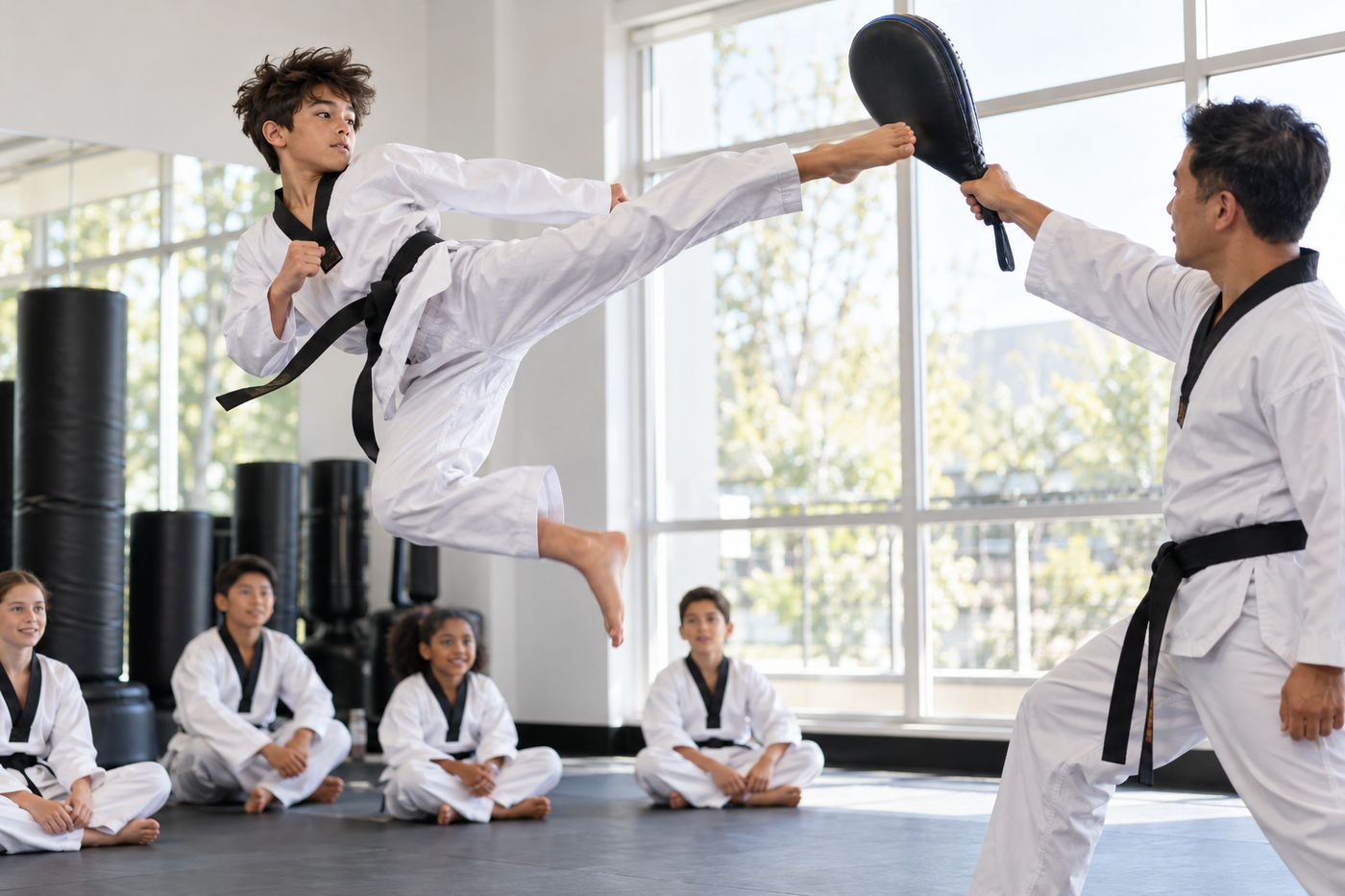
- Lift the back leg up high, keeping it nearly straight, either straight up or in a slight arc from the inside or outside. Aim to bring the foot above the height of the target.
- At the top of the lift, pull the heel down sharply onto the target, striking with the heel or the sole of the foot.
- Keep the leg under control on the way down and land in your stance, rather than letting the foot crash to the floor.
In sparring, many athletes lift the knee first and then extend the leg upward. This “chambered” axe kick is quicker and harder to read than a straight-leg swing.
Common mistakes
Kicking cold is the biggest risk. A straight-leg swing to head height puts a big stretch on the hamstrings, so always warm up and stretch before practising it.
Leaning back to get the leg higher is the next mistake. It drops the weight off the kick and makes you easy to push over. Stand tall and let flexibility, not lean, set the height. Third, students often bring the leg down loosely. The downward chop should be deliberate and controlled, both to hit with power and to avoid jarring the knee on landing. Last, a bent knee at the top means the kick will hit with the calf or fall short. Work on flexibility before trying to go higher.
Drills to practise at home
Leg swings. Stand next to a wall for balance and swing one straight leg up in front of you ten times, gradually going higher. Then swing from the inside and outside. These warm the hamstrings and build the motion.
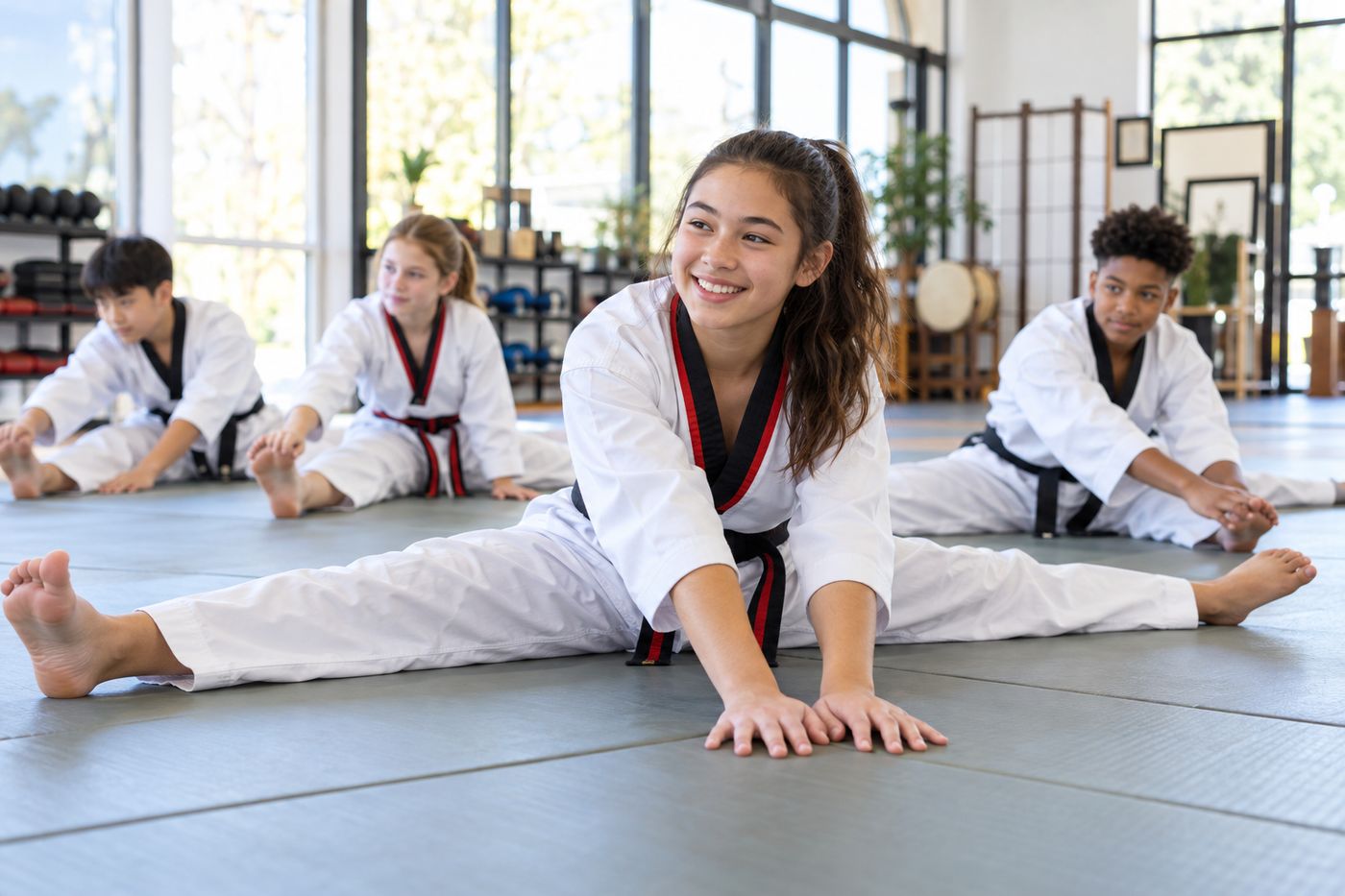
Hamstring stretches. Seated forward folds and lying hamstring stretches with a towel, held for 30 seconds each. Daily stretching makes more difference than long sessions once a week.
Chambered lifts. Lift the knee high, extend the leg upward, then bring the heel down slowly. Ten on each side.
Target drill. Hang a light target, such as a small towel, at chest height and practise bringing the heel down onto it with control.
Where it fits in your training
Schools introduce the axe kick at different points, often around green belt once students have basic flexibility. It pairs well with the roundhouse in sparring combinations. For stretches that help, see how to kick higher, and for every other kick, the kicks guide.
Questions parents and students ask
What does naeryeo chagi mean?
Naeryeo means downward and chagi means kick. The axe kick lifts the leg high above the target and brings the heel or sole down onto it, like the swing of an axe.
Is the axe kick allowed in sparring?
Yes, it is legal in Olympic-style sparring and scores to the head when it lands on the headgear. Many junior divisions restrict head contact, so check your competition's rules.
How flexible do you need to be for an axe kick?
Enough to lift a straight leg to at least head height. Most students need several months of regular hamstring stretching. Never force the leg up cold; warm up first.