On this page
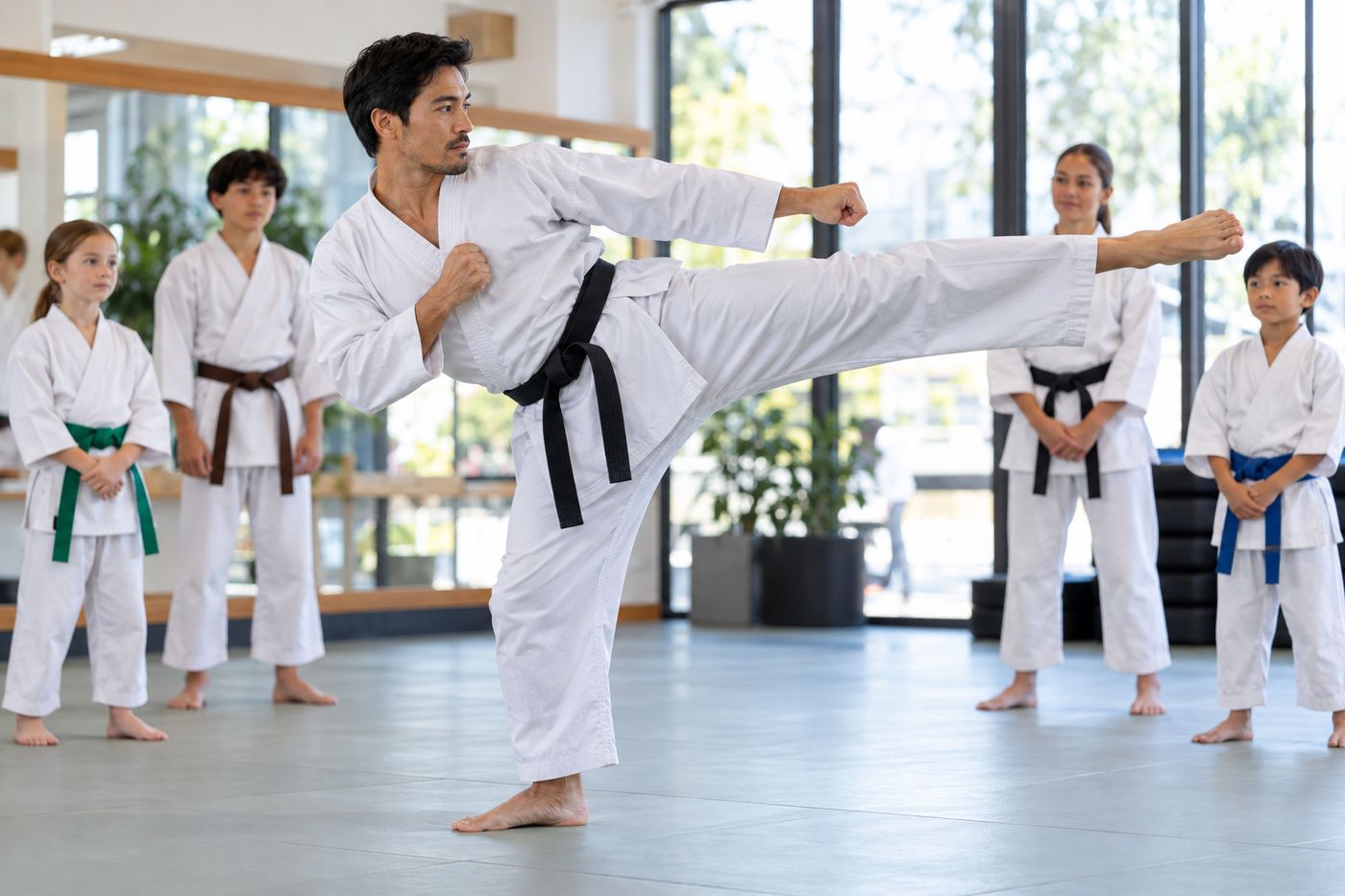
The side kick, yeop chagi (옆차기), is the most powerful basic kick in Taekwondo and usually the hardest for new students to master. It drives the heel straight out to the side with the whole weight of the body behind it, which is why it is the go-to kick for board breaking. It is also unforgiving: if the hip does not turn over or the standing foot does not pivot, the kick looks wrong immediately. Most students spend months on it, and a good one is a reliable sign of real progress.
What the side kick is used for
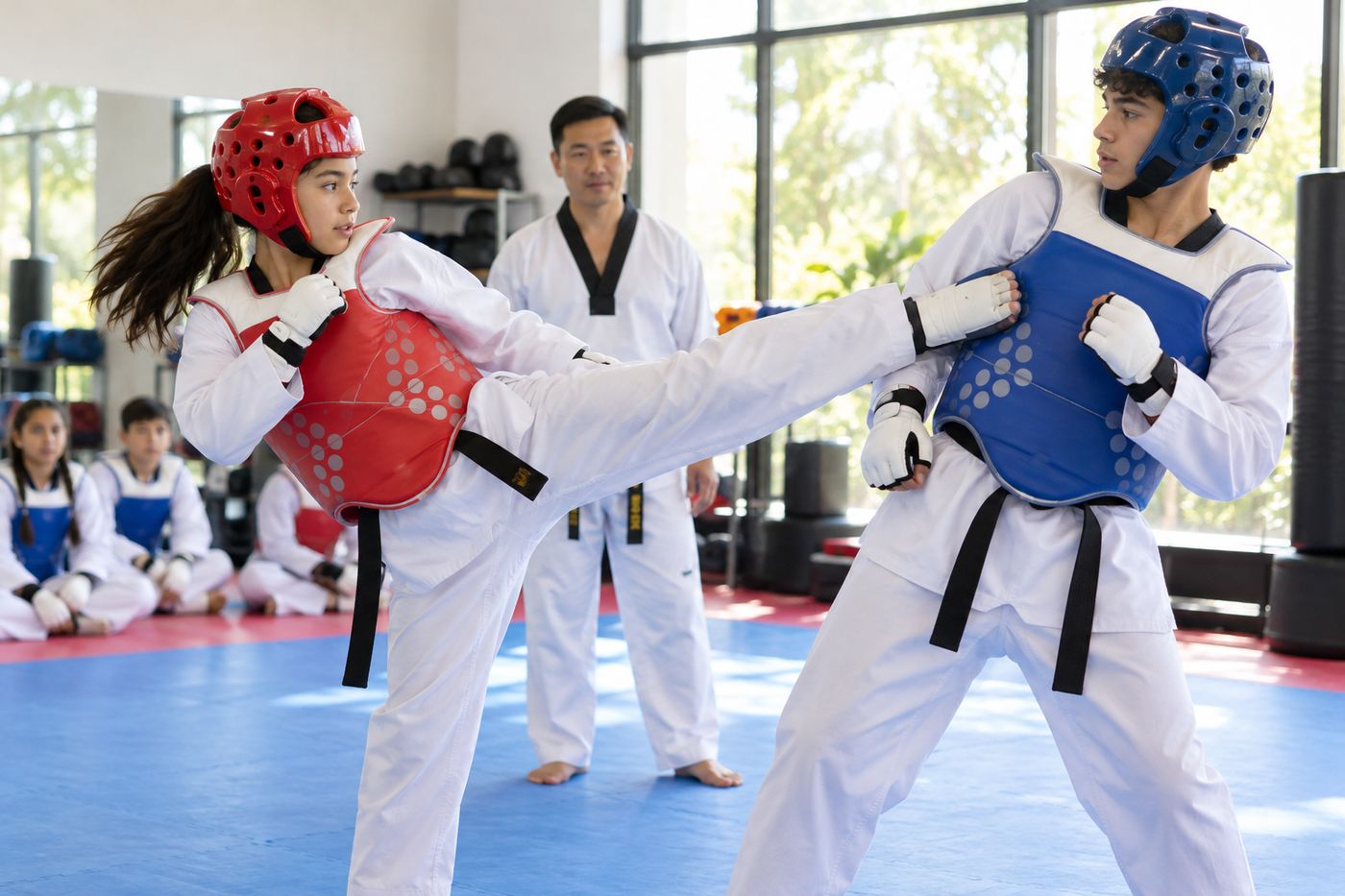
The side kick strikes in a straight line to the side, with the body turned away from the target. In forms, it first appears in Taegeuk Sa Jang and returns in many later forms. In breaking, it is the classic technique for going through one or more boards. In sparring, it works as a stopping kick against an opponent who rushes in, and to score on the body.
How to do a side kick, step by step
- Start in a fighting stance with your side toward the target and your guard up.
- Lift the kicking knee up across your body toward your chest, with the foot flexed and the heel pointed at the target. This tight chamber is the key to the whole kick.
- Pivot the standing foot so the heel points toward the target, turning nearly 180 degrees. At the same time, turn the hip over so the kicking leg lines up with your body.
- Drive the heel straight out to the target in a line, pushing the hip into the kick. At full extension your head, hip and heel should form a straight line, with the toes of the kicking foot pointing slightly down.
- Pull the leg straight back to the chamber, then set it down in your stance.
Look at the target over your front shoulder the whole time. If you lose sight of the target, the hip has turned too far or not enough.
Common mistakes
The most common mistake is not turning the hip over, which turns the side kick into a sloppy roundhouse. If your toes point up at the ceiling at full extension, the hip has not turned. Aim to have the toes level or pointing slightly down.
The second is not pivoting the standing foot enough. If the standing foot stays pointing at the target, the hip cannot turn. The third is chambering low and kicking up in an arc. A side kick should travel straight from the chamber to the target, so lift the knee to the height you want to kick first. Last, students often lean far away from the target. Some lean is necessary, but if the head drops below the hip, the power goes up into the air rather than into the target.
Drills to practise at home
Wall-supported side kicks. Stand side-on to a wall, hold it with one hand and slowly extend a side kick along the wall. Hold the kick out for three seconds. The wall keeps the leg in line and shows whether the hip is turned over.
Chamber and pivot. Lift into the tight chamber and pivot the standing foot, then set the foot down without kicking. Ten on each side.
Slow extensions. Kick in slow motion, taking four seconds to extend and four to return. This builds the hip and core strength that height depends on.
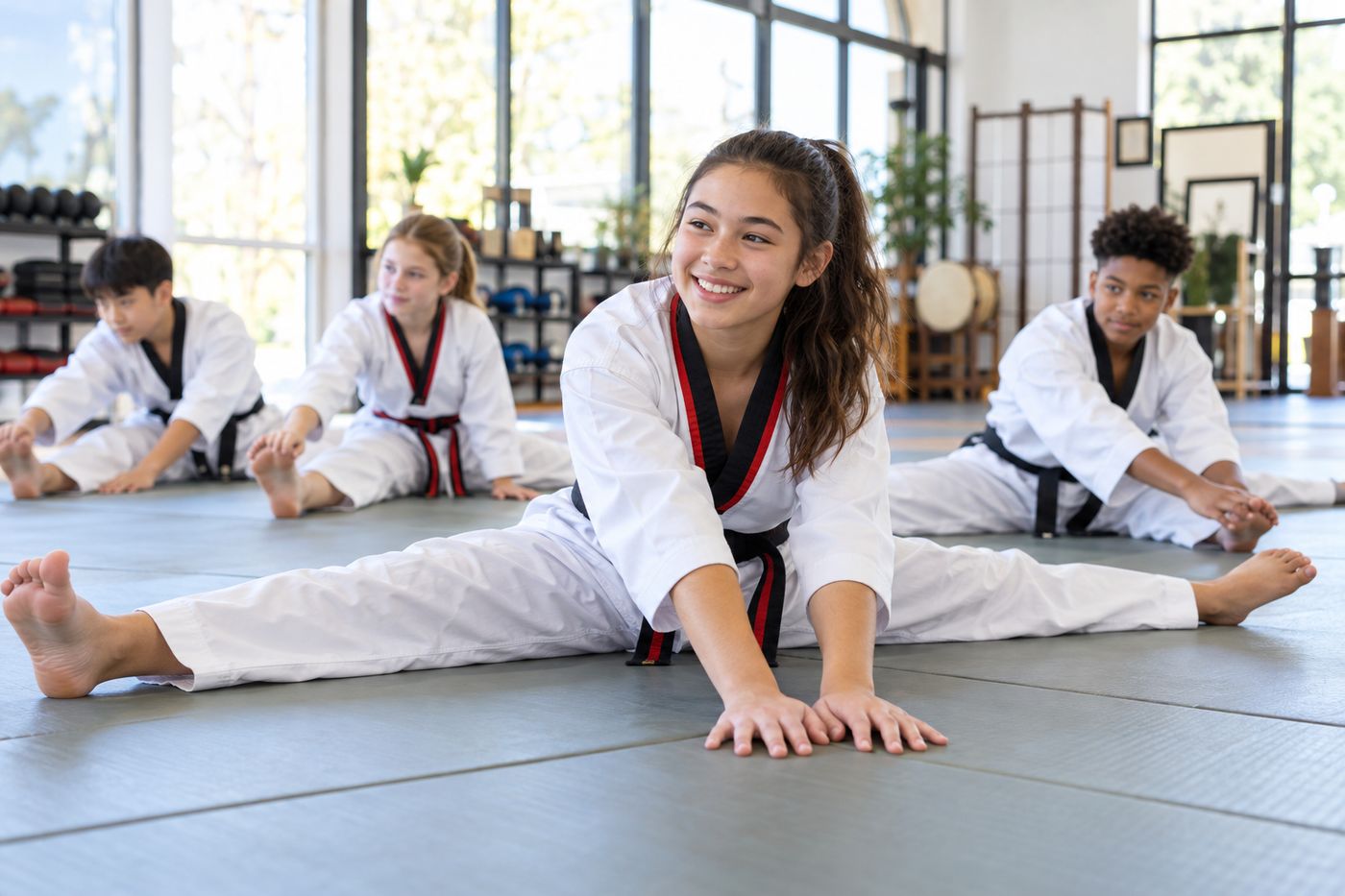
Flexibility work. The side kick rewards open hips more than any other kick. See our guide to kicking higher for stretches that help.
Where it fits in your training
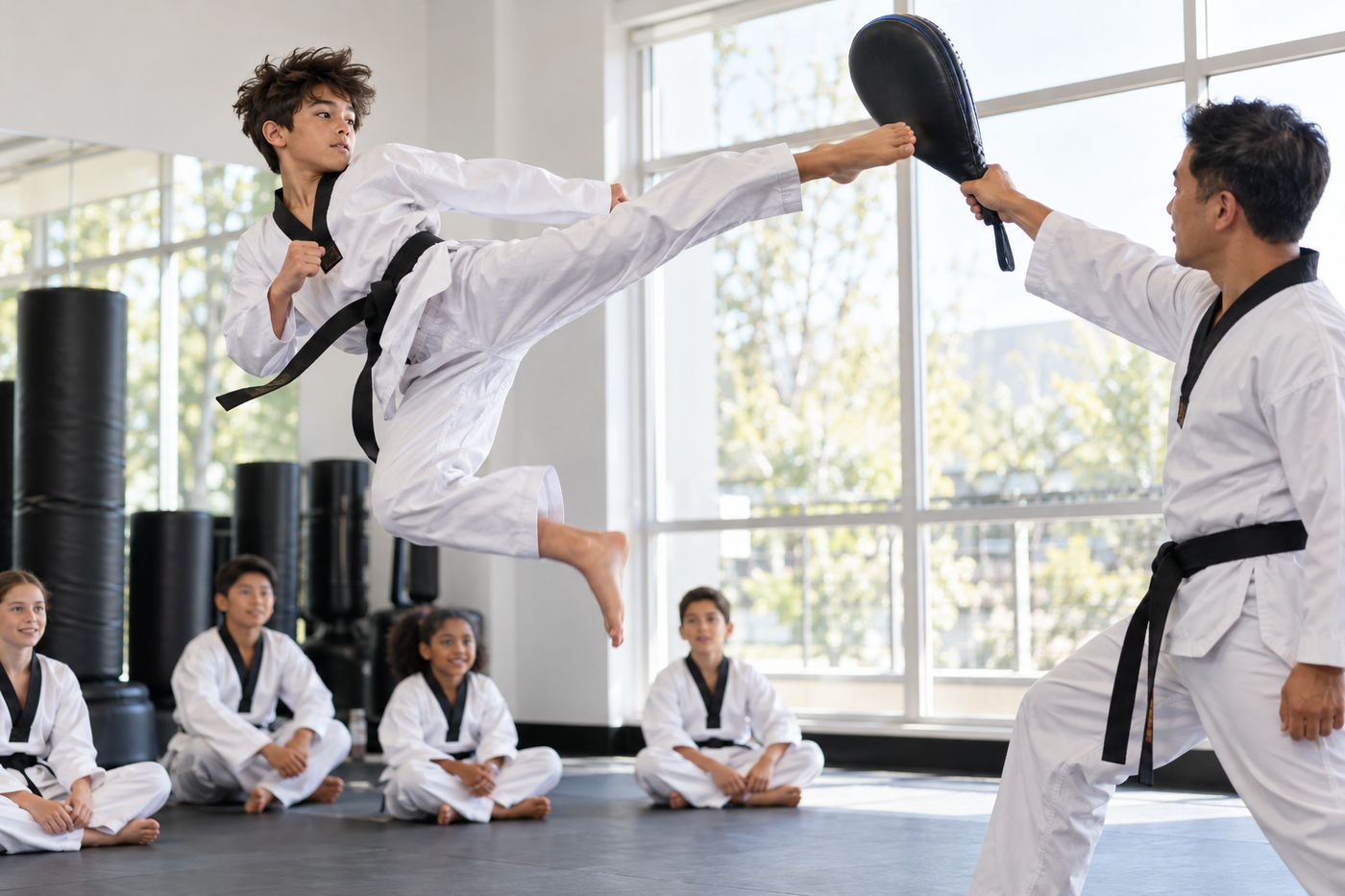
Most schools teach the side kick around orange or green belt, and it is tested on pads and in breaking from then on. It leads into the jumping side kick and the pushing side kick used in sparring. For every other kick and the belt each is usually learned at, see our guide to Taekwondo kicks.
Questions parents and students ask
What part of the foot do you use for a side kick?
The heel or the outside edge of the foot (balnal), with the toes pulled back and the foot flexed. The heel gives the most power for breaking; the edge is the traditional striking surface in forms.
Why is the side kick so hard?
Because the hip has to turn fully over, the standing foot has to pivot almost all the way round, and the leg extends in a straight line. It takes more hip flexibility and balance than the front or roundhouse kick.
Is the side kick used in sparring?
Yes, mostly as a stopping kick to keep an opponent away and to score on the body. A related pushing version (yeop mireo chagi) is common for creating distance.