| Hapkido for kids | |
|---|---|
| Starting age | About 5 or 6 |
| Focus | Escapes, joint locks, throws, kicks |
| Competition | Rare |
| Ranks | Colored belts, vary by school |
| Typical cost | $100 to $250 a month |
Pick by goal
- Self-defense with kicks and locksHapkidoCovers striking and grappling in one art.
- Sport and Olympic pathTaekwondoHapkido has few competitions.
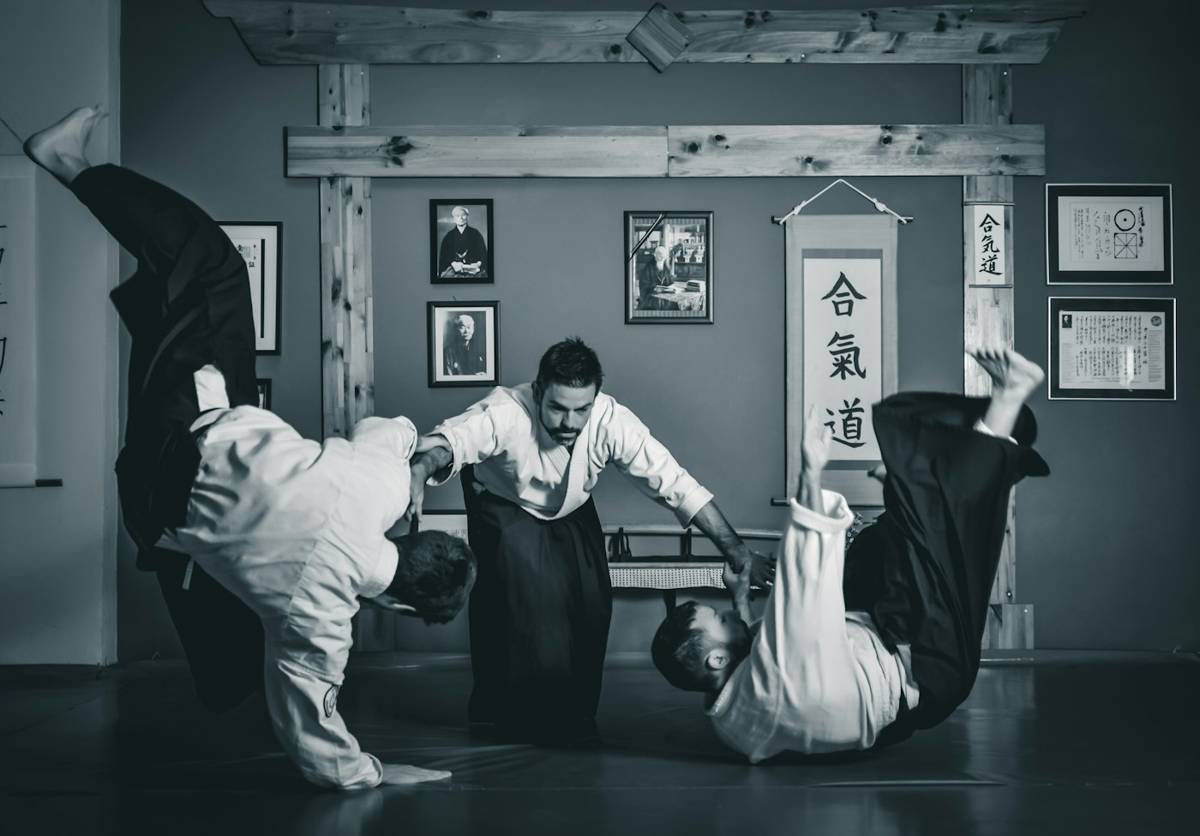
- Gentle locks and throws, no kicksAikidoSofter, cooperative practice.
On this page
If your child already trains in Taekwondo, you may see “hapkido” on the schedule or the school sign. Hapkido is Taekwondo’s self-defense cousin from Korea, and many schools teach both. On its own, it is a complete martial art that blends joint locks, throws and kicks into practical self-protection.
What hapkido is
Hapkido took shape in Korea after 1945. It is usually traced to Choi Yong-sul, who had trained in the Japanese art of Daito-ryu aiki-jujutsu, and to Korean students who added kicks and striking from Korean traditions. The name is often translated as “the way of coordinated energy”, and it uses the same characters as the Japanese word aikido, a reminder of their shared roots.
What hapkido teaches
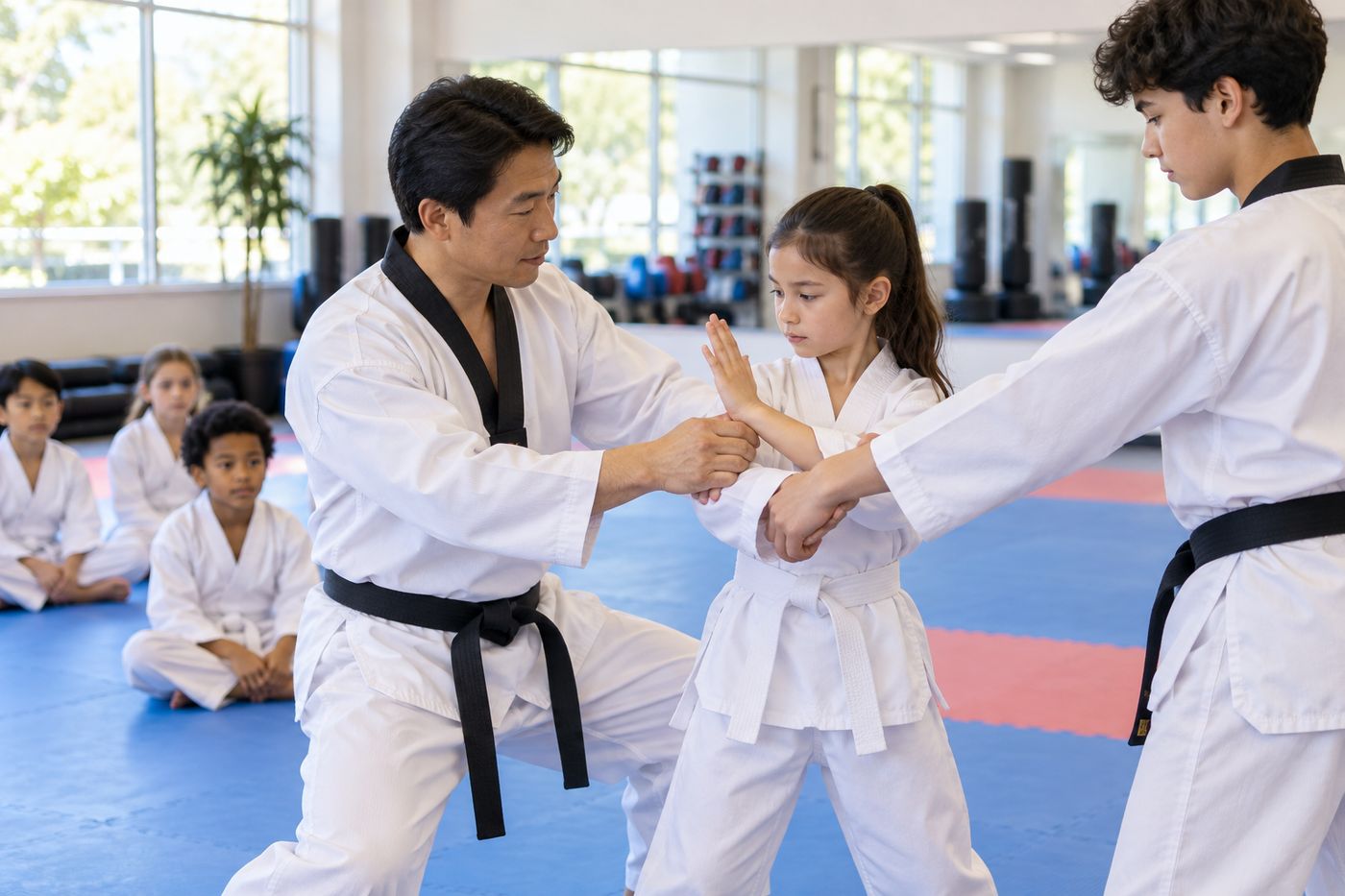
Hapkido combines several skill sets. Joint locks on wrists, elbows and shoulders are its signature, along with escapes from grabs and holds, throws and takedowns, breakfalls for landing safely, and kicks and strikes similar to Taekwondo. Advanced students learn to use everyday objects such as a cane or a belt for defense. The emphasis is on redirecting an attacker’s force rather than meeting it head on.
How it compares with Taekwondo and aikido
Compared with Taekwondo, hapkido spends far less time on sport kicking and forms, and far more on close-range self-defense. Compared with aikido, it uses more strikes and kicks and is more direct. Many Taekwondo schools add hapkido classes so students learn grappling and self-defense alongside their kicking.
What kids’ classes look like
Children’s classes usually include a warm-up, rolling and breakfall practice, escapes from wrist grabs and bear hugs, simple throws on mats, kicking drills and self-defense scenarios such as what to do if someone grabs your arm. Joint locks are introduced gently, with partners tapping to signal stop, and young children focus more on escapes than on locks.
Belts and safety
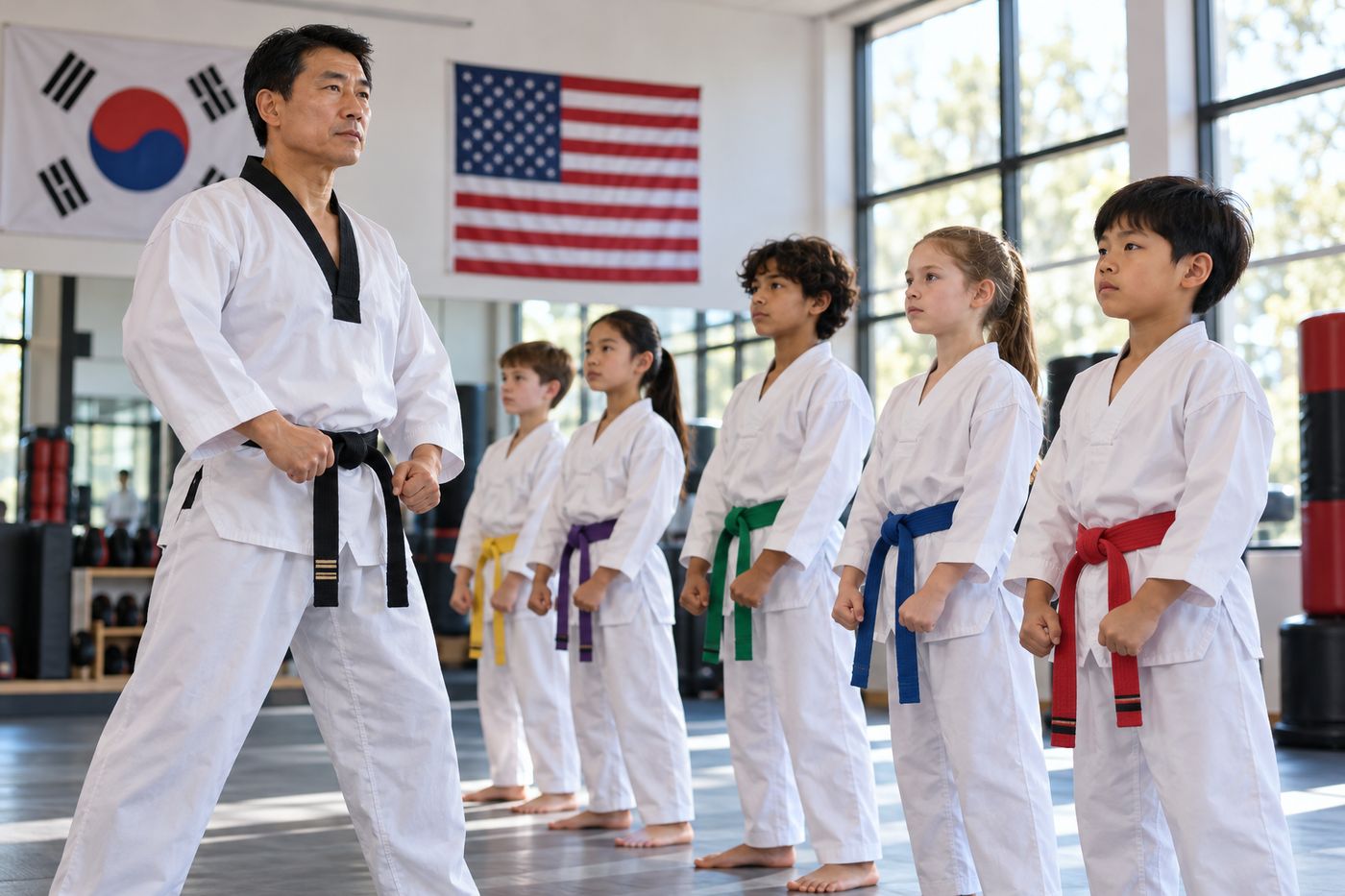
Hapkido uses colored belts below black belt, much like Taekwondo, with colors and requirements set by each organization or school. Because joint locks can injure growing joints if applied hard, ask how the school adapts techniques for children, how partners are matched and how carefully drills are supervised.
Costs
Hapkido classes are usually priced like Taekwondo classes, and at combined schools they may be included in the same membership or offered as an add-on. See our cost by style guide.
How to spot a good hapkido school
Hapkido has no single world body, so quality varies more than in Olympic sports. Ask which federation or association the instructor is ranked with and how long they have taught children. Watch how joint locks are practised: in a good kids’ class, partners apply locks slowly and let go the moment their partner taps, and younger children spend more time on falls, escapes and kicks than on locks. Many hapkido schools also teach Taekwondo, which is fine, but check that the hapkido class has its own curriculum rather than being Taekwondo with a few wrist grabs added. Our hapkido profile lists the signs of a good school and the red flags.
Is hapkido right for your child?
Hapkido suits children and teens who want practical self-defense with the structure of a Korean belt system, and Taekwondo students who want to round out their skills. For comparison, see the best martial art for bullying and our overview of the best martial art for kids.
For the facts at a glance, a parent scorecard and what a typical class looks like, see our Hapkido profile.
Questions parents and students ask
Is hapkido good for kids?
Hapkido can be great for confidence, falling safely and self-defense skills such as escaping grabs. Joint locks should be taught gently to children, and good schools keep partner work controlled.
What is the difference between hapkido and Taekwondo?
Taekwondo focuses on kicking and has an Olympic sport side. Hapkido focuses on self-defense, combining joint locks, throws, escapes and strikes, and has no Olympic competition.
Does hapkido have belts?
Yes. Hapkido uses colored belts below black belt, similar to Taekwondo, though colors and requirements vary by organization and school.