| Foil | Epee | Sabre | |
|---|---|---|---|
| Target | Torso | Whole body | Above the waist, incl. head and arms |
| Scores with | Point | Point | Point and edge |
| Right of way | Yes | No | Yes |
| Feel | Precise, tactical | Patient, timing | Fast, explosive |
Pick by goal
- First weaponWhatever the club teaches beginnersOften foil; switching later is common.
- College recruitingA club with a competitive youth teamResults and ratings matter.
- BudgetA club that lends gearDelay the $250 to $500 starter set.
On this page
Fencing is a combat sport with swords, and it is also one of the safest. It has been part of every modern Olympic Games since 1896 and is often described as “physical chess” because it rewards quick thinking as much as speed. For children who like strategy, focus and a touch of adventure, it can be a wonderful choice.
The three weapons
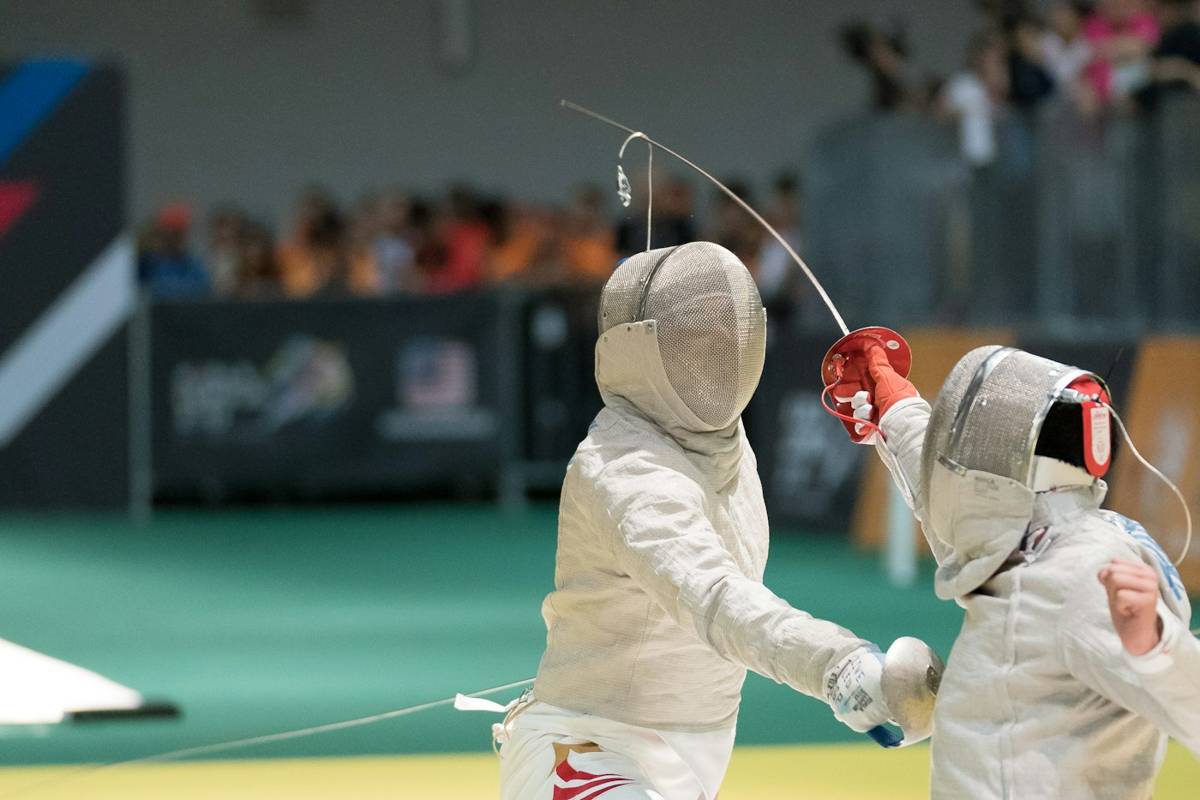
Fencing uses three weapons, each with its own rules. Foil is a light weapon; touches are scored with the point, only on the torso, and “right of way” rules decide who scores when both fencers hit. Épée is heavier; touches are scored with the point anywhere on the body, and there is no right of way, so whoever hits first scores, and both can score together. Sabre scores with the edge or point anywhere above the waist, uses right of way and is the fastest of the three.
How a bout works
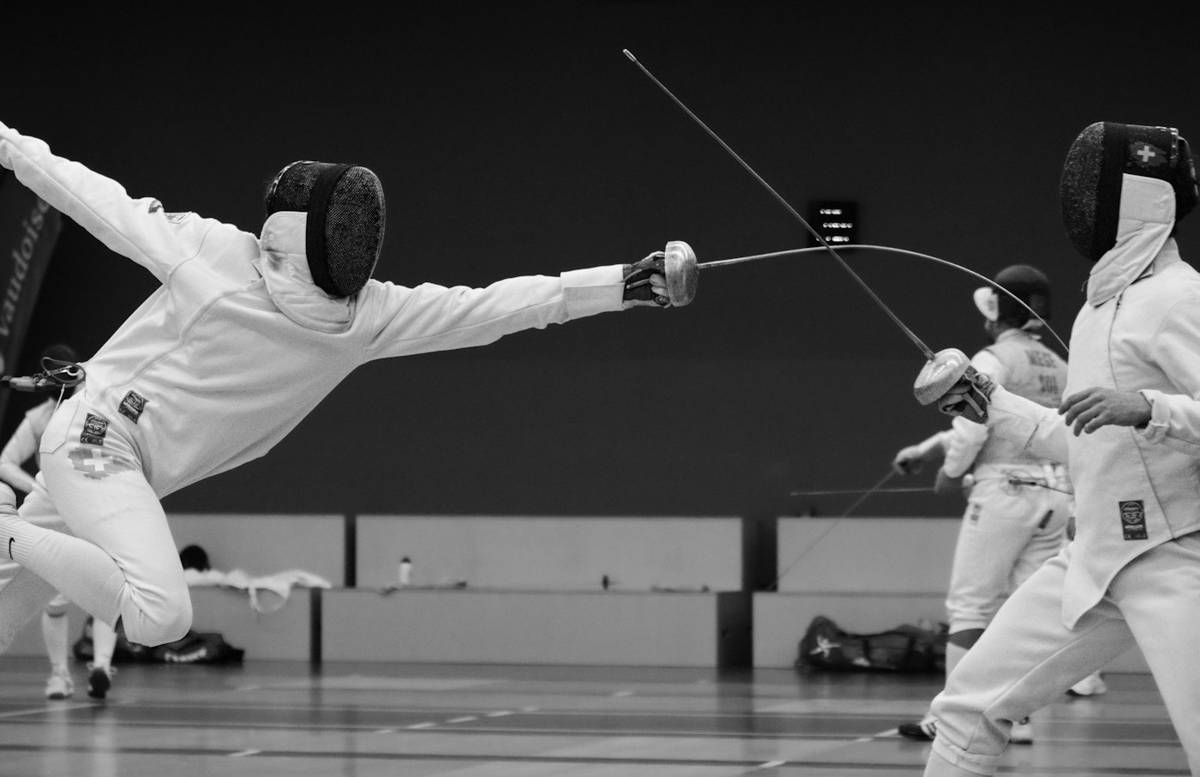
Fencers face each other on a long, narrow strip called the piste. Electric scoring equipment connects each fencer’s weapon to a scoring box that lights up when a valid touch lands. A referee manages the bout. Touches come quickly, and bouts are short, which keeps children engaged.
What kids’ classes look like
Classes usually include a warm-up and footwork drills (advances, retreats and lunges), blade work with a partner or coach, and then bouts. Young beginners may start with plastic equipment and games. Many clubs offer private lessons with a coach alongside group classes, which is common in fencing.
Safety
Fencers wear a mesh mask, a padded jacket, an underarm protector (plastron), a glove and breeches, and girls and women add chest protection. Equipment is tested to safety standards for competition. With proper gear and supervision, fencing has a low injury rate compared with many youth sports.
Equipment and costs
Clubs usually lend equipment to beginners. Once a child commits, families buy their own gear, which can cost a few hundred dollars for a starter set, and electric equipment for competition adds more. Club fees vary widely, and private lessons and travel to tournaments can make competitive fencing one of the more expensive youth sports.
Competitions and college
USA Fencing, the national governing body, runs youth competitions in age categories such as Y10, Y12 and Y14, as well as cadet and junior events, from local tournaments to national championships. Fencing is also an NCAA sport at a few dozen colleges, and strong fencers can be recruited.
How to choose a club
Look for coaches certified by USA Fencing, a structured youth program, enough strips and equipment for children to fence plenty, and a friendly club culture. Ask which weapons the club specialises in, what equipment you need to buy and when, and what typical monthly and tournament costs look like.
Ratings, explained
US fencers earn a rating letter from their results at sanctioned tournaments, from E up to A, with U meaning unrated. A rating depends on the strength of the event and where the fencer finishes, and it lasts several years before it needs renewing. Most children start unrated and earn an E or D after a season or two of regular local events. Parents sometimes treat ratings like belts, but they work differently: they reflect results against other fencers, not a test of skills, so a child can be technically strong and still unrated if they have not competed much. For youth fencers, there are also age-group events and national points lists. Our fencing profile has the words and gear you will meet first.
Is fencing right for your child?
Fencing suits thoughtful, competitive children who enjoy strategy and quick reactions. It does not teach hand-to-hand self-defense, so compare judo or BJJ if that is a priority. For a wider comparison, see the best martial art for kids.
For the facts at a glance, a parent scorecard and what a typical class looks like, see our Fencing profile.
Questions parents and students ask
What age can kids start fencing?
Many clubs start children from about seven to nine, and some offer introductory classes with plastic equipment for younger children. Youth competitions in the US include age groups such as Y10, Y12 and Y14.
Is fencing safe?
Yes. With proper masks, jackets and gloves, fencing has a low injury rate compared with many youth sports. Most injuries are sprains and strains rather than cuts or blows.
Which fencing weapon should my child start with?
Many clubs start children with foil, and some specialise in épée or sabre. The club's coaching strengths usually decide; children can switch later.