On this page
The push kick, mireo chagi (밀어차기), is one of the least glamorous kicks in Taekwondo and one of the most useful. It does not score points and it rarely appears in highlight videos. What it does is control the match: it stops an opponent rushing in, knocks them off rhythm and opens the distance for your own scoring kicks. Coaches love it because the students who use it well tend to win more of their sparring rounds.
What the push kick is used for
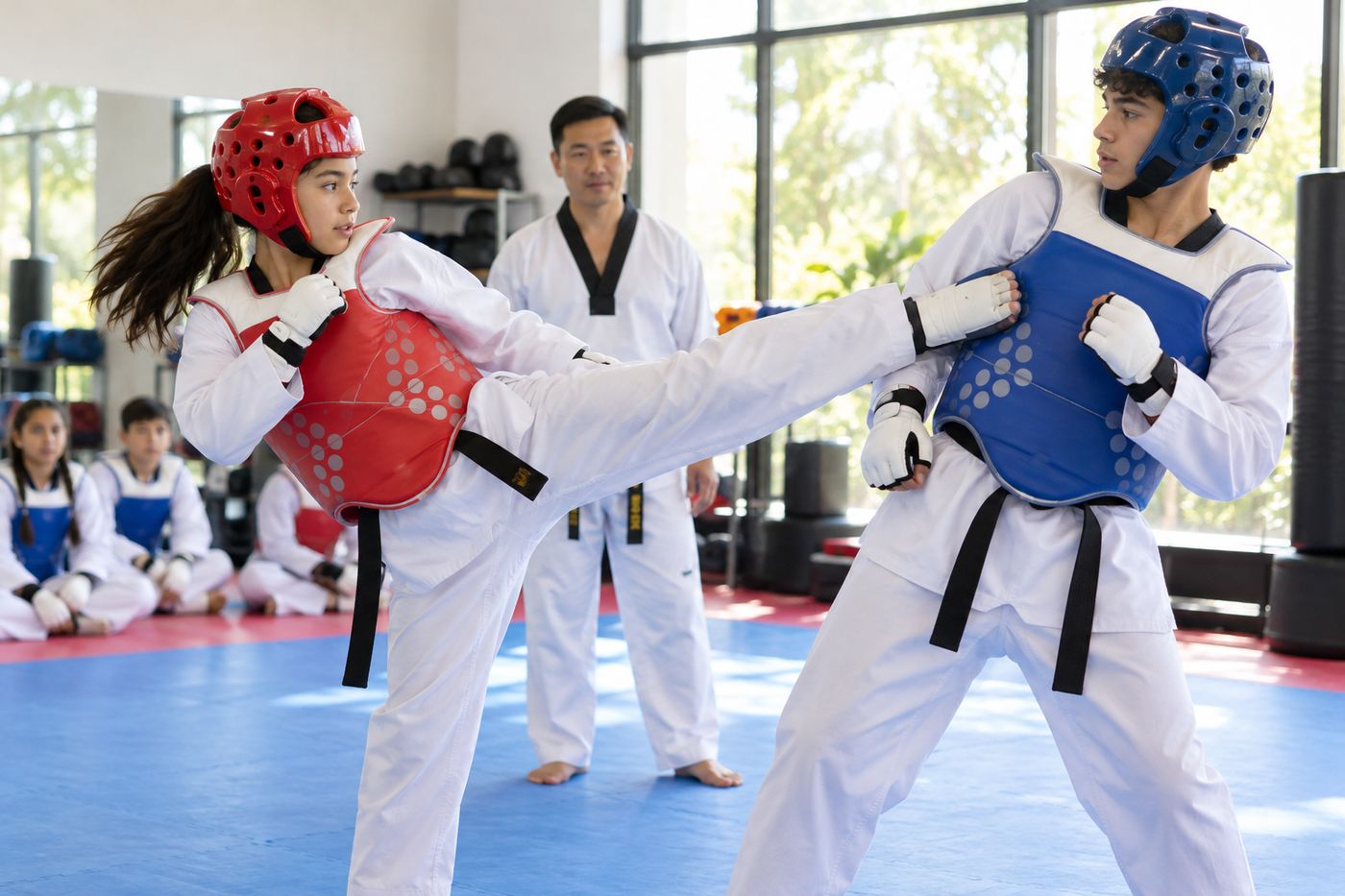
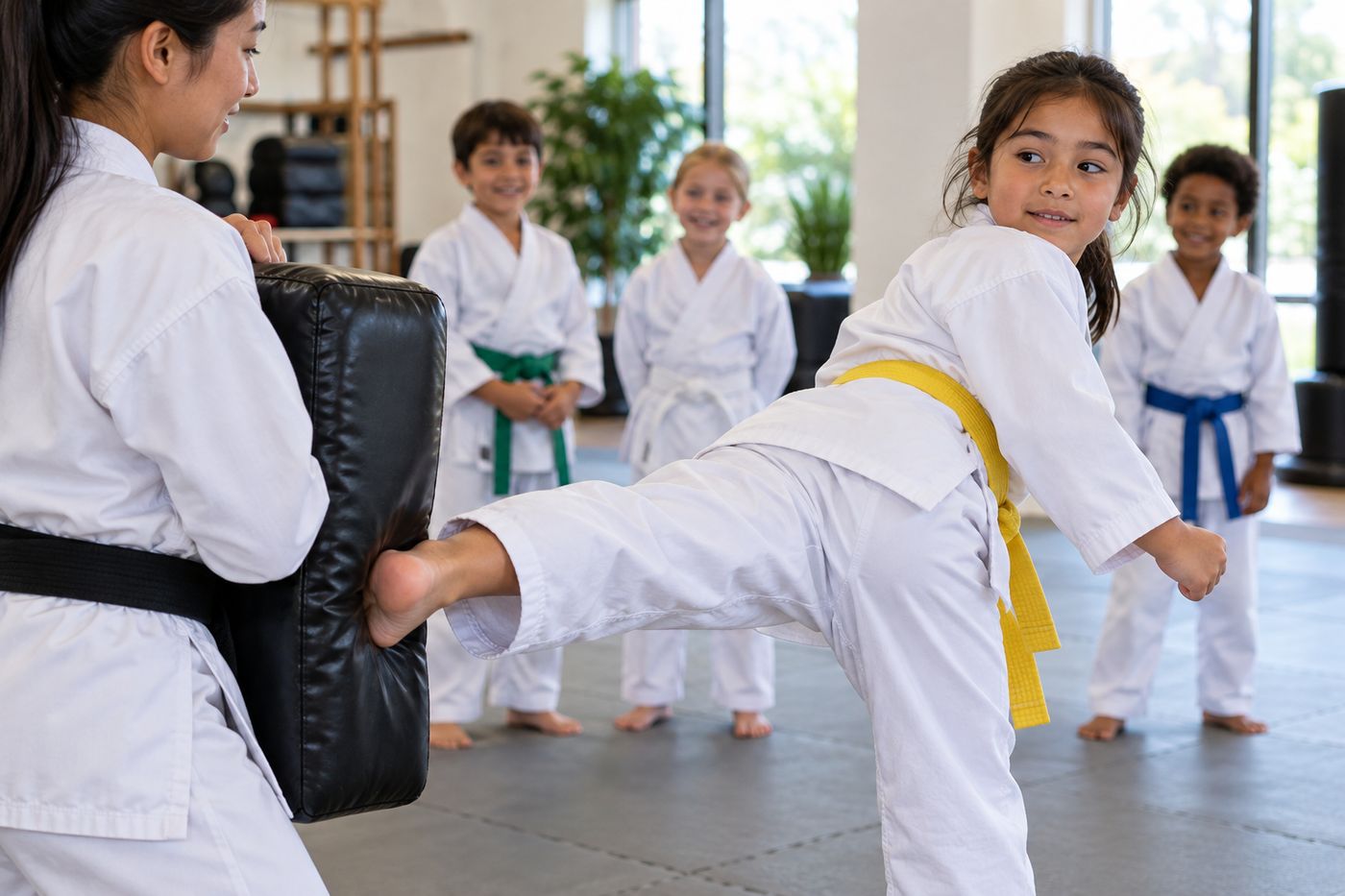
The push kick drives the sole of the foot into the opponent’s chest protector or stomach and pushes, rather than snapping. In sparring, it is used to stop an attack before it starts, to push an opponent toward the edge of the ring, or to create space before throwing a roundhouse or back kick. In self-defense it can push an attacker away to make room to escape.
How to do a push kick, step by step
- Start in a fighting stance, guard up. You will usually kick with the front leg.
- Lift the front knee up toward your chest, with the foot flexed and the sole facing the target.
- Drive the sole of the foot straight forward into the target, pushing the hip forward behind it. The kick is a push, so extend through the target rather than snapping back.
- Shift your weight slightly forward over the standing foot as you push, keeping your balance.
- Bring the leg back and set it down in your stance, or step forward into your next technique.
The whole body pushes, not just the leg. Imagine shoving a heavy door open with your foot.
Common mistakes
Treating it as a front kick is the most common error. A front kick snaps back; a push kick extends and pushes. If the opponent does not move backward, it was not a push.
The second is leaning back. If the upper body falls away, there is no weight in the push and you may be the one who gets pushed. Keep the shoulders over the hips. Third, students often telegraph the kick by shuffling or dropping their hands first. The push kick works best when it is quick and comes straight from the stance. Last, a low knee lift turns the kick into a shove to the thigh, which does little. Lift the knee to the height of the target.
Drills to practise at home
Wall pushes. Stand facing a wall a leg’s length away, lift the knee and push the sole into the wall, holding for two seconds. This trains the push and the weight shift.
Balance holds. Lift into the chamber and hold for ten seconds on each leg. Good balance makes the push kick quick and stable.
Partner push. If a family member can hold a big cushion against their chest, push them back gently with the sole of the foot. Feeling them move teaches the difference between pushing and kicking.
Push and follow. Practise a front-leg push kick followed immediately by a back-leg roundhouse. This is one of the most common combinations in sparring.
Where it fits in your training
The push kick is usually taught at green belt, when sparring begins. Learn more about how matches work in our sparring rules and gear guide, and see every other kick in the kicks guide.
Questions parents and students ask
What is a push kick in Taekwondo?
A kick that pushes the opponent away with the sole of the foot rather than striking. It is used to stop an attack, break the opponent's rhythm and create distance for your own kicks.
Does a push kick score points?
Rarely. The electronic chest protector needs a hit of enough force, and a push usually does not register as one. Its value is tactical: it sets up scoring kicks and stops the opponent from closing in.
Should a push kick use the front leg or back leg?
Usually the front leg, because it is quicker and closer to the opponent. A back-leg push kick is stronger but slower and easier to see.