On this page
Karate belts look simple from the lobby: a white belt on the first day and a black belt at the end. In between, though, every style and often every school does things a little differently. Understanding the logic behind the system helps parents set realistic expectations, cheer the right milestones and spot a school whose promotions seem too fast or too slow.
Kyu and dan: how ranks are counted
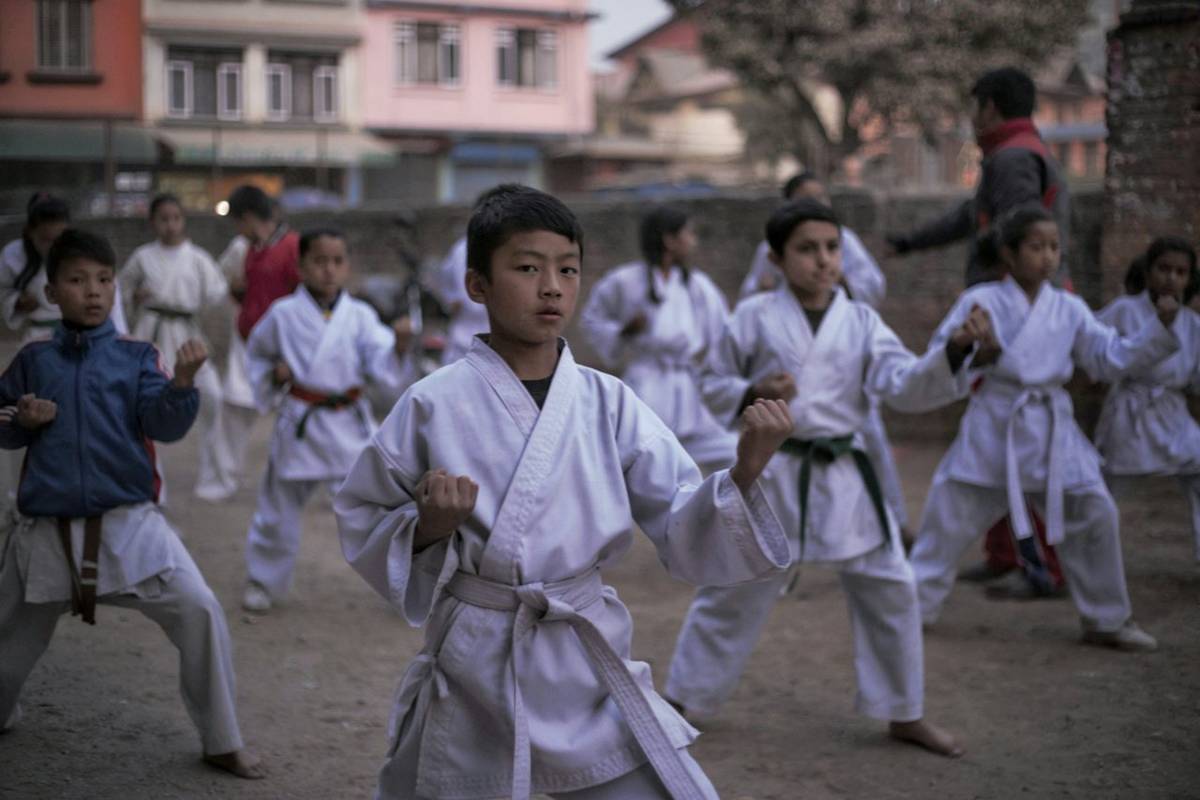
Traditional karate uses two kinds of rank. Students below black belt hold kyu grades, which count down toward black belt, so a beginner might be 10th kyu and a student just below black belt is 1st kyu. Once a student reaches black belt, they hold dan grades, which count up: 1st dan (shodan), 2nd dan (nidan) and so on. The colored belts are simply a visual way of showing the kyu grade, which is why the colors vary so much while the counting stays the same.
A common belt order
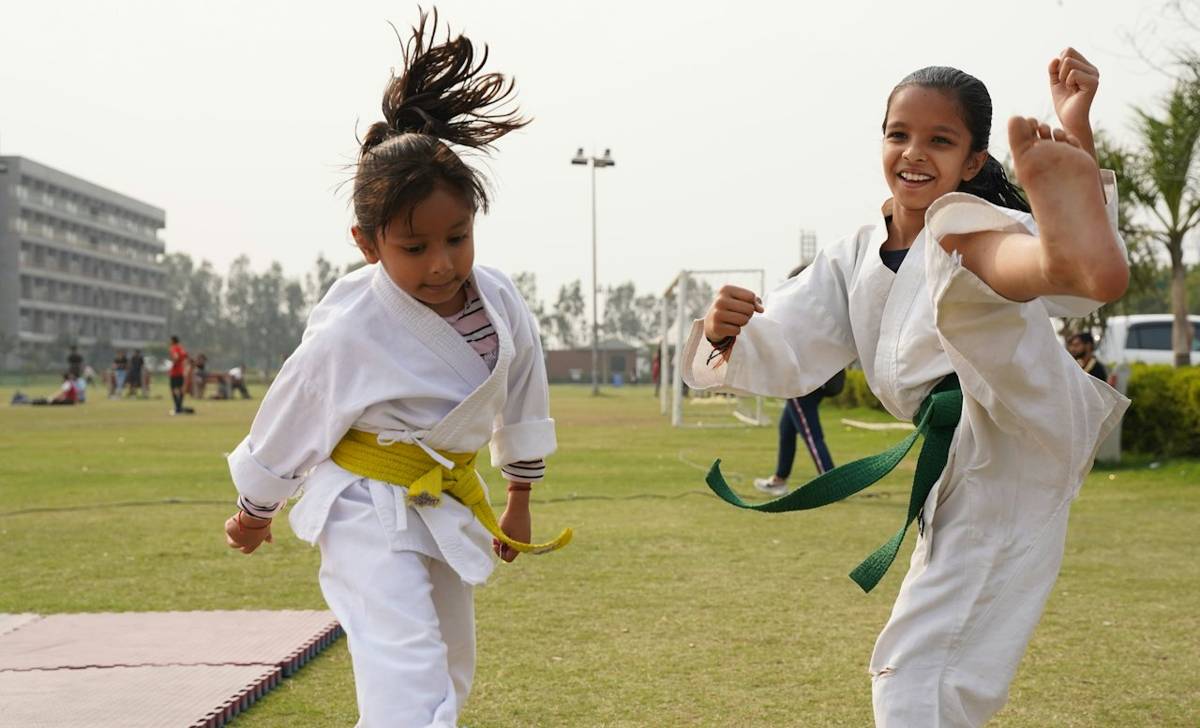
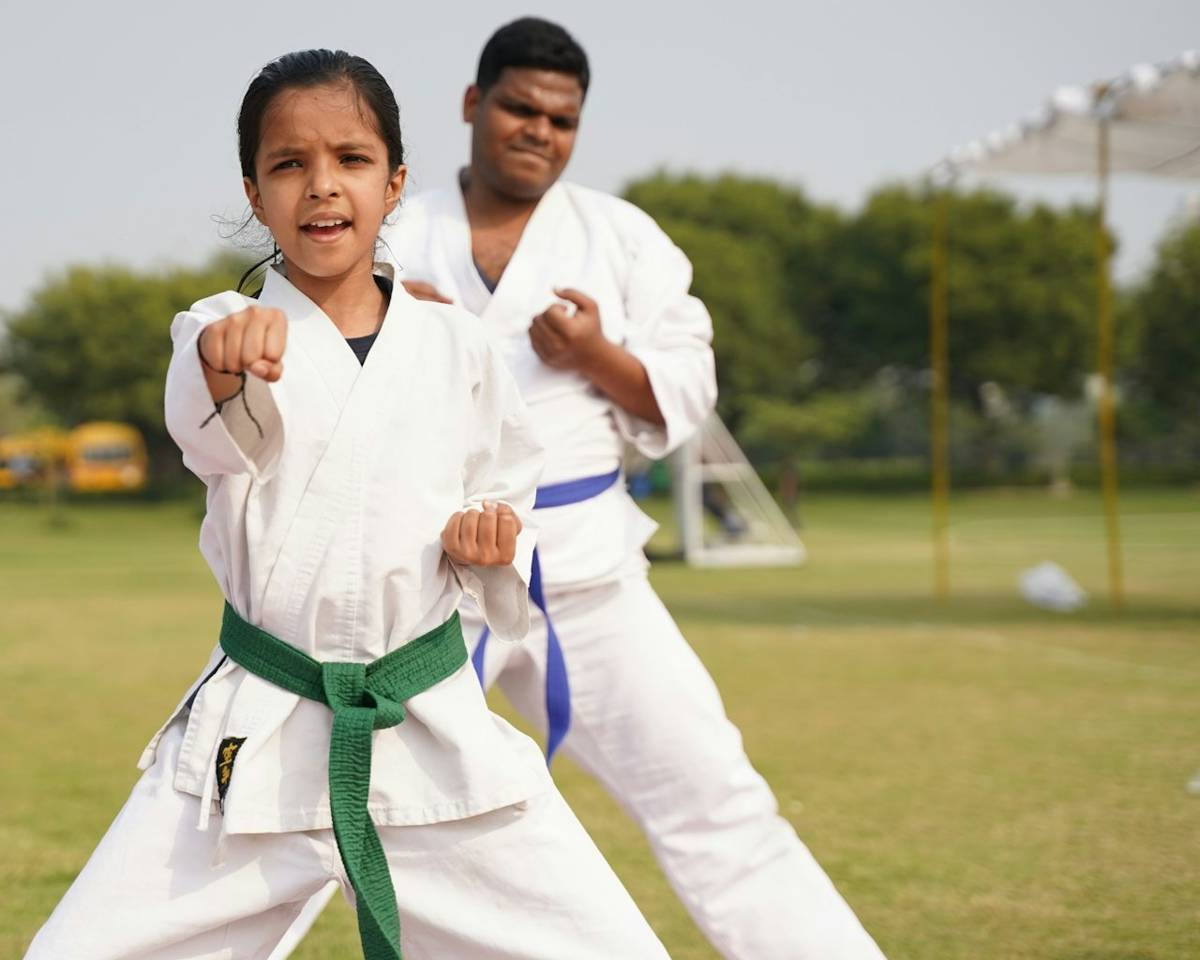
There is no single karate belt order. Many American schools use something close to white, yellow, orange, green, blue, purple, brown and black, sometimes with red, grey or extra shades of brown added. The Japan Karate Association and many traditional Shotokan groups use fewer colors and rely more on the kyu number. Children’s programs often add stripes of tape or half-colored belts between full ranks, because young students need a visible reward more often than adults do.
If your child changes schools, expect their rank to be reviewed. A green belt from one dojo may be placed differently in another, especially if the style changes.
Kata at each stage
Kata are the heart of a karate belt test. Each style has its own syllabus, but beginners in most styles start with short, simple forms and move on to longer, more complex ones.
In Shotokan, the most widely practised style, students usually learn the five Heian kata (Heian Shodan to Heian Godan) as colored belts, followed by Tekki Shodan and then more advanced forms such as Bassai Dai, Kanku Dai, Jion and Empi around brown and black belt. Shito-ryu and Wado-ryu teach the same basic series under its older Okinawan name, Pinan. Goju-ryu begins with Gekisai Dai Ichi and Gekisai Dai Ni, then forms such as Saifa, and places special weight on Sanchin, a slow breathing kata that builds strength and posture. Kyokushin schools start with the Taikyoku series and then learn the Pinan forms.
What a belt test usually includes
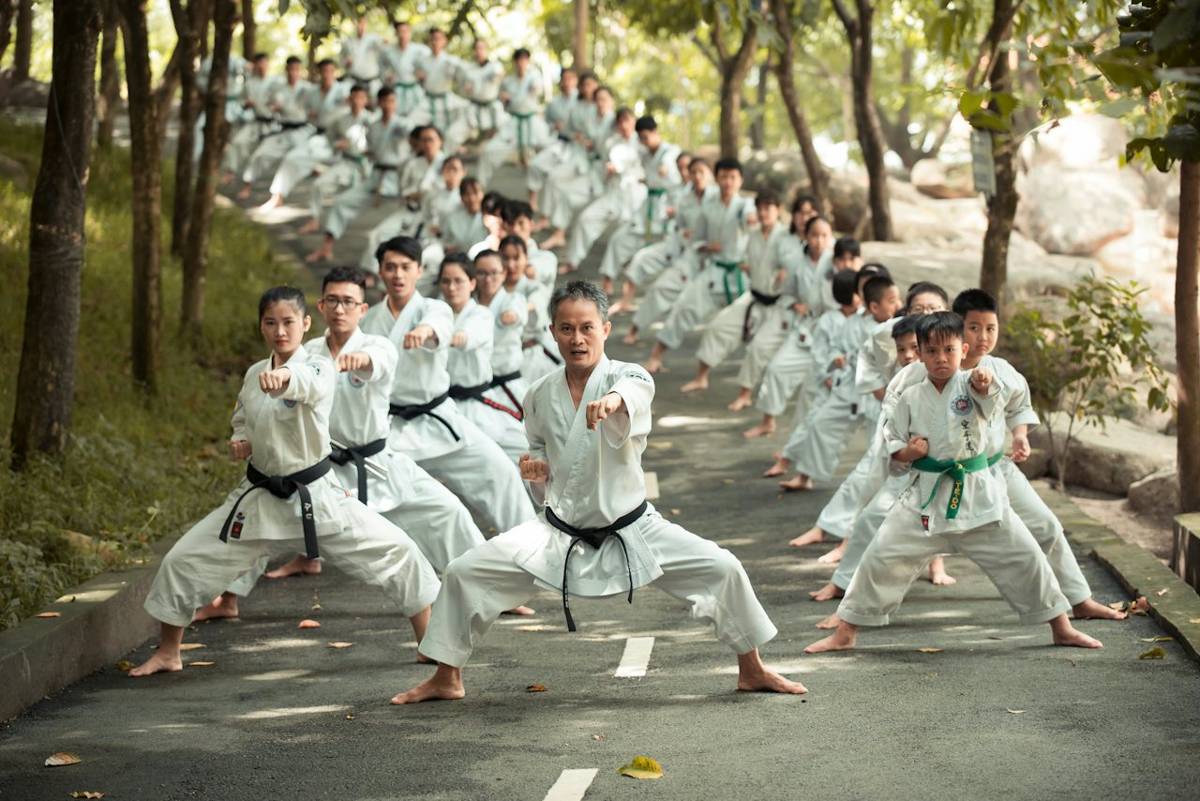
A typical colored belt test asks a child to show basic techniques (kihon) such as stances, punches, blocks and kicks; their current kata, performed with good rhythm and focus; partner work, which may be pre-arranged drills or light sparring for older children; and sometimes questions about terminology or the dojo’s rules. Examiners look for sharp technique, strong stances, spirit (kiai), and steady improvement since the last test.
Most schools charge a testing fee, commonly somewhere around $30 to $100 for colored belts and more for black belt. Ask how often tests happen and whether a child is only invited to test when they are ready, which is a good sign.
Junior black belts
Because a black belt traditionally represents adult maturity as well as skill, many organizations give children a junior black belt (sometimes called shodan-ho, or “probationary first degree”) and convert it to a full adult rank in the mid-teens. Some schools use a black belt with a white or colored stripe for this. It is a sensible system, and it is no reason to doubt a child’s achievement.
How long it takes
Most children who train two or three times a week reach black belt in about four to six years, and traditional dojos often take longer. Very fast timelines, such as a guaranteed black belt in two years for a young child, are a warning sign that the school may be selling belts. See our guide on how to spot a McDojo.
How parents can help
Ask your child to show you their kata at home, and praise effort and focus rather than the color of the belt. Keep training steady through the plateaus that come around green and brown belt, when kata get longer and progress feels slower. For the bigger picture, read our karate for kids guide and the karate profile.
- WhiteBeginner
- Yellow
- Orange
- Green
- Blue
- Purple
- BrownOften several levels
- BlackJunior black belt at many schools
Orders differ between styles and schools. Many children's programs add stripes or extra colors between these.
Questions parents and students ask
What is the karate belt order?
It differs between styles and schools. A common order is white, yellow, orange, green, blue, purple, brown and black, and many schools add stripes or extra colors for children so they can earn something every few months.
How long does it take a child to get a black belt in karate?
Usually four to six years of steady training, and often longer in traditional schools. Many organizations award children a junior black belt and convert it to an adult rank in the mid-teens.
What is a kata?
A kata is a set sequence of movements performed alone against imaginary opponents. Each belt level has its own kata, and performing it well is a central part of every belt test.