| What to know | |
|---|---|
| Below black | Kyu grades, counting down |
| Black and above | Dan grades, counting up from shodan |
| Common junior order | White, yellow, orange, green, blue, purple, brown |
| Tested on | Throws, pins, falls, etiquette, attendance |
| Black belt age | Usually mid to late teens |
Pick by goal
- Quick sense of progressA club with junior tipsSmall steps keep young children motivated.
- Competitive pathPoints from tournamentsSome organizations count results toward promotion.
- Track progress at homeOur printable belt trackerA visual record kids love filling in.
On this page
Judo is the art that gave the world colored belts. Its founder, Jigoro Kano, introduced the black belt in the 1880s, and colored belts for lower ranks spread in the decades that followed. Today, judo belts for children follow the same basic logic as in other arts, but the details depend on which national organization a club belongs to.
Kyu and dan
Like karate, judo divides ranks into kyu grades below black belt and dan grades from black belt upward. Kyu grades count down toward black belt; dan grades count up from first degree (shodan). The colored belts show the kyu grade, and the exact colors depend on the system.
Who sets the rules in the US
In the United States, three national organizations register judo ranks: USA Judo, the national governing body for the Olympic sport; the United States Judo Association (USJA); and the United States Judo Federation (USJF). Each has its own junior rank program, and a club follows the system of the organization it belongs to. Ranks are generally recognised between them, though a transfer may involve a review.
A common junior belt order
Junior systems vary, but a widely used order in the US is white, yellow, orange, green, blue, purple, brown and black. Many junior programs add stripes or split some colors into several steps so children are promoted more often. Interestingly, in Japan colored belts are used much less, and many students wear white until they reach brown or black.
What children are tested on
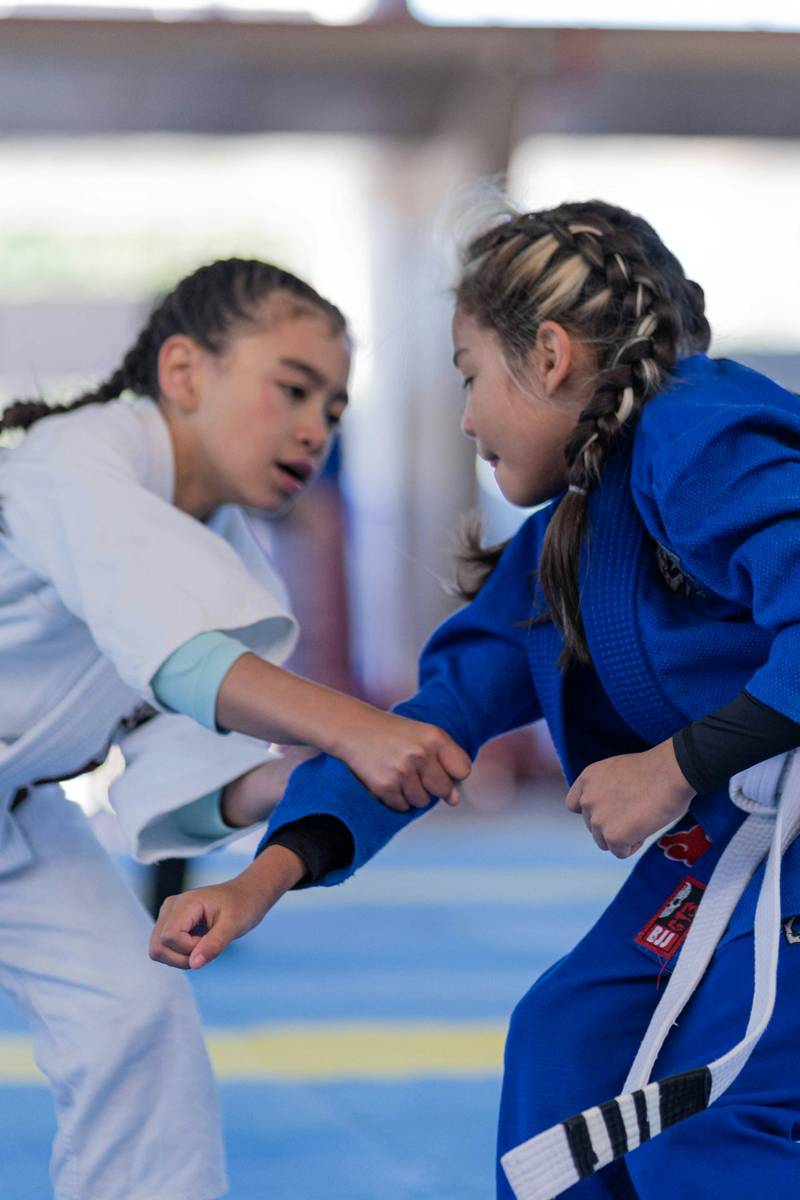
Judo promotions focus on practical skill. A child is usually expected to show:
- Ukemi, safe breakfalls to the back, side and front, and rolling falls
- Nage-waza, throws appropriate to their level, done cleanly with a cooperative partner
- Katame-waza, pins (osaekomi) and escapes on the ground
- Basic etiquette and Japanese terms
- Good attitude and regular attendance
Some systems award points for competition wins, and older juniors and black belt candidates may perform a formal kata, such as Nage-no-kata, with a partner. Many clubs promote in class rather than at a formal test, and fees are often modest.
Minimum ages and black belt
Each organization sets minimum ages and time-in-grade for higher ranks, and black belt has a minimum age typically in the mid-teens. A child who starts at six can expect years in the junior colored ranks. Judo values steady progress, and promotions are earned on the mat.
How long it takes
Timelines vary widely because many clubs train two or three times a week and some children compete more than others. As a rough guide, children commonly spend several months to a year at each junior belt, and black belt usually comes in the late teens or later. Fast promotions are not a judo tradition.
Why judo belts take longer than some styles
Parents moving from Taekwondo or karate are sometimes surprised by how slowly judo belts come. That is by design. Judo is tested against resisting partners in randori and competition, so a child has to make techniques work, not just show them. Many clubs promote children only a few times a year, and some organizations count tournament points or time in grade. The upside is that a judo belt means a lot: a green belt child can genuinely throw and pin someone who is trying to stop them. If your child gets discouraged, a printable belt tracker and praise for small wins, like a first clean throw in randori, help bridge the gaps.
How parents can help
Ask your child to show you their breakfalls, celebrate effort and good sportsmanship, and keep training steady. For more about the sport, read judo for kids, your child’s first judo class and the judo profile.
- WhiteBeginner
- Yellow
- Orange
- Green
- Blue
- Purple
- Brown
- BlackMinimum age in the mid-teens
The exact colors depend on the club's national organization. Many junior programs add stripes between colors.
Questions parents and students ask
What is the judo belt order for kids?
It depends on the organization and club, but a common junior order in the US is white, yellow, orange, green, blue, purple, brown and black, often with stripes in between.
How do kids get promoted in judo?
Coaches promote children based on time training, knowledge of throws, pins and breakfalls for their level and attitude. Some systems also count competition results. Promotions are registered with the club's national organization.
Can kids get a black belt in judo?
Black belt has minimum ages, typically in the mid-teens, so younger children move through the junior colored ranks first. Many judo players reach black belt in their late teens or as adults.