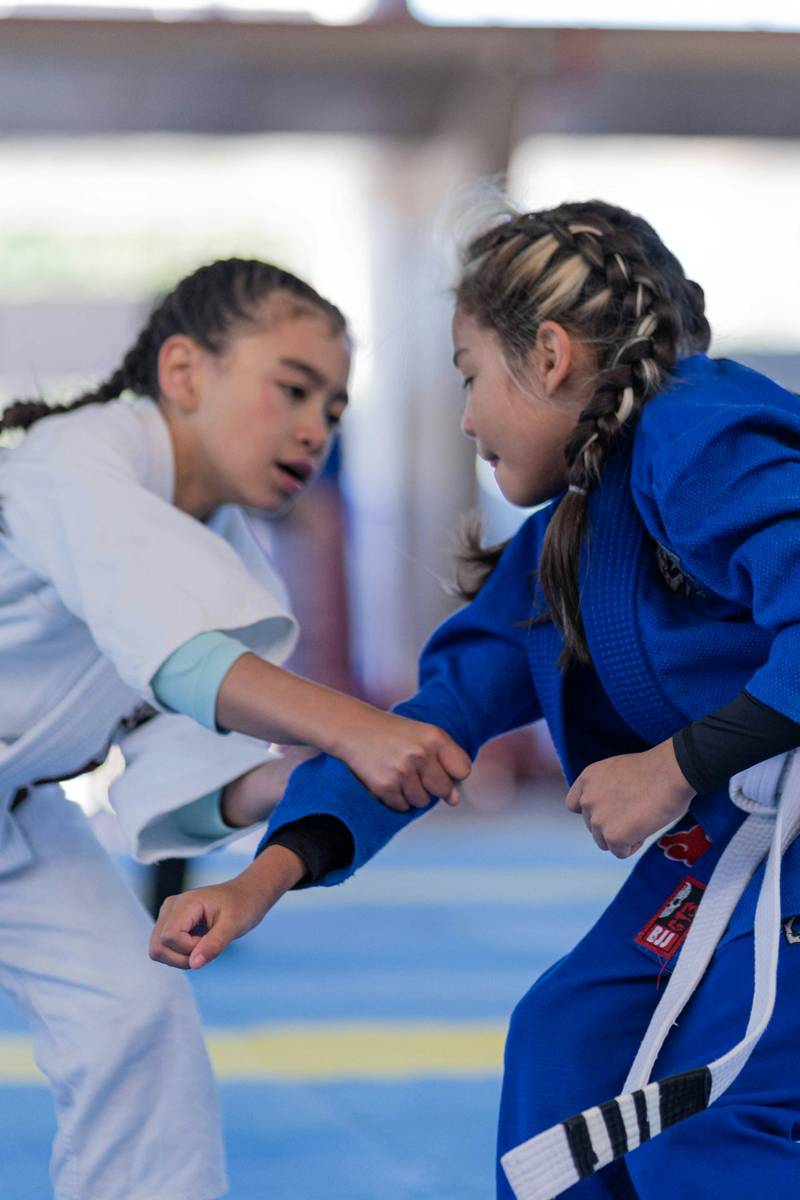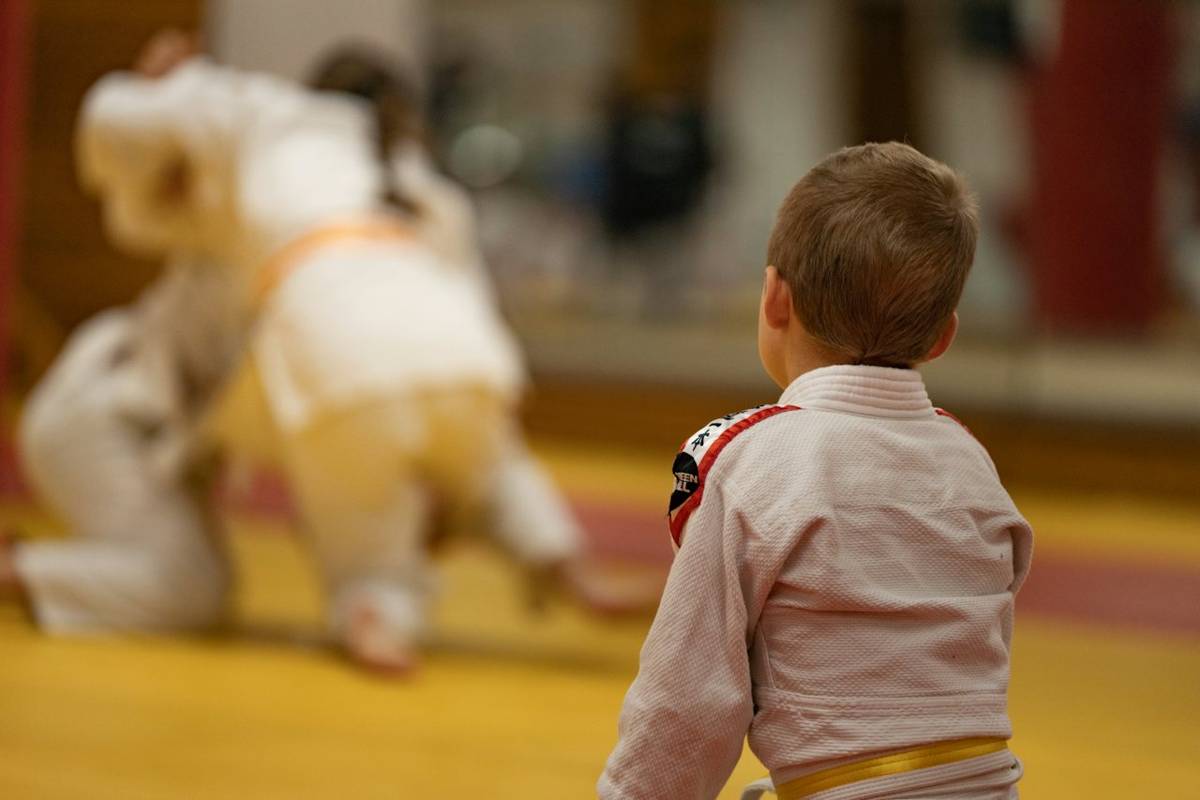
| What happens | |
|---|---|
| Bowing in | Bow at the mat edge, kneel in a line, bow to the coach |
| Warm-up | Running, rolling, animal walks |
| Breakfalls | Back, side and forward falls; the main lesson |
| First technique | A simple pin or slow throw with a partner |
| Games | Grip games, sumo-style pushing |
| Bowing out | Line up, kneel, bow |
Pick by goal
- Nervous childWatch one class firstSeeing the falls and bows removes the mystery.
- Under 6A dedicated little ones' classMore games, shorter sessions.
- Older beginnerAsk about a beginners' groupSaves being paired with experienced kids too soon.
On this page
A first judo class is a gentle introduction for most children. Judo coaches know that new students need to learn to fall safely before anything else, so the first sessions are full of rolling, tumbling and games. Here is what usually happens and how to help your child feel ready.
Before the class
Contact the club to book a trial and ask whether they have a loaner judogi, the heavy cotton jacket and trousers used in judo. Trim your child’s fingernails and toenails, remove jewelry, and tie long hair back without hard clips. A light snack an hour or two before class is better than a full meal, because there will be lots of rolling.
What to bring
- Long-sleeved athletic clothes without zips or buttons, or a loaner judogi
- Sandals or flip-flops (zori) for walking off the mat
- A water bottle
- Any registration forms; many clubs need a national membership for insurance after a trial
Etiquette your child will see
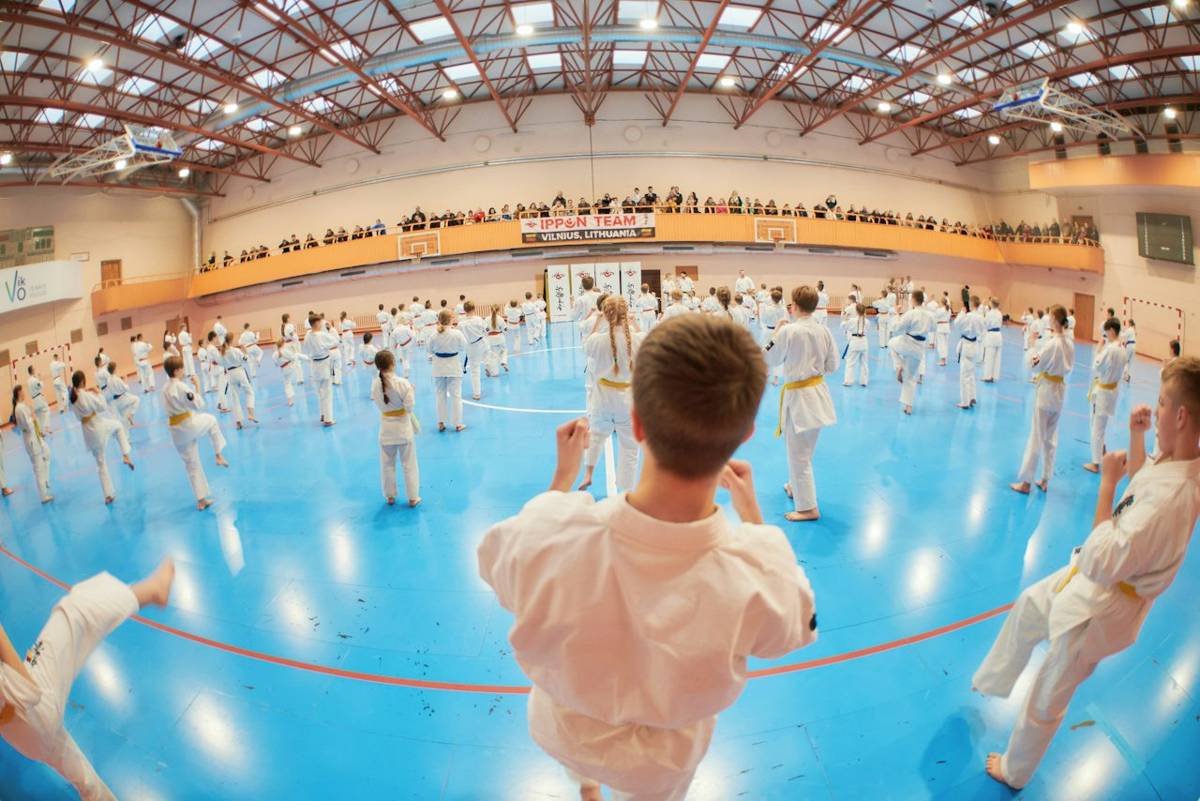
Judo has simple, consistent etiquette. Students bow (rei) when they step onto and off the mat, and before and after practising with a partner. Classes often begin and end with everyone kneeling in a line and bowing to the coach (sensei). Children are expected to listen when the coach speaks, help partners and look after one another. Explaining this beforehand helps children feel at home.
How the first class usually runs
After the opening bow, the warm-up usually includes jogging, forward and backward rolls and movement games. The heart of the first class is ukemi, breakfalls: children learn to tuck their chin, round their back and slap the mat to absorb a fall. They practise falling from sitting, then crouching, then standing. Later, the coach may show a simple pin and let children try it on each other, or play grip-fighting games. Young children often finish with gentle randori, free practice, from their knees.
Practising falls at home
If your child enjoyed the class, the best thing to practise at home is falling, not throwing. On a bed or a thick rug, they can rock back from a crouch and slap the floor with both arms, tucking the chin to keep the head off the ground, just as coaches teach in the first lessons. Five minutes a few times a week builds the habit quickly. Never let children throw siblings or friends at home, even playfully; throws need mats and a coach. Our guide to judo breakfalls explains each fall, and judo words for kids covers the commands they heard in class.
What parents should look for
Watch whether the coach keeps falls progressive and supervised, whether children are paired by size and age, whether the mat is large, padded and clean, and whether older students help younger ones. A good judo class feels busy and friendly, and children leave a little tired and smiling.
Questions to ask the coach
Ask how often children should train, which national organization the club belongs to, what membership and monthly fees involve, how the junior belt system works, and how the club handles safety, hygiene and competition. Many judo clubs are volunteer-run and low cost, and coaches are usually glad to explain.
After the first class
Children may be a little sore from rolling. Give it a few classes before deciding. For more, read judo for kids, judo belts for kids and the judo profile.
Questions parents and students ask
What should my child wear to their first judo class?
Comfortable long-sleeved athletic clothes without zips or buttons, or a loaner judogi if the club offers one. Judo is practised barefoot, so bring sandals for walking off the mat.
Will my child be thrown at the first class?
Usually not. The first classes focus on breakfalls, rolling and simple games. Throws come once a child can fall safely, and young children often practise from their knees.
Why do judo players bow?
Bowing (rei) is a sign of respect and thanks to the club, the coach and training partners. Children bow when stepping onto the mat and before and after practising with a partner.