| What it means | |
|---|---|
| Roll / rolling | Live grappling with a partner, BJJ's version of sparring |
| Tap | Patting the partner or mat to say stop; partners let go at once |
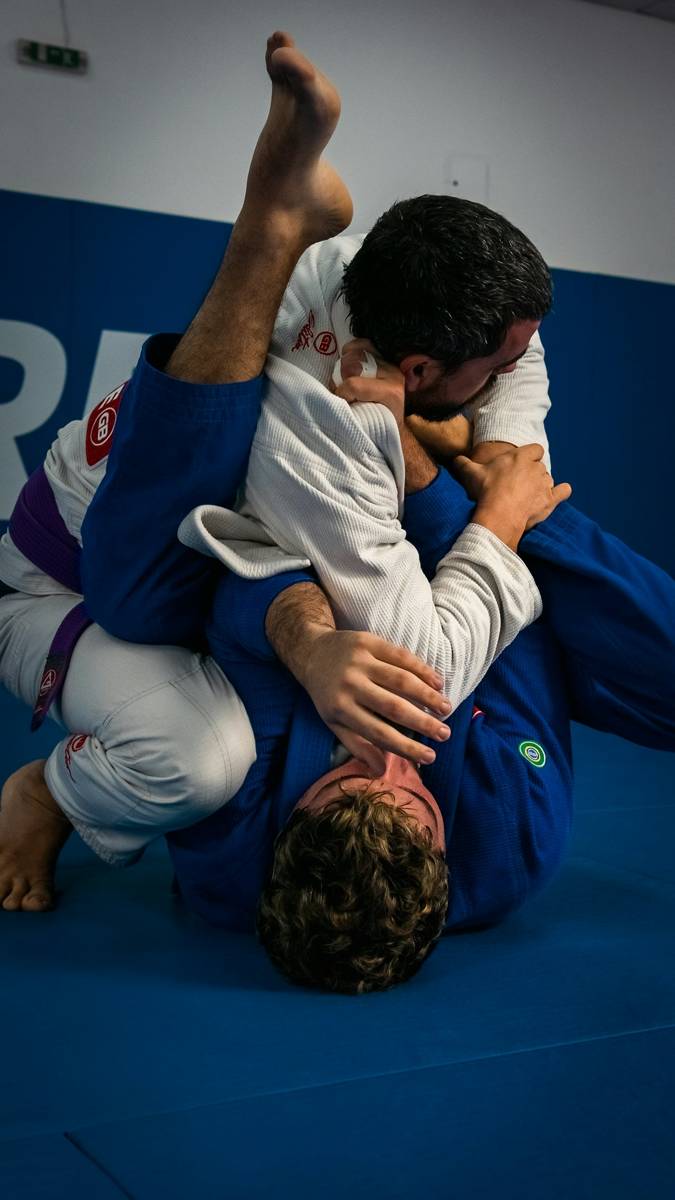
| Guard | On your back, using your legs to control the person on top |
| Mount | Sitting astride a partner who is on their back |
| Side control | Pinning a partner from the side, chest to chest |
| Back control | Behind a partner with hooks in, the strongest position |
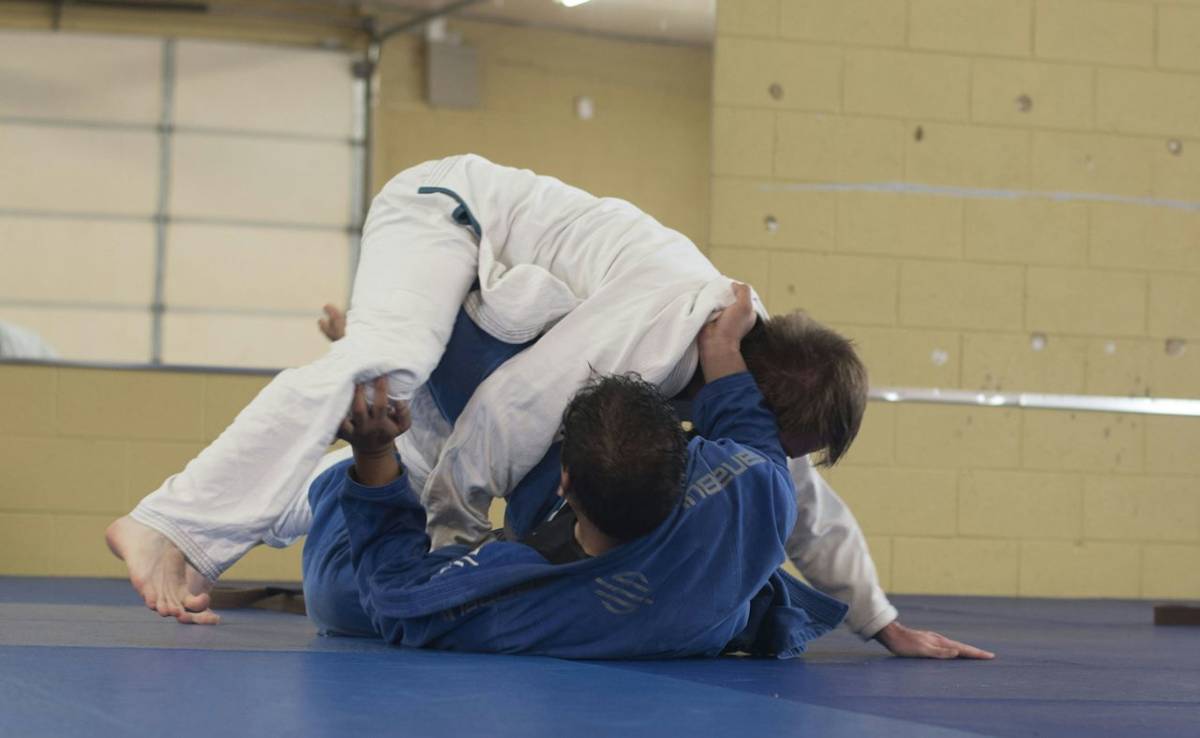
| Sweep | Turning over a partner from guard to end up on top |
| Pass | Getting around a partner's legs from on top |
| Shrimp | Hip escape: the basic move for making space |
| Oss | All-purpose greeting or 'yes' used at many academies |
After a few weeks of BJJ, children come home talking about passing guard, getting mounted and tapping their partner, and parents may wonder what on earth happened. Jiu-jitsu has its own vocabulary, mostly in English with a few Portuguese words from its Brazilian roots. Here are the terms you will hear most.
Rolling and tapping
Rolling is live grappling with a resisting partner, the BJJ version of sparring. In kids’ classes, much of it is positional sparring, where children start from a set position, such as one child in guard, with a simple goal like sweeping or passing.
Tapping is how a child says stop. They pat their partner or the mat, or say “tap”, whenever a hold feels uncomfortable, and the partner lets go immediately. Coaches drill this from day one. A child who taps is not losing; they are training safely.
Positions
The table above lists the main positions. Guard is unique to BJJ: the child on their back uses their legs to control the partner on top. There are many types, such as closed guard, with legs locked around the partner, and open guard. Mount means sitting on top of a partner who is on their back, and side control means pinning them from the side. Back control, behind a partner with legs hooked around their hips, is considered the strongest position. Knee on belly is a pin with one knee on the partner’s stomach.
Moves
A sweep turns the person on top over, so the child on the bottom ends up on top. A pass is getting around a partner’s legs from the top to reach side control or mount. Escapes are ways out of bad positions, and the shrimp, or hip escape, is the basic movement behind most of them; children practise it up and down the mat in warm-ups. A bridge, or upa, lifts the hips to roll a partner off. Takedowns bring a standing partner to the mat.
Submissions
Submissions are holds that make a partner tap, such as the armbar, the kimura, a shoulder lock, and the triangle, which uses the legs. Chokes are taught carefully and, under federation rules, some techniques are restricted for younger children. In kids’ classes, submissions are taught slowly and partners are taught to release instantly.
Academy words
Many academies use oss as a greeting or as “yes, coach”. The instructor is often called professor or coach. Open mat is free practice time. Gi classes are in the traditional uniform, and no-gi classes are in a rash guard and shorts; our guide to gi vs no-gi explains the difference.
Learning more
For the bigger picture, read BJJ for kids and the kids BJJ belt system. If your child is about to start, our guide to the first BJJ class explains what happens.
Questions parents and students ask
What does tapping mean in jiu-jitsu?
Tapping, by patting the partner or the mat or saying stop, means a hold is uncomfortable and the partner must let go immediately. Children learn to tap early and partners learn to release at once. It is the most important safety habit in BJJ.
What is rolling in BJJ?
Rolling is live grappling with a partner who is resisting, like sparring in other martial arts. In kids' classes, it is often positional, starting from a set position with limited goals.
Do kids learn submissions in BJJ?
Yes, gradually and under rules that restrict dangerous techniques for younger children. Simple holds and joint locks are taught with care, and partners are taught to tap early and release immediately.