On this page
A belt test is the first time many children perform under pressure in front of a crowd, and it is often a bigger event for the family than anyone expected. The good news is that color-belt tests are designed to be passed. Schools generally invite a student to test only once the instructor is confident they are ready, so the test is less a gamble than a chance to show what they’ve learned.
How students get invited to test
Most schools hold tests every two to three months. A few weeks before, students who have met the requirements, often shown by a full set of stripes, receive a test invitation or permission slip. Some schools post a list on the wall. If your child isn’t on it, ask the instructor what is still missing. The answer is usually specific, such as one section of the form or a kick that needs more height.
The order of a typical test
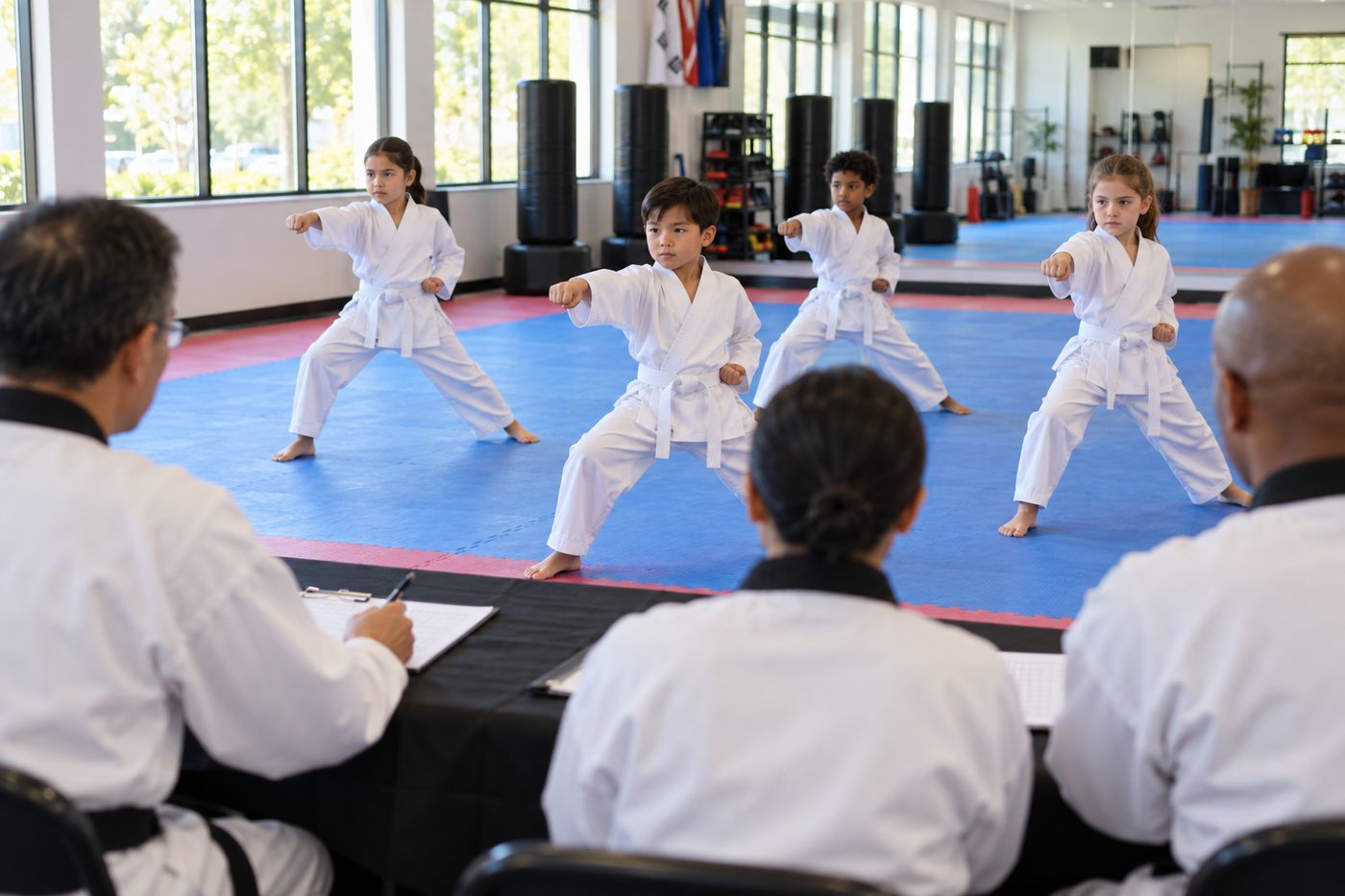
Color-belt tests vary by school, but most follow a similar pattern. Students line up by rank and bow in, then perform basics: stances, blocks, punches and kicks, done in lines as the examiner counts in Korean. Next comes the form, or poomsae, often performed in small groups and then individually. Examiners watch for the correct sequence, strong stances, clear finishing positions and a confident gihap (기합), the shout that marks key moves.
Depending on rank, there may be one-step sparring (prearranged self-defense with a partner), free sparring in protective gear, and board breaking (격파, gyeokpa). The examiner may also ask a knowledge question, such as the meaning of the belt color, the name of the form, or how to count to ten in Korean. The test ends with students lining up, bowing out, and usually receiving their new belts on the spot or at a ceremony a week later.
What examiners are really looking for
Parents tend to watch for mistakes in the form. Examiners watch for something broader: effort, focus and spirit. A child who forgets a move, pauses, and then finishes strongly will usually pass, while a child who does every move but looks around the room and mumbles the gihap may be told to work on focus. Loud, confident gihaps and a clean bow matter more than most families realize.
At higher ranks, standards tighten. Stances need to be the right length, kicks need to reach the right height, and the student needs to perform without hesitation. By red belt, examiners also look at how a student helps lower ranks, since leadership becomes part of the curriculum.
Costs to expect
Color-belt testing fees in the United States usually run from about $40 to $100 per test, which covers the new belt, a certificate and the examiners’ time. Black belt tests cost more, often $200 to $500 or higher, because they include the Kukkiwon registration fee and a certificate from Seoul. Some schools build every test fee into a monthly membership; others charge separately. Ask for the schedule when you enroll so the fees don’t come as a surprise. Our cost guide has the full picture.
Helping a nervous child
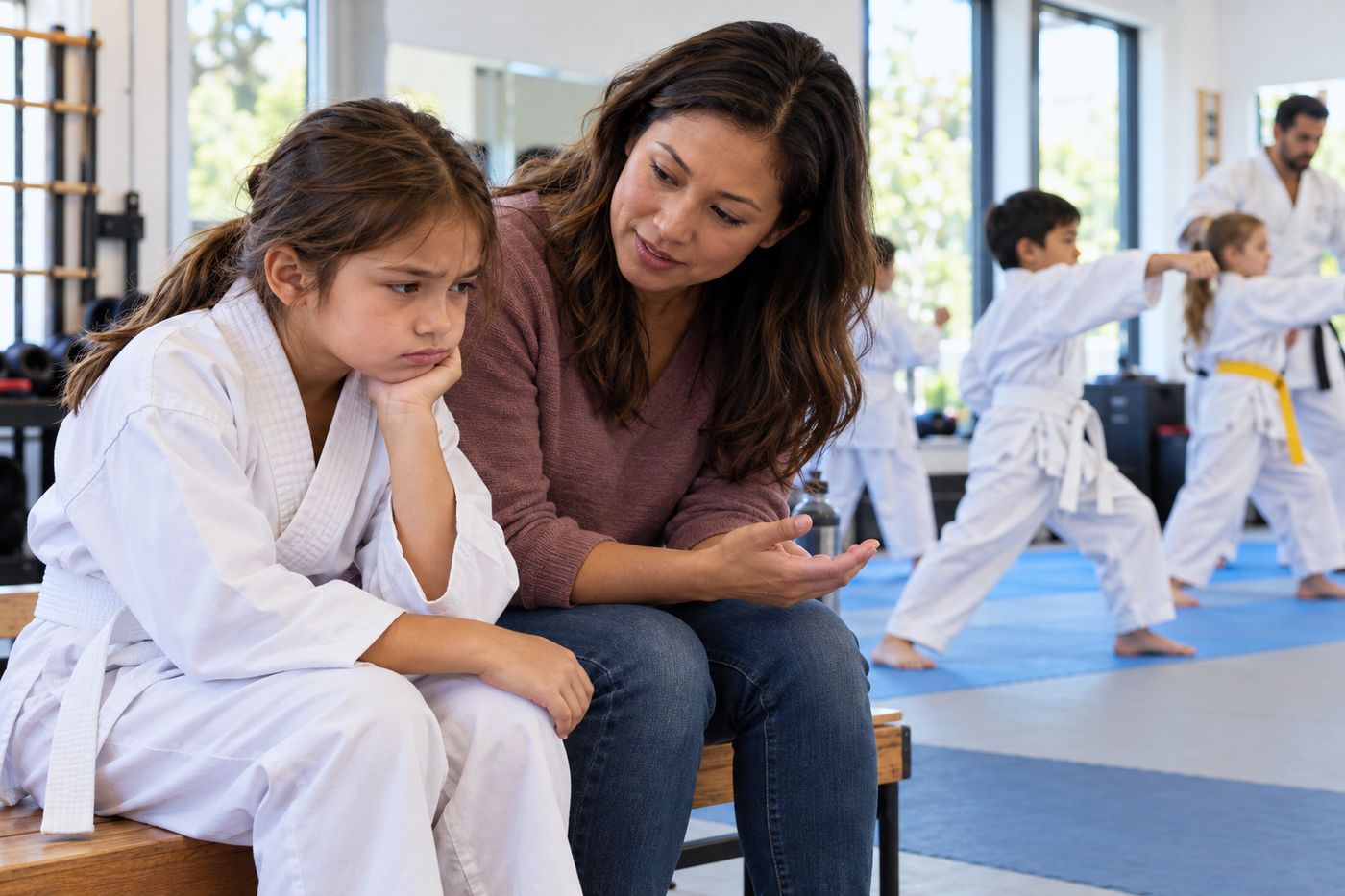
The most useful preparation is repetition at home. Ask your child to perform the form in the living room, then again for a grandparent on video call. Performing for a small audience is great practice for a big one. Practice the bow, the gihap and the opening “Yes, sir” too, because those first few seconds set the tone.
On the day, keep things calm. A normal meal two or three hours before, a clean and ironed uniform the night before, and arriving early enough to warm up all help. Avoid last-minute coaching on the way in, since a child who is told five things to remember will remember none of them. A simple “Have fun and be loud” works better.
During the test, sit where your child can see you, and resist calling out. If something goes wrong, a wave and a smile afterward matter more than any correction.
If your child doesn’t pass
Sometimes a student is held back, or receives a “conditional” pass with a skill to show again later. It stings, but it is not a disaster, and it usually means the school takes its standards seriously. Ask the instructor exactly what needs work, make a small practice plan, and treat the next test as a fresh start. Many students say later that the test they had to retake was the one they were proudest of.
Questions parents and students ask
Can you fail a Taekwondo belt test?
Yes, though it is uncommon at color-belt level because most schools only invite students who are ready. A student who doesn't pass usually retests at the next session.
How much does a Taekwondo belt test cost?
Color-belt tests in the US commonly cost $40 to $100 each. Black belt tests are more, often $200 to $500 or higher, including the Kukkiwon certificate fee.
How long is a Taekwondo belt test?
A color-belt test for children usually lasts one to two hours, depending on how many students are testing. Black belt tests can run three hours or more.
What should parents bring to a belt test?
A clean uniform, the current belt, water and a camera. Many schools ask families to stay seated and quiet while students perform.