| Uniform | Fit notes | |
|---|---|---|
| Taekwondo dobok | V-neck top, light fabric | Sleeves to the wrist, trousers to the ankle |
| Karate gi | Wrap jacket, light or medium cotton | Sleeves to mid-forearm or wrist by style |
| Judo gi | Heavy, reinforced jacket | Sized for grip rules; check the club's advice |
| BJJ gi | Heavy, shorter cut than judo | Kids' sizes (often M00 to M4) by height and weight |
Pick by goal
- Growing fastOne size up, hemmedHem trousers and roll sleeves until they fit.
- Avoid shrinkingCold wash, air dryDryers shrink cotton uniforms.
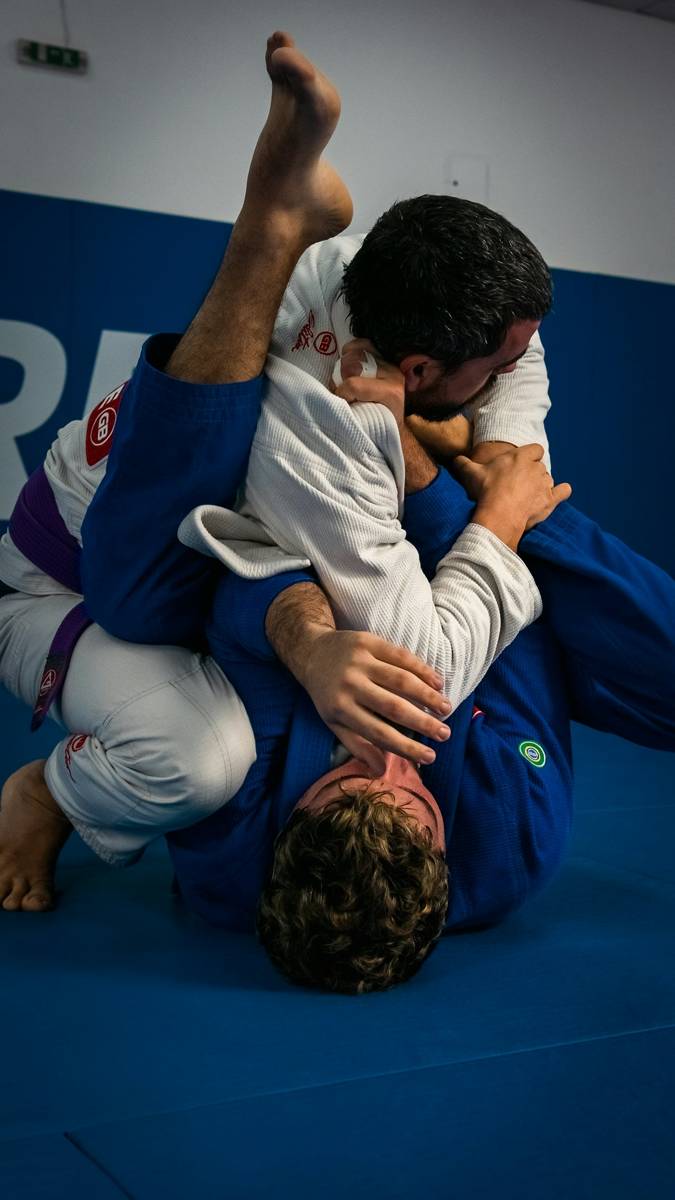
- Grappling artA proper BJJ or judo giLight karate gis tear when gripped.
- Belt careDon't wash itTradition, and it lasts longer.
On this page
A child’s first uniform is a big moment, and also a source of confusion. Sizes vary between makers and styles, cotton shrinks, and children grow fast. Here is how to get the right fit and make it last.
Uniforms by style
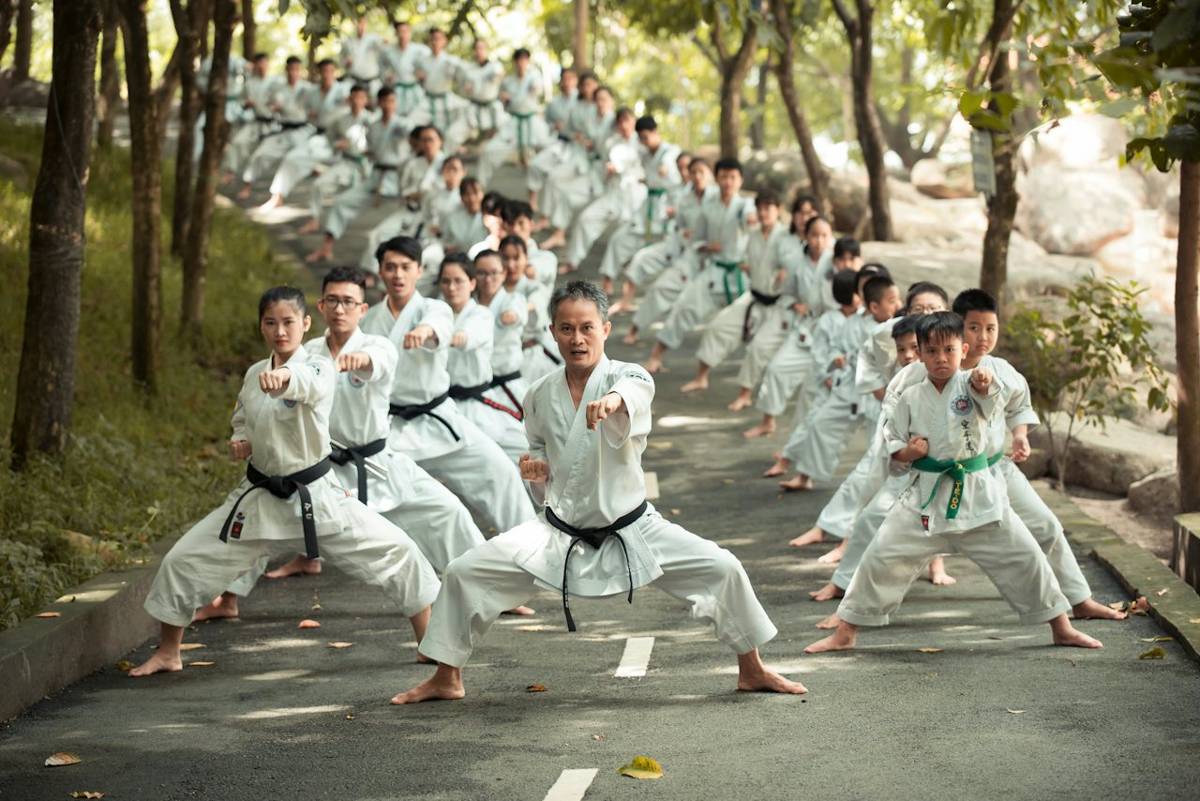
Taekwondo uniforms, called doboks, are light, with a V-neck top in most Olympic-style schools. Karate uniforms are wrap jackets in light or medium cotton, and some styles prefer shorter sleeves. Judo and BJJ uniforms, both called gis, are much heavier, with reinforced jackets built to be gripped and pulled. A light karate uniform will tear quickly in a grappling class, so buy the right kind for the art. Many schools sell or recommend a specific uniform, and some include the first one in the sign-up fee.
Getting the size right
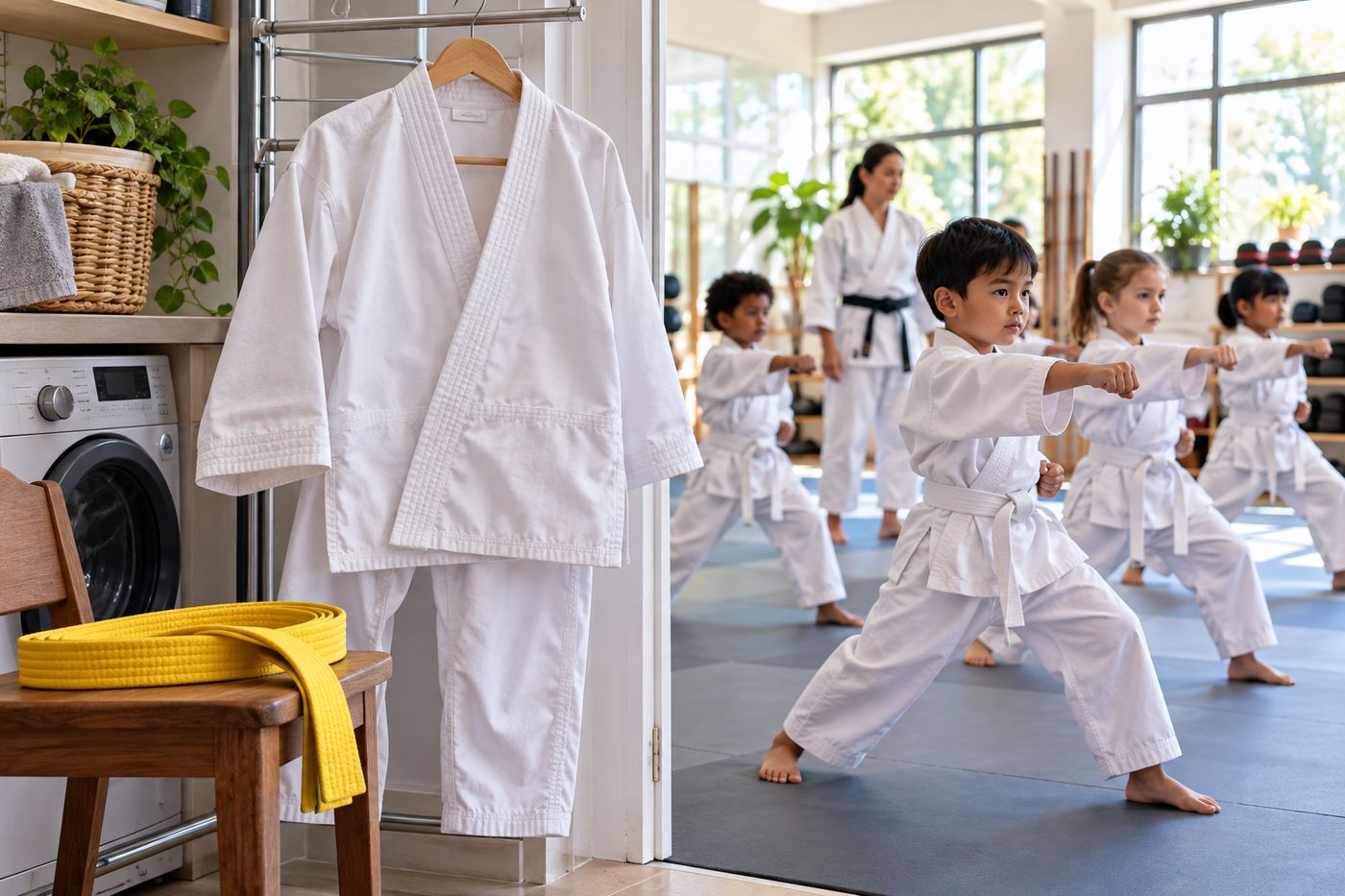
Use the maker’s size chart, which is usually based on height and weight. Children’s sizes are often numbered from 000 or 00 upward, and BJJ brands commonly use M00 to M4 for kids, but numbers vary between brands, so always check the chart. The jacket should close comfortably and cover the hips, sleeves should reach roughly the wrist without covering the hands, and trousers should end around the ankle without dragging.
Room to grow
Buying a little big is sensible, but avoid going too far. Sleeves that flop over the hands and trousers that catch underfoot are uncomfortable and unsafe. A common approach is one size up, with trousers hemmed or rolled and sleeves folded once until the child grows into them. Remember cotton shrinks a little in the first washes.
Washing without shrinking
Wash uniforms after every class or two, especially grappling gis, which get sweaty and can spread skin infections. Use cold water and a gentle detergent, wash whites separately and skip bleach if the uniform has patches or colored trim. Hang to dry; a hot dryer is the most common reason uniforms shrink. Washing inside out helps protect patches and embroidery.
Caring for the belt
Most schools follow the tradition of never washing the belt, and children are often told it holds the work they put in. Practically, washing fades the dye and frays the stitching. Hang it to air out, and spot clean it gently if needed. Teach your child to tie it properly; our guide to tying a Taekwondo belt works for most styles.
Gear and replacement
Children usually need a new uniform every year or two as they grow. Sparring gear and mouthguards also need replacing as they are outgrown or worn. Our cost calculator includes uniforms and gear, and our guide to what to bring to the first class covers the essentials.
Questions parents and students ask
Should I buy a bigger uniform for my child to grow into?
A little bigger is fine, but not much. Sleeves covering the hands or trousers dragging on the floor are a trip hazard. Many parents buy one size up and hem the trousers or roll the sleeves temporarily.
Do martial arts uniforms shrink?
Most cotton uniforms shrink, especially in a hot wash or dryer. Some are pre-shrunk. Wash in cold water and hang to dry to keep the size.
Why shouldn't you wash a martial arts belt?
In many schools, not washing the belt is tradition: it represents the work put into earning it. Practically, washing fades the color and frays the stitching. Air it out and spot clean if needed.