On this page
Walk into a Taekwondo school for the first time and you notice the shoes lined up by the door, the flags on the front wall, and children bowing as they step onto the mat. It is a polite, orderly place, and parents often wonder which of those rules apply to them. The short answer is that very few do, but knowing the customs helps your child and makes the lobby a more pleasant place for everyone.
Shoes and the mat
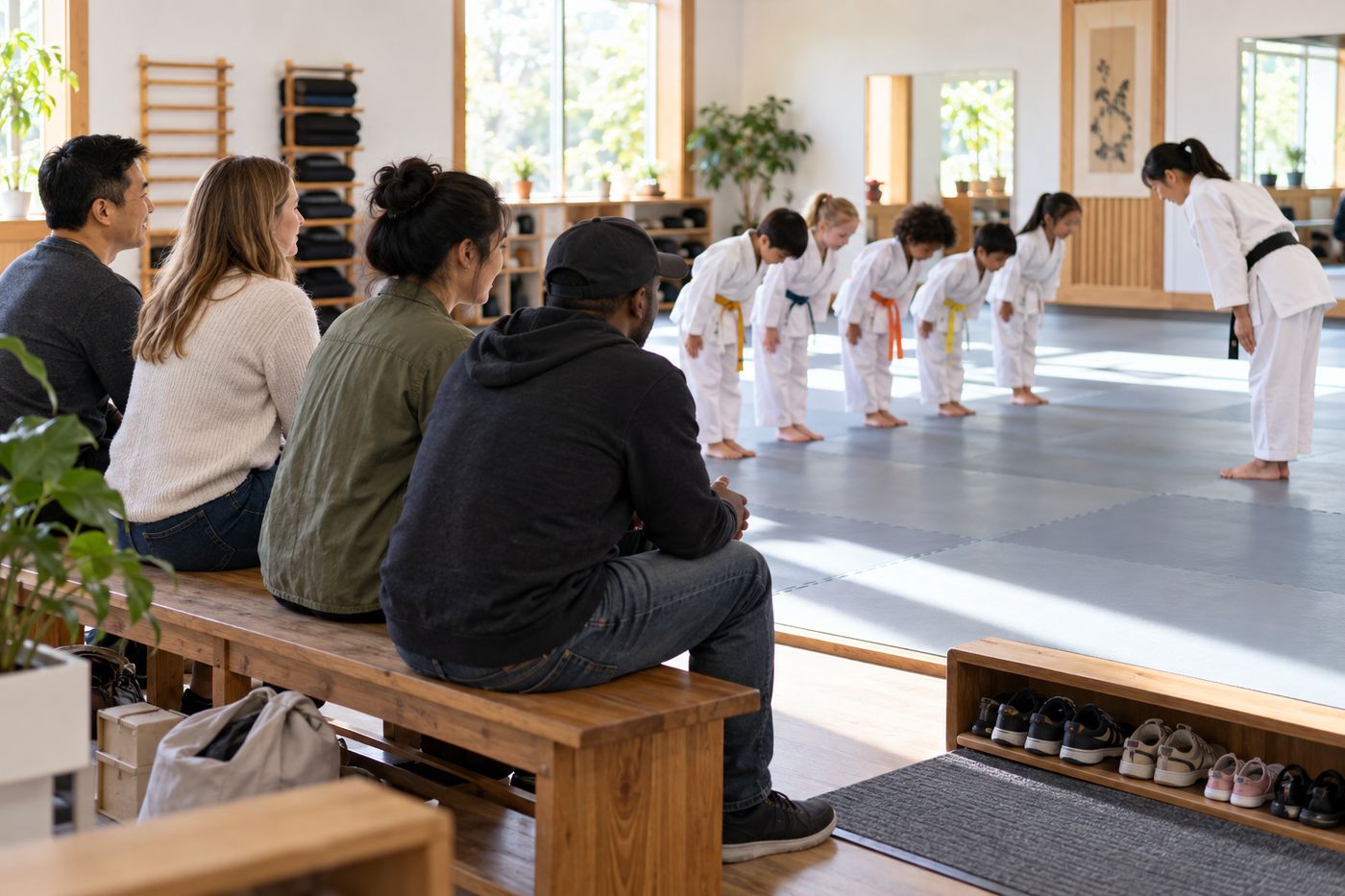
The training floor, called the mat or the dojang floor, is kept clean because students train barefoot and sit on it. Shoes always come off before stepping on it, and most schools ask that shoes stay in the entry area. As a parent, you will rarely need to step onto the mat at all, but if you are invited, for a ceremony or to help tie a belt, take your shoes off first.
Students bow when they step on and off the mat. Parents don’t need to, though many younger siblings enjoy copying.
Watching class
Most schools welcome parents to watch, either from benches along the wall or through a lobby window. Watching is a great way to see what your child is learning, and children usually work harder when they know someone is looking. The key is to watch quietly. Calling out instructions, cheering during drills or waving to get a child’s attention pulls them out of the class, and a child who keeps looking at a parent often misses what the instructor says next.
Phones are fine for occasional photos or a short video, but turn off the flash and keep the sound off. Some schools ask parents not to film other children, so check the house rules. Conversations in the lobby should stay low, since sound carries in an open gym.
Talking to instructors
Instructors are often happy to talk, but the best time is before or after class, not during. If you have a concern, such as a child who is anxious about sparring or a schedule change, a quick word after class or an email to the front desk works well. For bigger conversations, ask for a few minutes when the instructor is free rather than catching them as the next class lines up.
Most schools use a title for instructors, either “Master” with a last name, or the Korean sabeomnim (사범님). The head of the school may be called gwanjangnim (관장님) or Grandmaster. Use whatever the school uses, and your child will notice and be pleased.
At belt tests and ceremonies
Belt tests are more formal than regular classes. Arrive early, seat younger siblings where they can stay quiet, and keep phones on silent. Applause is welcome at the end of each group’s performance, but not during a form, when a sudden noise can break a child’s concentration. If your child stumbles, resist the urge to call out, and save the hug for afterward.
Some schools invite parents onto the mat to tie the new belt around their child’s waist. If you’re not sure how, our guide to tying a Taekwondo belt has a step-by-step diagram, and the instructors will gladly help.
Supporting without coaching
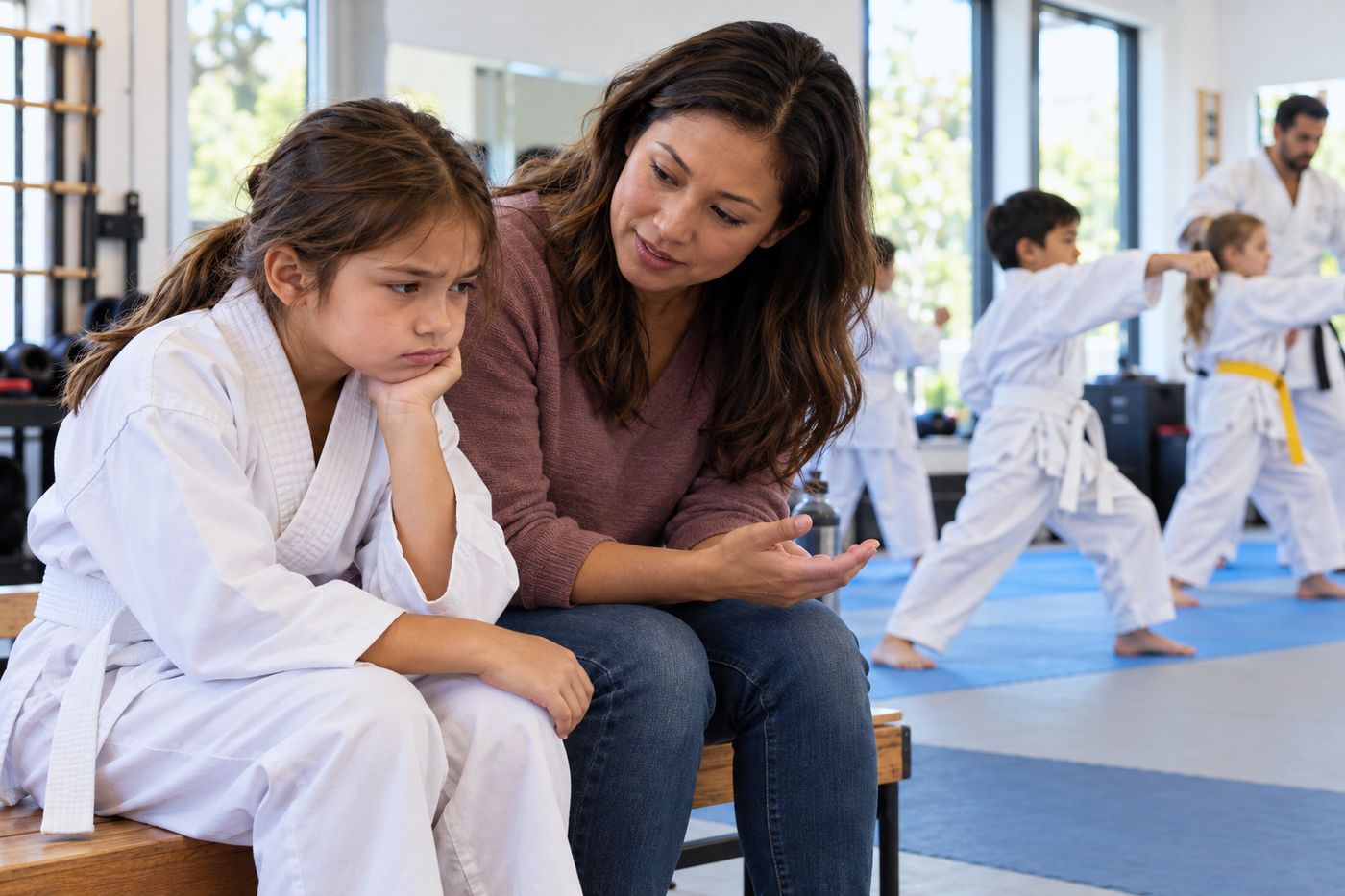
The hardest rule for many parents is to let the instructor teach. Parents who drill their children at home on technique, especially if it differs from the school’s version, can leave a child confused about whom to follow. A better role is the practice partner. Ask your child to show you the form, call out the Korean count, hold a pillow as a kicking target, and celebrate effort rather than correcting details.
If your child comes home frustrated, ask what happened before stepping in. Most frustrations are small, such as a missing stripe or a hard drill, and they pass. If something seems wrong, such as a child who suddenly doesn’t want to go, a calm conversation with the instructor almost always clears it up.
A small thank you goes a long way
At the end of class, students bow and say gamsahamnida (감사합니다), thank you. Parents don’t need to say it in Korean, but a thank-you to the instructor at the door, especially after a test, is noticed and appreciated. It also shows your child that the respect they practice on the mat is something the whole family values.
Questions parents and students ask
Do parents have to bow in a Taekwondo school?
No. Parents are guests, and no school expects them to bow. A friendly nod or greeting to the instructor is plenty, though many parents enjoy returning a bow when their child's instructor offers one.
Can parents walk on the Taekwondo mat?
Only when invited, and never in shoes. The training floor is treated as a clean, respected space.
What should I call my child's Taekwondo instructor?
Use the title the school uses, often Master plus last name, or the Korean sabeomnim. If unsure, ask at the front desk.